
Archiv der Kategorie: Management

Here you find topics like planning, organization and leadership.

Negotiation is mutual enrichment

A negotiation is the interest-driven tug-of-war to attain an agreement. This may be purchasing hardware, agreeing a service or other reconciled interests. The assumed relationship between the negotiators has a great influence on the negotiation. If an applicant is in a job interview, the question, who offers what, is crucial to the relative negotiating position. In the case of cheap labor, the applicant is in a lost position, because the next one is already waiting for this chance. Rare specialists are more likely courted and thus are in a better position. These black-and-white situations are rather easy to cope with. It becomes difficult, if a conversation partner devotes himself to the illusion of holding all the trumps in his hand and gambles without measure. A few prerequisites have to be created in order to have negotiations on a level playing field with reciprocal satisfaction. Then mutual enrichment is reachable.

In real negotiations both parties have to offer something and the outcome is open. Only when this starting point applies to both, it is worthwhile to invest time into the negotiations.

  • Sufficient information
    Even if it sounds banal, the availability of the relevant information is crucial. This does not only mean that you get the desired information, but also that you have the obligation to provide relevant information. This information does not consist only of length, width, weight, quality, or price, but also includes the expectations of the contracting parties, which are often hidden behind the object of negotiation. This does not mean, however, that all cards are put on the table from the beginning. It is more important to give at any time a satisfactory answer to the questions of the opposing party. The difference between tactics and the state of not knowing results from one’s own preparation, which has to be done in advance. It is an important expression of mutual appreciation. The parties continuously receive that way a better insight. This allows both sides to approach each other.
  • Ensure feasibility
    The negotiating items are often not specific enough that one would be able to compare one alternative with the other. The effort involved in a project is determined by the difficulty, the components, the quality, and it often depends on the cooperation of the customer. The description of these framework conditions is never accurate enough that one could derive exact estimates from it. The first and most important step is that the negotiation object, what the customer expects, is feasible. The client is usually represented by several people, who might have very different ideas. In the interest of feasible outcomes, sufficient information about all requirements and the offer is crucial. The feasibility is the easier to recognize, the clearer the assignment is for both parties. On this basis, it an agreement materializes, or not.
  • Live and let live
    The real contractual object is the price. Actually it is not necessary to point out that the buyer wants to achieve as much as possible for as little as possible, as well as the seller fights for as little as possible for as much as possible. Nevertheless, there are always negotiating partners who think that this issue is unknown to the other side. It is smarter to choose a more understanding approach. Striving for a good price and a suitable offer is legitimate. One’s attitude determines the acceptability for the other in the negotiation. It is not an advantage to bamboozle the contract partner. In the worst case, it hurts him so much that he is no longer available – which becomes one’s own disadvantage. That’s why: Live and let live.
  • Closing
    Negotiations have a clear goal – achieving a closing. Considering the expenses that both parties put into the needs-oriented preparation, it is inconvenient for both, if the closing does not materialize. However, to make a conclusion, the key is the magic word “compromise”. Everybody has to approximate the respective situation and each other’s expectations. This leads to the adaption of some requirements – e.g. a price limit, a desired range of services, an overstated claim to the result quality, and cheeky excessiveness. In order to nip later dissatisfaction in the bud, it is absolutely necessary to bring the facts into a form which adequately outlines the requirements and deliverables. The final contract is the framework for the delivery of the service. Potential changes should be documented later on, to avoid unnecessary frustrations.

Bottom line: Many people have already talked about the prerequisites for negotiations. In any case, it is crucial to provide sufficient information, to focus on feasible areas, to ensure your own life and the life of the other side, and, above all, to eventually reach a printable conclusion. Now nothing remains to reach a mutual enrichment.
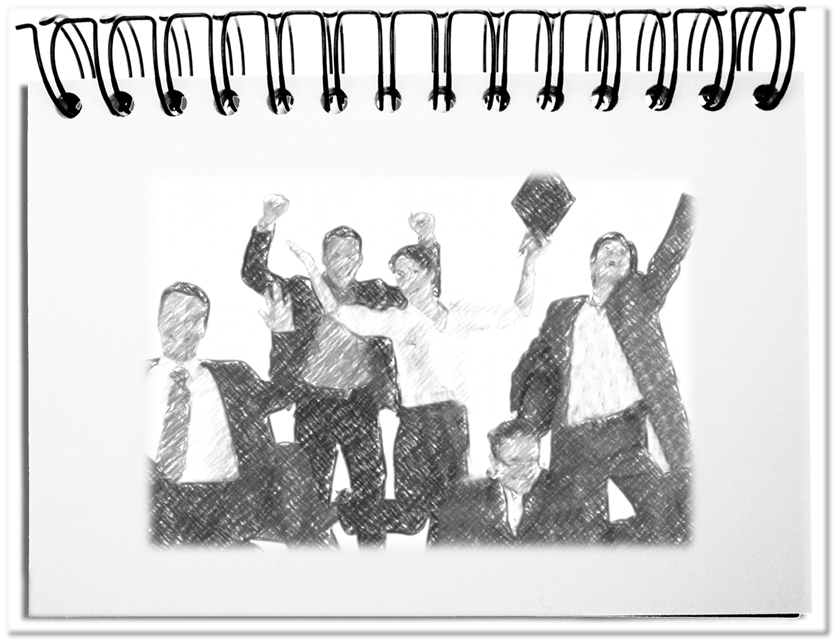
What is wanted

The modern workplace is moving. Globalization, information society and digitalization are transforming the working environment powerfully as at the advent of the steam engine. Manual labor shifts globally to where it is the cheapest. The physical values are replaced by informational. Digitalization virtualizes business processes. The remaining jobs provide expensive skilled or precarious less-educated activities. In both cases, the money is no longer sufficient in order to hold the people at work. The management thinks that the workforce desires good remuneration, a safe workplace, promotion and growth, good working conditions, interesting work, compassionate help with personal problems, loyalty to the employees, visible recognition, tactful discipline and active participation. Are these things really what is wanted?

In the following you find some criteria that are relevant for each of us. It is based on these ideas.

  1. Visible appreciation
    The ability to perform is in every employee. Additional amplifiers are praise, acknowledgment and respect. The biggest impact will be achieved, if the appreciation is visible to all. There are always appropriate occasions – at meetings, at the end of a project, at celebrations.
  2. Promotion and growth
    Especially the young workforce is motivated by career perspectives, which have a relatively long effect. Staggered programs that take several years increase on the one hand the operational ability and maintain on the other hand the tension. This includes certificates, education with popular coaches, training courses that interest the employees, and ultimately continuous growth through promotion.
  3. Active participation
    If the decisions are made over the heads of the employees, this dims their performance. Through employee participation, everyone is shaping the future. This reaches e.g. from capital to profit sharing to the joint designing of workflows and working conditions, like continuous improvement processes, quality circles or the learning organization. Important building blocks are the elements of self-organization – the joint development of the strategy, the structures and the processes, as well as participation in decisions that affect one.
  4. Good working conditions
    The working conditions are determined by various factors. The subjective ones are influenced by physical, intellectual, and mental states, which lead to a personal attitude – e.g. positive view, exhaustion, dislike. The factual aspects result from the available technology, the attractiveness of the workplace as well as the official regulations regarding the breaks, flextime or vacation.
  5. Good remuneration
    Even if payment does not have a long-term effect, it represents an important basis for employee satisfaction. In principle, the split in fixed and variable remuneration provides an additional motivator in the form of salary, holiday / Christmas money, and bonuses. It is favorable, if the distribution depends to a large extent on the individual performance. „Socialist“ levies on the basis of total success, without consideration of the personal contribution, rev the individual not so much up.
  6. Compassionate support with personal problems
    The most important relationships in everyday life are found in the work environment. This leads to the fact that personal problems are becoming visible over time. If the company offers a trustworthy environment that allows the employees to get advice in case of personal problems, to receive support from the supervisor or even from the HR department, then the workforce is intrinsically committed to the company.
  7. Interesting work
    Interesting tasks are especially encouraging for the particularly powerful employees. For this purpose, the challenges should fit with the interests of the individual, have a certain degree of difficulty or promise additional status. In conjunction with visible recognition, the employees are motivated for a long period of time.
  8. Loyalty to employees
    Active employee retention measures ensure loyalty. For this, you only need fair basic conditions, an open communication culture, backing and, for example, a visible appreciation. Poor personnel management is a central reason for the lack of loyalty. If the company does not realize this loyalty loss, they are surprised by the termination of the employee.
  9. Safe workplace
    Jobs will be safe, if you remain physically and mentally without harm and the place, where you work, is not dangerous. The potential threats of the workplace are overshadowed by the danger of not having one. The flexibilisation of the working world has become possible due to powerful IT programs. The simplified selection and administration of personnel has opened the door for flexible working hours and diverse types of employment. The results are precarious jobs, part-time work and increasing fluctuation.
  10. Perceived self-efficacy
    The freedom that is available for improving the work creates the self-efficacy that motivates to collaborate. As soon as you make intrinsically changes and prioritize the necessary tasks, you take ownership of the improvement. The necessary self-discipline and the respect for each other determine the working environment decisively.

Bottom line: What is wanted in the working day is once again moving. Today’s attitudes challenge tightly organized companies. The workforce wants visible recognition, active participation, compassionate help with personal problems, a safe workplace, good compensation, interesting work, promotion and growth, loyalty to the employees, good working conditions and tactful discipline. The different understanding of what the workforce really wants is reflected in the different prioritization of the management (see in the first section) and the employees (see in this paragraph), e.g. the importance of an interesting work, active participation, or the desire for compassionate support with personal problems. Once the executives take into account what is wanted, the company’s performance will increase – see more here !!