
Archiv der Kategorie: Management

Here you find topics like planning, organization and leadership.

The too tightly held egg breaks

Every time I take an egg in my hand, I pay attention that it does not slip out and breaks on the ground. At the same time, I avoid making a too strong grasp, so that I do not break it. I am aware that the shell is stable, but nevertheless the careless pressure could crack it.
Aren’t executives not in a similar situation? They lead the employees and ensure that they adhere to the sets of rules that result from the laws, the corporate guidelines, contracts and other arrangements. As with the egg, the leaders have to create the balance between a too loose and a too tight guidance. If results are missing or the employees withdraw their respect, then the leader forfeits his authority. If the manager controls too pedantic, then he risks the staff commitment and loses employees through fluctuation in the mid-term. In any case the danger exists that the basis for cooperation will be broken.
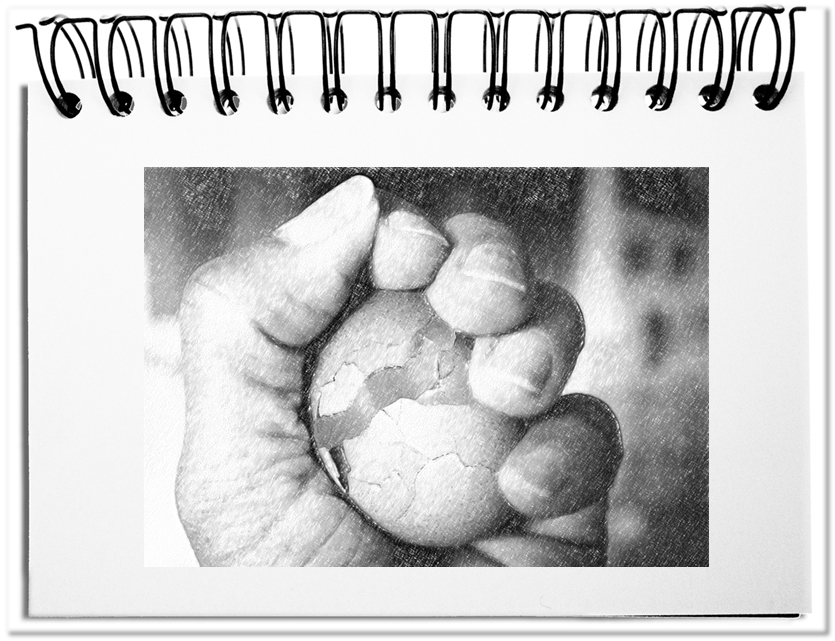
Eibroken

In the past executives could grow into their tasks by accompanying experienced superiors. Today, after graduating, a few internships and some short professional experiences, one can already get assigned to an executive position. This trend is amplified by HR policies in large companies, which rely more and more on assessments in artificial „lab conditions “. We can recognize these bosses from their work style. They are characterized by their Micro Management, the taking over of project functions and thereby missing out the leading.

The following leadership tasks are crucial, in order to accomplish the guiding role.

  • Communication
    The regular exchange of thoughts, opinions and facts is particularly important and at the same time very time-consuming in groups. The more employees are directly assigned, the more time is needed for the exchange of thoughts and the less time is available for each employee. It takes time for personal talks as well as for different forms of conversation (e.g. fireside chats, coffee talks, powwows). Besides personal discussions the comprehension of the employees is increased by publishing regularly important topics as emails, newsletters or a personal intranet page.
  • Coordination
    The skimpiest alternative of coordination is the command chain with their order and obedience. It is actually clear for most people that this model is no longer workable. Who would like to be led in such a manner! For this reason there are today further mechanisms for coordination, e.g. agreements, targets or the Linking pins. This naturally requires more time, than simply issuing an order. In the long run, however, the involved people learn to act autonomously. Then the remaining effort happens particularly in the information exchange.
  • Cooperation
    Also executives are forced to work together with others. For this purpose an environment should be created, that facilitates teamwork. Apart from the necessary equipment with spaces and media, workshops offer a setting outside of everyday life. In these work groups people coordinate the direction of the area and business models as well as the culture.

In all cases it is crucial to find the right balance between demanding and promoting. It is not a matter of not being able to exert pressure, but to create with the right leadership results AND to keep the acceptance, motivation and commitment of the employees.

Bottom line: Leadership is a critical task, since it has a large influence on the economic well-being of the company. It is an important contribution, in order to keep the teams on track and to provide them with sufficient hold. The same way as the too loosely or too firmly held egg breaks, the efficiency of a team stands and falls with too little or too much leadership.

See also: Out of the liability
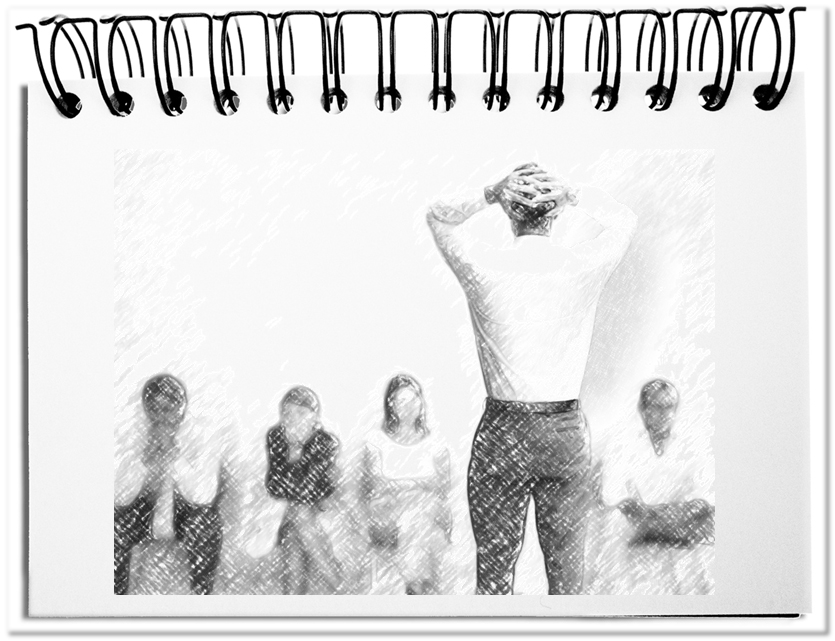
Real leaders

Even if the society, the economy or the enterprise are blamed for drawbacks, it is always people, who are creating, not necessarily conscious, negative circumstances. Examples are the leaders. The behavior of highly paid superiors is frequently copied by the employees. Since the fish stinks from the head, the negative properties are mainly conveyed.

  • Missing authority of the boss’s results in long-winded decision making.
  • Postponing decisions paralyses progress.
  • Missing goals create contradictory activities.
  • Blindness and deafness to the feedbacks of the employees result in a loss of confidence.

As a consequence, incongruent leadership style undermines the authority and prevents results.

Führungskraft

The employees are asked in the course of the introduction of Entrepreneurship to think and act like an enterpriser. At the same time the leadership positions are reduced to simple steps on the career ladders. The actual task of management goes in this case by the board. Employees have to fill out the role of an ‚executive’ faster than ever before, without being in the position to develop the following characteristics.

  • Power
    The takeover of a team leader position suggests that thereby the necessary power and sufficient resources are automatically available. On the one hand the purely formal transfer of power is not enough in times of increasing employee participation, in order to exert influence as well as to get acceptance and commitment from the employees. On the other hand the higher leadership levels keep the control of the planning and the budgets. Top managers decide nowadays the smallest activities and expenditures personally. For middle management only remains the title.
  • Decisiveness
    An important function of bosses it is to seize the take decisions that cannot be decided on the subordinated level. In the scope of responsibility goals should be specified that fit within the superordinate frameworks. Additionally, alternatives have to be selected, the application of resources controlled, social conflicts dissolved as well as the fundamental structure of the job positions and the procedures defined. In order to fill out the role, the executives need decisiveness. This requires decisions that are made timely and conclusive.
  • Goals
    The published plans are the basis for the staff and the other participants. The goals must fit into the big picture, but they should leave enough flexibility for the activities of the employees. Therefore the executives must make the overview available that shows the direction to the operational activities. Leaders are the specialists for the political aspects, the control of the area, the availability of the relevant information and for the control of cooperation.
  • Attentiveness
    The most important ability of the top management is the attention that is used to observe the occurrences – particularly the observation of the relationships between the employees, between employees and customers as well as between employees and suppliers. They provide the basis for the improvement measures of co-operation. Since these social aspects mostly happen on an unconscious, subliminal level, it needs a lot of instinct based on experience.
  • Style
    There is not the one, right style of leadership, but different approaches that depend on the country-specific culture, the role models of the enterprise and the personality of the leader. This might be authoritarian, democratic or liberal leadership approaches and/or any mixture of the three. It is crucial that the selected style is constantly used. The employees receive thereby an example for their orientation.

You can see in large companies more and more that the executives have promising titles, but do not show in everyday business the above characteristics. This explains the search for trainings concerning charisma, acceptance and commitment. They should enforce the self-confidence of the responsible people. Unfortunately decisiveness does not evolve, if decisions are always made on the superior levels. The ever more evolving micro management results at the same time in the fact that subordinated executives do not reflect any more about strategy, goals and activities in their responsibility. Since guidance in its actual sense does not take place, the question about the personal style of leadership will one day not appear any more, since the high-level executive is lowered to the role of a messenger of the superordinate levels.

Bottom line: The middle management mutate into highly paid employees, who

  • do not have the previous authority,
  • actually don’t need decisiveness,
  • have modest room for acting,
  • distribute only insensitively orders and
  • do not unfold a personal style.

In principle, these are good basic conditions in order to create lean structures. Unfortunately the enterprises undermine these approaches, by proclaiming flat structures. At the same time they create hierarchies that subordinate one executive to another of the same level. Formally, there will be fewer levels, than expected. The resulting ‘kings without land’, who, without budget and power, are not allowed to make their own decisions, turn into shadows of real leaders.