
Archiv der Kategorie: Management

Here you find topics like planning, organization and leadership.

More attention on the personal contribution

The larger an organization, the more it is built upon the division of labor. Tasks are distributed not only horizontally from one function to another but also vertically – employees and leaders of teams, departments, divisions, businesses unit, and corporations. As in a snowball system, superiors consider the performances of all subordinates as its share of the whole. They infer the rationale for paying itself up to 273 times the average salary. But without considering that every role, no matter how small, has a decisive share in the overall result. Let us remember the story of the lost nail.

A blacksmith forgot a nail while shoeing a horse, causing a horseshoe to fall off, by which the horse’s leg broke and threw off the riding messenger, who was thus unable to deliver the message, causing the army to suffer defeat and ultimately losing the war and due to it the kingdom.

And only because the blacksmith forgot a nail. It was the blacksmith’s contribution that had unforeseen consequences.
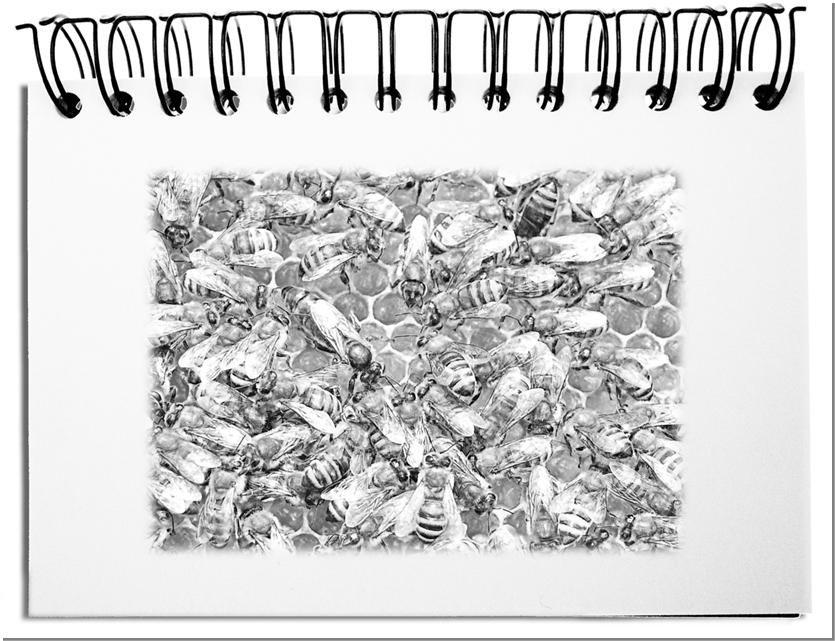
People are not machines. This effectuates that the individual contributions turn out differently. These performances are influenced by their biography, traits, passions, and daily conditions. Further differences result from the respective circumstances, i.e., the time, speed, focus, result, quality, outcomes, diligence, comprehensiveness, and perseverance. However, the basis is the individual part built on practical experience, existing knowledge, commitment, and appreciation by superiors and colleagues.

  • Practical experience
    The most important is the practical experience, i.e., insights acquired through the consistent routine (regular application of obtained findings, mental models, and experiences through Learning-by-doing). If we see something new, we memorize only 20% – if we hear it, 30%; if we see and hear, 50%; if we see and hear and talk, 70%; and if we do it, 90%. Practical exercises create in active training or learning-on-the-job, informal learning in vocational weekdays, agile skills in the long term. Unlike theoretical training, personal application anchors skills for long-term recall. Yet, companies cannot assess these experiences, as their effectiveness only becomes apparent later in action.
  • Certified knowledge
    Originally, monastic and cathedral schools and later the early universities, such as Bologna, Oxford, Heidelberg, and Harvard, had a holistic approach, similar to vocational apprenticeship – young people studied, that is, observe, investigate, and engage in-depth with the world. After six years of research and learning, they attained the lowest degree, the baccalaureate. After another twelve years, they earned the magister degree or doctorate – and this with an average life expectancy of 32 years. This required various oaths as well as a private and a public exam. Today, a study is more like a continuation of schooling and predominantly limited to small areas of knowledge – although interdisciplinary courses, such as cognitive science, systems theory, or psycholinguistics, are making the boundaries between faculties more permeable. The purpose is primarily to confirm temporary knowledge, i.e., to recall a specific knowledge, at one point in time as completely as possible. In addition, the speed by which new knowledge and standards emerge has led to institutions offering training and grant certifications. In contrast to practical experience, theoretical training provides the content of a knowledge area and confirms, through fitting exams, that students have memorized a particular material. This is practical for companies, as they receive the final certificates, „objective“ proof of the skills for selecting employees.
  • Decisive commitment
    Regardless of the experience and knowledge available, the personal contribution is determined by the commitment of individuals. Attitudes toward the company drive the engagement and are composed of emotional attachment, acceptance of the corporate governance, and perceived advantages. Even with the best conditions, indifferent personalities deliver worse results than committed ones with less qualification. This explains the efforts made to bind the low-commitment participants more closely to the company with coaching, team building, and participation in decision-making. For a company, this means, above all, winning leaders for the human image of Theory Y or even experimenting with entirely new work models to make it easier for the workforce to commit and thus deliver better results.
  • Appreciated performances
    The well-being of the members of a company results from respectful interaction with each other. In contrast, negative feedback, unfairness, and unequal treatment damage the satisfaction and self-esteem of ALL involved people. Especially micromanagers, who disempower employees by interfering in the smallest details, changing results, and not developing appreciation undermine commitment. As a result, those who actually work, leave the fulfillment of the task to these supervisors, who feel affirmed by the growing number of errors that they have to do everything by themselves – a vicious circle (see also Theory X). For companies, this demands developing an appropriate mindset (e.g., Theory Y). In the future, processes that follow a strict workflow will be shifted into IT. For the leaders remain the „human“ tasks to serve the committed employees (Servant Leadership).

Bottom line: The personal contribution of the employees results from their doing, i.e., the ideas, actions, and results. This is supported by relevant experiences, acquired knowledge, and the desire to contribute maximally. When the performers can also expect that their part of the whole is appreciated, you have the best conditions to deliver top results. Since people are not programmable entities, who, once they are provided with business processes, rules and assignments, always function the same way, we need to put more attention on their actual contributions. This requires leaders who follow the activities mindfully. The smaller the company, the greater the likelihood that there is not enough time to take care of leadership skills. Therefore, these companies need to start developing a contemporary mindset. For example, every corporate member must develop entrepreneurship, encouraging followers of Theory Y and eliminating those of Theory X. The personal contribution of EVERYONE is the difference that makes the difference.
Decision-making reloaded

Incredibly, we make 20,000 decisions a day. With sixteen hours that we spend every day awake, these are about 20 decisions per minute. In the last minute, you may have decided to:

  • open your IT device,
  • choose between email and social media,
  • prefer one link over another when skimming,
  • prefer the title Decision reloaded to a Forbes List 2021,
  • open this post
  • skip the first paragraph,
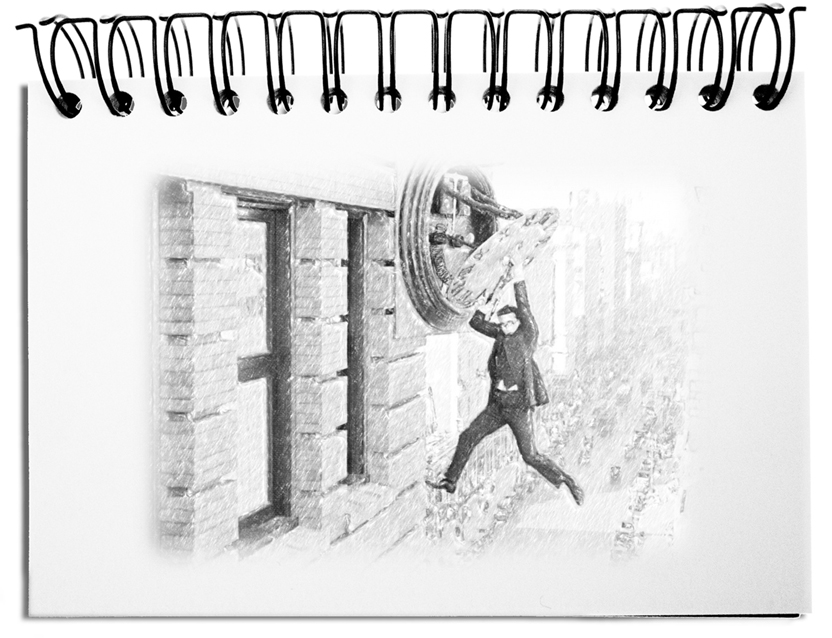
  • look at the picture,
  • go back to the beginning of the post,
  • believe or not that we make 20,000 decisions a day,
  • read on with this assumption,
  • believe that these are 20 decisions per minute,
  • continue reading on this basis for the time being,
  • ignore up the ringing phone,
  • take a look at the rest of the article,
  • continue reading based on the remarkable keywords,
  • delay your previous activity,
  • read on despite this list,
  • understand that decisions are an essential part for you, even if not 20 times a minute,
  • use the topic for yourself,
  • recognize that 20 decisions have taken place in the last minute.

You have likely thought about similar considerations in the past minute – mostly unconsciously. With such a frequent activity, it makes sense to refresh our understanding of decision-making.

However, the emphasis of this post is not on the small decisions that we continually make unconsciously, but we turn to the big ones that have far-reaching effects and are made consciously. For this, we look at the time span and the components of a decision, the alternatives, the lasting of the impact, and the responsible parties.

  • Deciding – an act or rather a process?
    The blow of the hammer of a judge or auctioneer is the moment when a decision is concluded. Through this official act of an authorized person, a decision enters into force, or a final choice is made. The decision-making process needs time to work out the components, weigh them against each other, establish them with a binding act and evaluate the effects afterward.
    Depending on the leadership style, (de)centralized top-down vs. bottom-up, leaders satisfy their mindset. The process-oriented decisions, which should turn those affected into participants and make implementation more likely, are the more viable ones.
  • The moment of decision
    The „right“ moment is a matter of belief. There are the reactive leaders, who make decisions as late as possible, if at all – There is nothing left but to rectify the situation. Then there are the active ones who roll up their sleeves and solve a difficulty directly – Where is the problem? What can we do? We do it like this. Then there are the pro-actives who try to foresee difficulties with a far-reaching radar and make preventive decisions – We investigate these developments and make sure that nothing unforeseen happens. And eventually, the passive decision-makers (what an oxymoron), who follow the illusion that by avoiding a decision, they would not decide – We agreed after lengthy negotiations that we should definitely think about when we could meet to discuss how to proceed.
    There is no one right moment to decide what must/should/could be determined. The late decision has more information, but follow-up problems are already happening. A timely decision is the last chance to prevent the consequences. The proactive ones lack information and may deal with obstacles that never occur. The important thing is that a decision is made at all.
  • Components of a decision
    Reducing a decision to one act does not meet its complexity. It is the interplay of several aspects that together constitute a decision. It starts with the triggers that determine the pressure to decide – e.g., deadlines, imminent danger, stakeholder demands. Often several goals have to be reconciled with each other. The search for solutions becomes more difficult due to a lack of information about the past, present, and future. Since there are always many options to choose from, at least three should be worked out. To avoid surprises and unintended consequences, the possible impacts must be anticipated, e.g., through appropriate scenarios in which the alternatives are „tested“. To clarify the role of the decision-makers, they need outlined tasks, competencies, in the sense of agency, and a firmly outlined responsibility that defines the consequences for the decision-makers.
    These components take time, i.e., the decision-making process.
  • Decision alternatives
    The number and the spread of options are an essential aspect of decision-making. Let us consider inevitable decisions where we believe we have no choice, although there is always a choice between one action or no action. This means that we always have at least two alternatives – even if doing nothing is always the worse alternative.
    Experienced executives know that there are always at least three options to take full advantage of the available space.
  • Half-life of decisions
    Let us imagine we would be standing on a balcony. A conflagration is blazing in the flat beside us. We can hold out on the balcony for fear of jumping – and burn to death. Or we can jump down from the second floor – in the worst case, we break our necks. Less decisive people will say it does not matter what they choose. However, there is a higher probability of survival in the jump. In any case, the NECESSARY decision has an infinite half-life. You either immediately end up in eternal rest or continue to live as if nothing had happened. With all other decisions that have no final consequences, you can always revise your decision afterward.
    The need for action increases according to the importance and the urgency. The more people affected, the greater the reach, the more constant the consequences, and the greater the costs, the better you have to prepare and evaluate the decisions.
  • Who decides?
    A decision has already been preceded by another significant one – Who decides? The choice of who decides is the responsibility of the orderers – e.g., a steering committee or the recipients. And before that, the question arises, who chooses this circle. And so on. Those assigned, who do not want to be burdened with responsibility, call for public decision-making and thus delegate responsibility and consequences to the majority. According to the Highlander principle (There can only be one), however, one specific person should decide, otherwise, there is no clear accountability. Nobody decides when several decide. In this case, everyone is collectively to blame, and thus no one.
    The unambiguous assignment of one person increases the quality of a decision.

Bottom line: Until now, the personal income also depended on decision-making because decision-makers were placed at management levels. In the course of Theory Y, agility, and servant leadership, the detached leaders become obsolete. They are replaced by the employees on-site. However, this does not change the decision-making process, the choice of the moment, the building blocks, the need for alternatives, the half-life, and the clear mandate despite decision-makers at all levels. Besides the doing, decision-making is the most crucial element in business and the last resort for the leaders, who are becoming obsolete with the current collaboration models.