
Archiv der Kategorie: Management

Here you find topics like planning, organization and leadership.

The blind spot of sales promotion

The chances of the Internet make everyone a possible vendor of products and services. It leads to confusing offers and a lack of demand in your outcomes. Therefore, you fight with all means for awareness. To stand out from the flood of competitors, legions of advisers offer help regarding Social Media, SEO, Chat Bots, Affiliate, Influencer and Online Marketing, and more. They promise a growing sales funnel and thus make more revenue. However, all these means are void as long as their vie for leads drive the sending offers at any cost as well as the SEO design does not create anything but ongoing work, charges, and the loss of self-confidence in your deliverables.

Too many PR efforts create a blind spot that even the best promotional efforts cannot address – the inadequate design of your deliverables.

  • Focus on the wrong thing – better sharpen the product range
    There is no question that promotion has a significant impact on sales. However, Henry Ford already knew: You cannot build up a reputation on what you are going to do. In our fast-paced times, entrepreneurs seem to put the cart before the horse. They design mesmerizing promotions for an offer that is stuck in the providers‘ minds. Coming up with the slogan consumes time and energy – remember, without having a presentable deliverable. At the same time, customers pay for your offer – be aware, they are not willing to pay more for something due to the effort required for sales promotion.
    For this reason: Before you get bogged down in advertising, make your products and services sellable – the baker first makes the rolls before praising them.
  • Distraction through SEO – better conduct personal customer conversations
    The real purpose of advertising is to increase sales – not to attract additional visitors to your website. The presumption that the clever design of the website and especially the keywords will generate further business through the increased number of visitors is more wish than reality. A car repair shop with limited parking spaces and a fixed number of employees cannot process more vehicles at will. Therefore it does not need more traffic on the website, but rather more interaction with its regular customers. In contrast, an advisory office can better adapt to a growing number of orders. Through clever marketing, it taps into and ultimately serves new customer groups and a more extensive scope. However, it is futile to advertise as long as the deliverables are not prepared coherently. SEO is a one-way street that does not provide new insights. Only through the mutual exchange with your customers, you learn where and how you can become better.
    For this reason: Save SEO time and money and instead involve the customers in the further development of your deliverables – you discover your weaknesses and can offer at the same time additional and higher-quality outcomes.
  • Tough in presentation, banal in matter
    According to Microsoft, the attention span of Internet users is eight seconds – then they move on to the next page. However, this duration says nothing about whether a link was clicked by chance or people searched for exactly your content. You should be aware that you only read this bullet point up to here and only understand it 70-80%. Potential buyers skim the content for their keywords. If they do not find what they are looking for or are distracted by something else, they move on and are gone. However, if you catch their attention, they start reading carefully. After all, they want to make an investment – the more it costs, the longer they are ready to read the enticing explanations that clarify your skills. The superficial appearance of most web pages arouses doubts in readers – all show and no substance. By describing your deliverables too shallowly, you have missed the chance to win a customer who is already with you. Stick to the old design rule Form follows Function – sharpen your ax before you chop wood.
    For this reason: No one judges a car only by its body – make sure that all the components of your offering fit together and perform as expected.

Bottom line: Understandably, you struggle to create an attractive external image – especially if you are not working to capacity. However, the problem is rarely a weak web presence. Convincing websites are available off the shelf. A few clicks and the company colors and logo are incorporated. The good news is that these standards make it easy for customers to navigate your offerings. If you are using the same headlines repeatedly (e.g., Better – Faster – Farther – Cheaper), you are not setting yourself apart from your competitors. The difference that makes the difference is a description of your unique capabilities. If this view on the tip of the iceberg of your achievements is then based on appropriately prepared procedures, the moment has come to apply skillfully. In this case, Henry Ford’s insight counts: Half the money I spend on advertising is waste, and the problem is I do not know which half. However, get into the blind spot of your sales promotion first – the products and services. That is what your customers are ready to pay for.
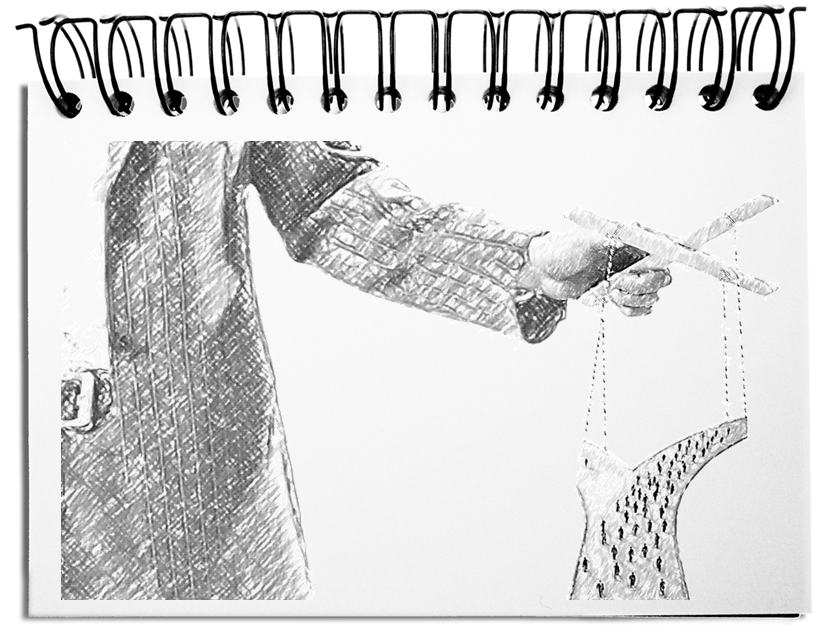
Leading in this or in a different way

Not all superiors want to take responsibility but rather earn more. In the absence of expert development paths, they have no choice but to assume a position that replaces their expert with leadership requirements: above all, leading and promoting themselves and others; building and maintaining relationships; developing images of the future and making decisions; solving problems; accepting results. Since leaders are multipliers, their convictions spread through their sphere of influence, e.g.

  • Their conception of people: humans are unwilling (Theory X), or humans are motivated (Theory Y)
  • Their worldview: the world is a machine or an organism
  • Their leadership understanding: top-down versus bottom-up versus inside-out
  • Their contribution: determine direction versus generate momentum versus letting go

Leadership is often reduced to the CHARISMATIC UNIVERSAL GENIUS, whose abilities are innate. In this context, a look at the book Managing, Performing, Living by Fredmund Malik is recommended. He shifts the focus to the leader’s effectiveness through rules and principles and a set of tasks, tools, and communication.

In this blog post, you discover four roles you, as a careful observer, find in companies.

  • Principals
    The days of Louis XIV are over. Nevertheless, authoritarian leadership styles that rule from top to bottom still exist. Guidelines are dictated. Politically correct, they no longer act as authoritarian despots but as purchasers. They expect duty fulfillment without opposition or resistance. The absolutistic rulers of the past had little data available for decision-making. Now, a flood of insights is open to all parties. As a result, today’s potentates run the risk of turning out to be micromanagers who interfere in the details of execution.
    The focus is on order. This role is influential with precise specifications of the content, timeframe, and available budget. Those who manage to suppress their autocratic behavior can achieve a lot.
  • Administrators
    The times of carefully erected corporations are coming to an end. Even if the size is still the goal, decision-makers are now learning that they need new delegation approaches. Ashby’s Law of Requisite Variety has taught us that the diversity of answers must be greater than those of the questions raised. The ordinarily rigid organization of structures and processes gets replaced by dynamic units of about 150 participants who act to a large extent autonomously in the interest of the whole. The typical administration obstructs this flexibility since its regulations have no chance to justify all possible cases.
    The roles, the TARs (task, authorities and responsibilities) are at the center. The aptitude in defining roles ensures the balance between commonality and freedom. Memorable governance creates the overarching mindset. The appropriate degree of specifications and the generous evaluation of the fulfillment are crucial.
  • Salespeople
    The days of all-around geniuses, who master all aspects of their company, are over. In the absence of expertise, impressive companies exploit their creative sources – e.g., when 3M allocates 10% of its working time to the creative will of everybody, or when Google gives its employees the freedom to generate new offerings ever through cross-functional collaboration, a refreshing management style and a focus on results.
    This is primarily about solutions that need the chance to prove themselves in the marketplace. For this to happen, extended leeway must be created above all, which provides ample means to turn ideas into results. In this environment, tolerance and openness, on the one hand, and clever marketing are necessary to convert the existing possibilities into advantages.
  • Servants
    The days of the top-down chain of command have passed with the general availability of data. Knowledge is power has lost its meaning as groups ALWAYS know more than individuals. Accordingly, the hierarchy has been turned upside down. Leadership levels now serve their assigned units (i.e., Servant Leadership). To get the right thing done right at the point of action, individuals need broad authority and, when difficulties arise, support from their leaders.
    The focus lies on the impact of offerings – e.g., noticeable quality, friendliness at the Point of Sale, and customer satisfaction. To do this, employees must be capable of acting – i.e., to have sufficient resources, expertise, and support. For this role, the leaders should have empathy, understanding, and presence.

Bottom line: Traditional leadership approaches, i.e., autocratic, top-down reign, excessive bureaucracy, or technocratic silo organizations no longer fit the fast-paced VUKA world. How the roles of the future will look is up to your imagination. The functions described are distributed along the axes of decision-making direction (top-down vs. bottom-up) and communication style (one-way vs. either way). They are intended to make today’s leaders consider their role and provide impulses to rethink their working style. In the end, everyone decides whether they want to lead in this or in a different way.