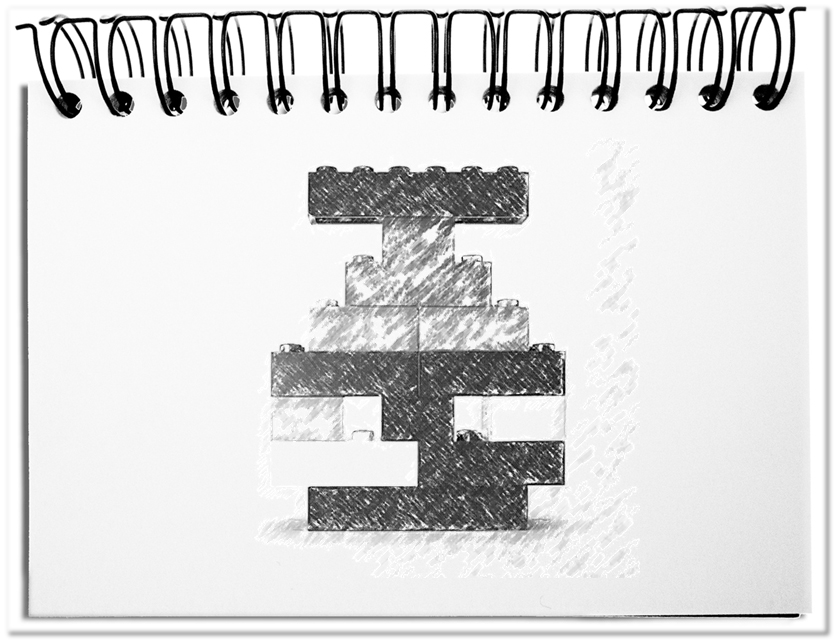
In the 90s of the last millennium Business Process Reengineering, briefly BPR, swept over large enterprises. Companies streamlined initially in-house and eventually inter-company processes as part of lean management. This wave has weakened in English-language environment after a hype in the second half of the nineties (see Ngram: http://ow.ly/yJq6p). The interest in the business process rose continuously in German-speaking countries (see Ngram: http://ow.ly/yJr5n). Everybody talks regularly of processes, workflows and continuous process improvement without the defined features that make the sequence to a process. The process – the unknown entity.
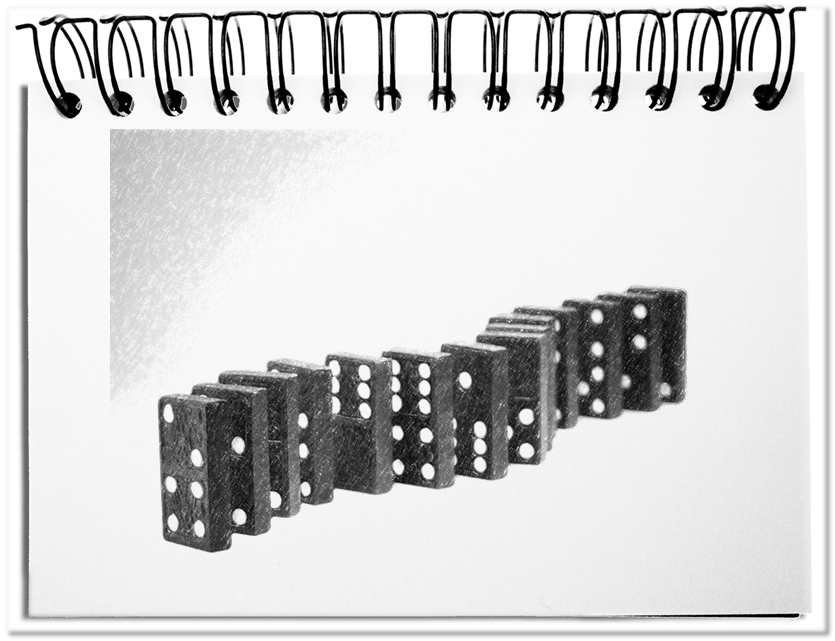
The process-oriented description of functions and/or activities, the so-called process, consists of individual steps. Those again are functions that consist of individual steps, and so on, independent of the format that is used for depiction *1. The documentation of the sequences facilitates the planning, the realization, the monitoring and the redesigning. Few people are aware of the fact that the description of the process is not the reality. The same way as thematic maps only provide a look at geological, political or economical details, the process consists of relevant steps. Additionally, a process has the following, formal criteria.
A process…
- … needs a defined start and a defined end. The more vague the start or end is, the worse the quality of the description.
- … runs WITHOUT interruption from the beginning to the end. As soon as a sequence is interrupted, the activities stop inadvertently for an indefinite period. Two processes with separate start and end are created.
- … is repeatable. The purpose of process development is that a procedure functions again and again reliably for all participants. One-time procedures are coordinated at run-time, since the ex-ante effort can in no way be compared to the benefit.
- … runs across the borders of different areas of responsibility. Within a responsibility, the description does very little good, since the employees act independently.
- … has defined rules. All involved people always have to know what, how, from whom, with which results, to whom have to be delivered, in order to fulfill the purpose of the function. Deviations jeopardize the outcomes.
- … has a decision maker. Since the process runs across independent responsibilities, it is necessary that the decision for the process be bundled in one hand, so that the process goals are not undermined by other department goals.
As soon as you examine a business process the next time, look for the features mentioned. If one is missing, there is a need for optimization.
*1 The question of the appropriate detailing level will be discussed on another occasion.