
Archiv der Kategorie: English

Out of the liability

The pressure on decision makers is increasing. The decisions of the board and the managing directors result more and more frequently in criminal convictions. Compliance and potential breaches of duty threaten executives. As long as things go well and no illegal crimes are existing, there is no danger. However, as soon as success is missing, decision makers should expect that they could be sued by their own company. What are the options, in order to get out of the liability?
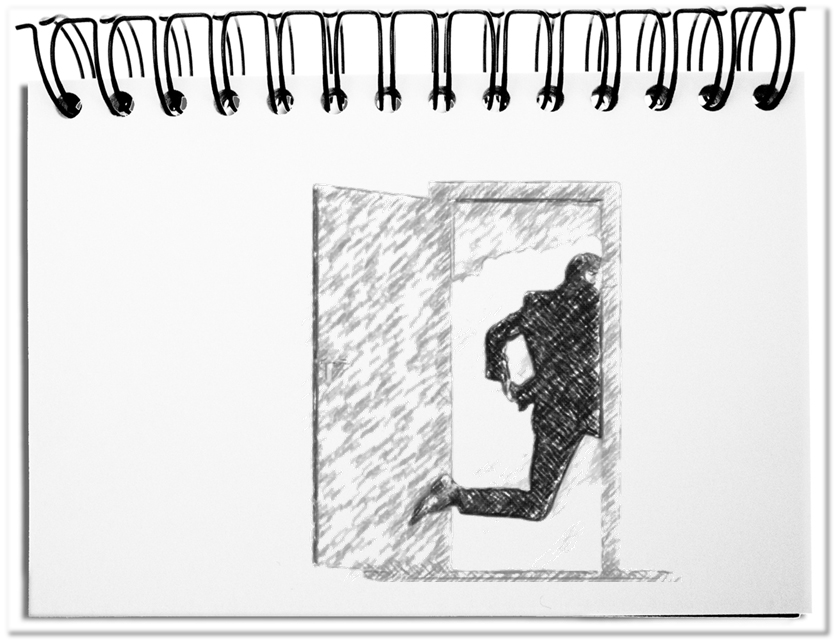
Flucht

There is always a residual risk that no one can escape. At least you can reduce the risk with the following counter measures.

  • Governance
    Documented specifications show the effort to enforce proper behavior. This is underlined by continuous emphasis of rules in meetings and events.
  • Subcontractors
    The use of subcontractors enables the transfer of the operational responsibility. Thereby you can bypass liability for employees that could result from labor and works agreements. Also the risk of mismanagement is passed in the first place to the subcontractor (e.g. the Doha Express Highway – Bilfinger versus Tubin; the oil platform Deepwater Horizon – BP versus Transocean).
  • Outsource critical fields
    In the balance you can separate risk-loaded areas from the current business. A good example is the foundation of bad banks, in which banks moved risky, bad papers during the crisis, whereby the risk was passed on to taxpayers. Most current example to creep out of the liability is the attempt to extract risky parts from the actual enterprise EON. By splitting off the dirty technologies coal, atom and gas, with all its risks, EON prepares the way for passing the follow-up costs of the aftercare to the German taxpayers.
  • Shift attention
    It is smart to divert the attention to another topic in case that one actually has to take care of the problem. The first impulse is surely the nomination of a scapegoat. Distraction provides also complaining about drastic consequences and the need to prevent it. Celebrating results that are already achieved always works in any case.
  • Escaping
    In the past, it has proven especially effective to sell the critical enterprises (like in the case of Bhopal the sale of Union Carbide to Dow Chemical) or the development of a new strategy that makes the old problems obsolete (as in case of founding a new airline by Lufthansa). A personal strategy could be to change the job.
  • Confession
    To admit failure based on leaked out circumstances is always the ideal step for damage control. In any case attempts to hush up something will sooner or later become uncovered and creates the impression of bad conscience. A confession also reduces the height of the punishment for legal misdemeanors.

Insurers already offer liability manager insurances in case of emergency. This D&O*-insurance covers mistakes that are not committed deliberately.

Bottom line: On the one hand new styles of leadership result in a larger participation of the employees during decision making. At the same time the bosses are held personally accountable. Therefore, one has to consider that the decision for taking over a leadership position is not only determined by the desire for m ore money, but also by the willingness and the ability to take risks. With the measures above the liability can be minimized.

*) D&O = Directors and Officers
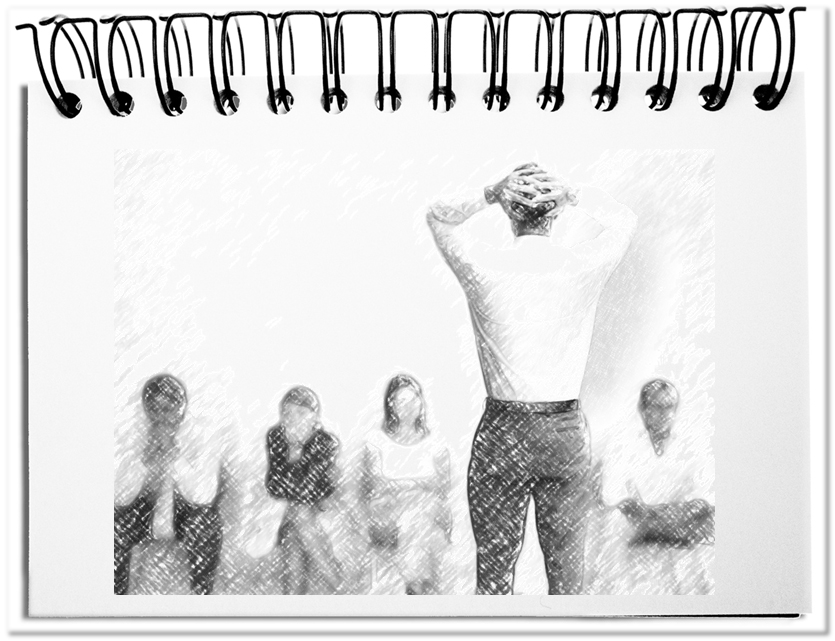
Real leaders

Even if the society, the economy or the enterprise are blamed for drawbacks, it is always people, who are creating, not necessarily conscious, negative circumstances. Examples are the leaders. The behavior of highly paid superiors is frequently copied by the employees. Since the fish stinks from the head, the negative properties are mainly conveyed.

  • Missing authority of the boss’s results in long-winded decision making.
  • Postponing decisions paralyses progress.
  • Missing goals create contradictory activities.
  • Blindness and deafness to the feedbacks of the employees result in a loss of confidence.

As a consequence, incongruent leadership style undermines the authority and prevents results.

Führungskraft

The employees are asked in the course of the introduction of Entrepreneurship to think and act like an enterpriser. At the same time the leadership positions are reduced to simple steps on the career ladders. The actual task of management goes in this case by the board. Employees have to fill out the role of an ‚executive’ faster than ever before, without being in the position to develop the following characteristics.

  • Power
    The takeover of a team leader position suggests that thereby the necessary power and sufficient resources are automatically available. On the one hand the purely formal transfer of power is not enough in times of increasing employee participation, in order to exert influence as well as to get acceptance and commitment from the employees. On the other hand the higher leadership levels keep the control of the planning and the budgets. Top managers decide nowadays the smallest activities and expenditures personally. For middle management only remains the title.
  • Decisiveness
    An important function of bosses it is to seize the take decisions that cannot be decided on the subordinated level. In the scope of responsibility goals should be specified that fit within the superordinate frameworks. Additionally, alternatives have to be selected, the application of resources controlled, social conflicts dissolved as well as the fundamental structure of the job positions and the procedures defined. In order to fill out the role, the executives need decisiveness. This requires decisions that are made timely and conclusive.
  • Goals
    The published plans are the basis for the staff and the other participants. The goals must fit into the big picture, but they should leave enough flexibility for the activities of the employees. Therefore the executives must make the overview available that shows the direction to the operational activities. Leaders are the specialists for the political aspects, the control of the area, the availability of the relevant information and for the control of cooperation.
  • Attentiveness
    The most important ability of the top management is the attention that is used to observe the occurrences – particularly the observation of the relationships between the employees, between employees and customers as well as between employees and suppliers. They provide the basis for the improvement measures of co-operation. Since these social aspects mostly happen on an unconscious, subliminal level, it needs a lot of instinct based on experience.
  • Style
    There is not the one, right style of leadership, but different approaches that depend on the country-specific culture, the role models of the enterprise and the personality of the leader. This might be authoritarian, democratic or liberal leadership approaches and/or any mixture of the three. It is crucial that the selected style is constantly used. The employees receive thereby an example for their orientation.

You can see in large companies more and more that the executives have promising titles, but do not show in everyday business the above characteristics. This explains the search for trainings concerning charisma, acceptance and commitment. They should enforce the self-confidence of the responsible people. Unfortunately decisiveness does not evolve, if decisions are always made on the superior levels. The ever more evolving micro management results at the same time in the fact that subordinated executives do not reflect any more about strategy, goals and activities in their responsibility. Since guidance in its actual sense does not take place, the question about the personal style of leadership will one day not appear any more, since the high-level executive is lowered to the role of a messenger of the superordinate levels.

Bottom line: The middle management mutate into highly paid employees, who

  • do not have the previous authority,
  • actually don’t need decisiveness,
  • have modest room for acting,
  • distribute only insensitively orders and
  • do not unfold a personal style.

In principle, these are good basic conditions in order to create lean structures. Unfortunately the enterprises undermine these approaches, by proclaiming flat structures. At the same time they create hierarchies that subordinate one executive to another of the same level. Formally, there will be fewer levels, than expected. The resulting ‘kings without land’, who, without budget and power, are not allowed to make their own decisions, turn into shadows of real leaders.