
Archiv der Kategorie: English

The process – the unknown entity

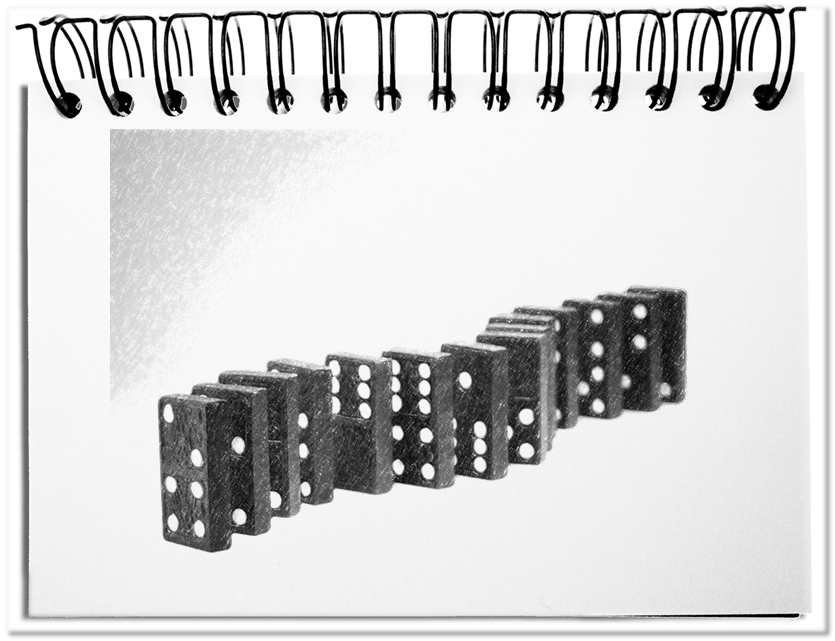
In the 90s of the last millennium Business Process Reengineering, briefly BPR, swept over large enterprises. Companies streamlined initially in-house and eventually inter-company processes as part of lean management. This wave has weakened in English-language environment after a hype in the second half of the nineties (see Ngram: http://ow.ly/yJq6p). The interest in the business process rose continuously in German-speaking countries (see Ngram: http://ow.ly/yJr5n). Everybody talks regularly of processes, workflows and continuous process improvement without the defined features that make the sequence to a process. The process – the unknown entity.
Prozess

The process-oriented description of functions and/or activities, the so-called process, consists of individual steps. Those again are functions that consist of individual steps, and so on, independent of the format that is used for depiction *1. The documentation of the sequences facilitates the planning, the realization, the monitoring and the redesigning. Few people are aware of the fact that the description of the process is not the reality. The same way as thematic maps only provide a look at geological, political or economical details, the process consists of relevant steps. Additionally, a process has the following, formal criteria.

A process…

  • … needs a defined start and a defined end. The more vague the start or end is, the worse the quality of the description.
  • … runs WITHOUT interruption from the beginning to the end. As soon as a sequence is interrupted, the activities stop inadvertently for an indefinite period. Two processes with separate start and end are created.
  • … is repeatable. The purpose of process development is that a procedure functions again and again reliably for all participants. One-time procedures are coordinated at run-time, since the ex-ante effort can in no way be compared to the benefit.
  • … runs across the borders of different areas of responsibility. Within a responsibility, the description does very little good, since the employees act independently.
  • … has defined rules. All involved people always have to know what, how, from whom, with which results, to whom have to be delivered, in order to fulfill the purpose of the function. Deviations jeopardize the outcomes.
  • … has a decision maker. Since the process runs across independent responsibilities, it is necessary that the decision for the process be bundled in one hand, so that the process goals are not undermined by other department goals.

As soon as you examine a business process the next time, look for the features mentioned. If one is missing, there is a need for optimization.

*1 The question of the appropriate detailing level will be discussed on another occasion.
Economize without cutback

Product- and service-oriented ventures work based on existing resources – material, information, capital and infrastructure as well as employees. The spontaneous reaction to missing results is the reduction of costs, as if it would be possible to get athletes into shape with deprivation of food and water. Yet, it needs purposeful expenditures that strengthen the venture and make fit again. There are inventive approaches that economize without cutback.

Bleistifte

The smart procurement policy as well as the use of onboard means and relics offer various possibilities.

Smart procurement policy
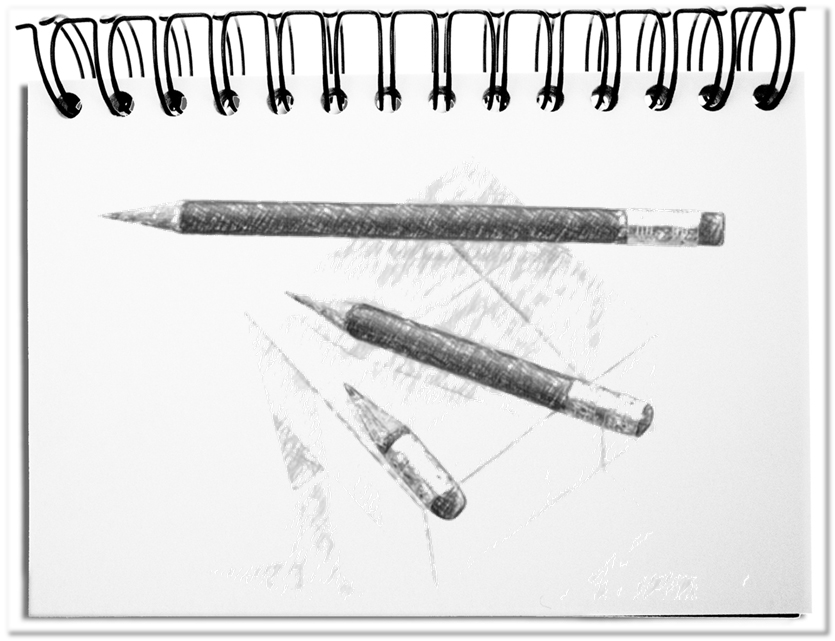
The first reaction to a need with the acquired consumer mentality is the search for the newest, most efficient, and most interesting one (see illustration: the longest pencil). In the past, the buyers superelevate the requirements fanciless and pressed the price below the pain threshold of the suppliers, in order to achieve the apparently largest advantage for the company. Suppliers at the edge of efficiency are the effect. However, this results eventually in a sinking quality of the procured goods. Perhaps this is the reason for the growing number and growing size of recalls in the automotive industry.
Smart procurement policy creates additional savings. It gets possible, if the operative units

  • optimize their design,
  • describe more exactly their needs ,
  • estimate the order quantities less generously,
  • reduce the waste as well as
  • co-operate more aligned with procurement department.

Onboard means
At least since the economic crisis in 2008, more and more enterprises remember the existing onboard means (see illustration: the middle pencil). After discontinuing internal activities through outsourcing and temporary work, the remaining, internal employees specialized in co-ordination. This makes it today more difficult to take back the tasks that were outsourced within the last decades, since the appropriate abilities were unlearned. Costs can be saved, by examining and re-assigning existing resources, and to again training the missing abilities. The onboard means support, by

  • redirecting the organizational culture to the customer,
  • improving and accelerating processes holistically,
  • avoiding unnecessary activities,
  • waiving bureaucratic intermediate results,
  • redistributing existing means,
  • planning with Zero-base budgeting, and
  • dissolving traditional structures.

Relics
Leftovers of earlier business models are resources that contributed over long period to success, but, in the meantime, are judged as not to being any longer necessary (see illustration: that pencil-stub). The change from onboard means to the leftover takes place gradually. Even most purposeful means of production reach eventually the end of their life cycle. Good leadership looks regularly for the status classification of each resource. The encountered relics have the following difficulties.

  • They do not serve any more the original purpose,
  • require expensive administration,
  • need unnecessary space, produce constantly maintenance costs and
  • put a strain on the balance sheet.

However, this does not mean that these relics could not provide contribution. Through smart application, you are able to

  • continue to use remaining functionalities,
  • reuse parts, and
  • save costs through dissolution of the definitely unusable inventory.

Afterthoughts:

All we need for savings are committed employees, who have extensive authority and steer their resources autonomously. Thus, for example, the following side effects can be prevented.

  • The decision-making and release processes that are highly administrative and multi-eyed, become obsolete through responsible acting of all involved ones.
  • The incapacitating and demotivation of managers and employees do not take place any more, as soon as tasks, authorities and responsibilities are in one hand.
  • Floods of required signatures for the highest escalation level can be omitted, since these tasks are consistently delegated to the place of action.

The much sworn entrepreneurship will be forgotten until the ailing patient gets to the intensive care unit. The good news is, as soon as the crisis arises, cost plays no more role, since the new target is survival. Then, the required means exceed previous savings. The bonsai approaches that nip any commitment of the employees in the bud do not make sense in the medium term.

Through smart procurement policy as well as the use of onboard means and relics, you do not only optimize your available resources, but you also increase your reputation, if you economize without cutback.