
Archiv der Kategorie: English

Reducing unintended consequences

The increasing complexity of tasks inevitably results in narrowing of the perspective of the acting persons. Increasing time and cost pressure prevent us from thinking outside the box. This increases the unintended consequences and burdens the desired effect. Nobody can afford to look beyond the box anymore. Good examples can be found in politics – when climate protection has to fight with nature conservation for space to install wind turbines; when the health of consumers is endangered by the extensive use of glyphosate in agriculture; when power supply lines are impeded by local residents; when traffic cannot be diverted because other disadvantages emerge; when temporary employment models and the promotion of the low-wage sector increase the risk of poverty now and in the future. The social need for further development is prevented by interests of few. That way, the parties involved are mutually depriving each other of a desirable future.
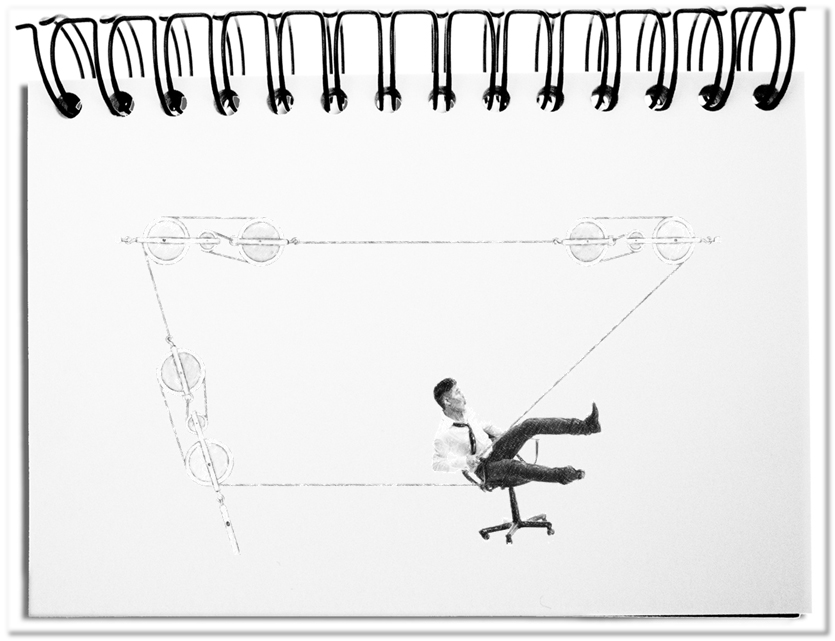
In order to secure creative leeway, the outcomes of measures must be recognized and dealt with at an early stage – whether they are intended or not or not even the direct consequence of the doing. They influence the acting persons through evolved or designed activities, the selected target groups or unforeseen third parties, i.e. everyone. The difficulties arise from a lack of foresight and awareness of the weaknesses, which are:

  • The missing overview
    It comes from the quality of the available data that, in the absence of current data from the future, are mainly extrapolated from the past into the future. On the other hand, the quantity and complexity of the available knowledge as well as the resulting butterfly effect make it impossible to provide reliable predictions.
  • The persistence of old solutions
    The habit of copying old things and reusing them in a rash way leads to solutions that no longer fit the current circumstances – like the administrative tasks that continue to be paper-based.
  • The suppress of existing interests
    The expectations of stakeholders remain unconsidered and, despite everything, influence the results – as soon as, above all, the decisive stakeholders are not involved.
  • The cognitive distortions of the participants
    The tendency of the actors to put their own goals above those of the whole leads to distortions that burden the result – if the participants do not align to each other

In order to get the weak points under control, it needs the conscious consideration of the task. It is already enough to go through the following steps.

  • To work out the initial situation with those concerned, so that everyone has a common view.
  • To describe in brief the purpose, in order to convey the raison d’être to the parties involved.
  • Anchoring a snapshot of the desired future with everyone so that they can act coherently on their own.
  • Prepare a comprehensive proceeding that avoids pragmatically restrictive approaches with their unwanted surprises.
  • Once the activities are prepared, they should be cross-checked: Are the actors known? Is the purpose described? Do the circumstances fit? Are the planned, visible actions appropriate?
  • If further influences are now being carefully sought during execution, unintended consequences should occur less frequently and identified stumbling blocks should be eliminated early on.

Bottom line: Today’s way of working leads to the situation that neither the time nor the means are available to think outside the box. This means that threatening surprises remain undetected for the time being and cannot be eliminated at an early stage. In order to better manage these unintended consequences, it is advisable to address the above-mentioned aspects: clarify the facts; make the purpose tangible; formulate the vision; keep the approach flexible; check the coherence of the measures; and eventually, work through everything carefully. In addition, the requirements of modern management continue to apply – clear objectives, defined roles, fixed time and cost budgets, etc. Looking at ALL the above elements, the unintended consequences should be reduced.

Stimulate recognition

Sometimes we let inspirations vanish unused that seem to come out of nowhere and strike like lightning, although we desperately search for them on another occasion. A eureka simply takes time to evolve. The paradoxical request to have a spontaneous idea prevents more than it provides ideas. With increasing agility, however, the expectation rises that employees will deliver solutions in short cycles, called sprints. This requires means to stimulate recognition.

An important engine for our capability to find something new is our perception. It is always active and receives stimuli at any time and simultaneously through any sense. Once you have become aware of the stimulating buttons, thinking creates results that are promising for the current task. Let’s take a look at the five channels (in short: VAKOG) that are available to us in order to simply attentively trigger the charging flashes of inspiration.

Visual (V)
At 40 Bit/sec, our vision is the sense with the greatest bandwidth. You can see that way the light of a candle across many kilometers in a dark night. With this sense we receive forms and colors. Use this channel as follows:

  • Change the viewing direction!
  • Surf through unknown websites, magazines and illustrated books!
  • Close your eyes for a minute and notice after opening the eyes the changes in the environment!
  • After that: Discover the emerging thoughts and connect them with your current task!

Auditive (A)
Our hearing still manages 30 Bit/sec. It allows us to hear the ticking of a clock from more than six meters. Hereby noises and rhythms, sounds and music as well as speech are perceived. This channel can be provoked as follows:

  • Close your eyes now or take a little walk and listen!
  • Find a sound that sticks out or that you like to hear!
  • Start a canned music and let your thoughts drift.
  • After that: Notice the emerging thoughts and connect them with the current task!

Kinesthetic (K)
We feel with our body 5 Bit/sec. This is enough to feel a bee’s wing falling on our cheek from 1cm. The fingertips distinguish surfaces and edges. Our body perceives fluctuations in temperature before we become aware of them. We feel the position and movement of our body and react with pains to thermal, mechanical and chemical stress. These channels can be used in the following way:

  • Just close your eyes and strike over a reachable surface!
  • Feel the temperature of a heat source near you or in the sun!
  • Stand up, take a lap and feel your body – the feet, the knees, the back, the shoulders, the neck and whatever!
  • After that: Notice the emerging thoughts and connect them with the current task!

Olfactory (O)
Even though our nose only has a speed of more than 1 Bit/sec. bandwidth, you can still smell a drop of perfume in a three-room apartment:

  • Close your eyes and sniff your surroundings!
  • Get up, take a walk through your immediate surroundings and pay attention to the smells in the different places!
  • Take a splash of perfume or enjoy the smell of fresh coffee!
  • After that: Notice the emerging thoughts and connect them with the current task!

Gustatory (G)
The taste buds work closely with the nose and have a bandwidth of 1 Bit/sec. With this we taste another teaspoon of sugar dissolved in 7.5 liter of water:

  • Close your eyes and taste your surroundings!
  • Use a small snack or coffee to bring about a change in your taste!
  • Try something completely different or even unloved!
  • After that: Notice the emerging thoughts and connect them with the current task!

Bottom line: All senses are always active and receive stimuli from the environment without our continuous attention. Of the 100% stimuli that our senses absorb, only 10% become conscious. More would drive us mad. However, we can activate perception and fire our thinking. The concentration on single or multiple channels provides us with a completely new view of the world – and offers us the desired stimulations of our thinking, which release our inspirations from the subconscious and would otherwise not be easily reachable. Thus, the VAKOG channels offer a possibility to stimulate our recognition and to reach spontaneous insights.