
Archiv der Kategorie: English

The one thought before any strategizing

All activities need a compass to align with. The first thought of many strategists is to win. However, that does not always mean that you are the first, the fastest, the greatest, or that you have to grow constantly. The desired impact direction might be a fitter company or better utilization of existing means or happier employees. The selected alignments can be undermined by different simultaneous directions. The impact direction is therefore an important basis for the design of the future.
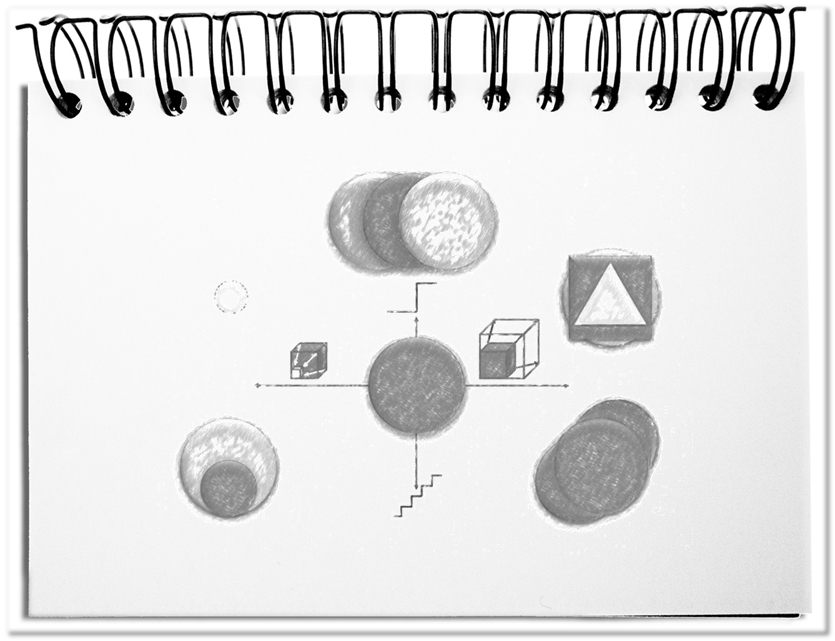
The common direction can be found between growth and contraction (horizontal axis) and gradual first order change and radical second order change (vertical axis). The following options arise.

  • Consolidate
    Making the current business more robust doesn’t sound very exciting. Securing viability on the basis of available means is a good preparation for the future. For this purpose, the offers can be enhanced, better placed and advertised. Or the chosen value discipline (customer, product or flow orientation) persistently pursued. As long as the turnover has good prospects, this is a reasonable approach.
  • Activating
    If the existing core aspects, the offers, flows and skills, are expanded, it favors the business. For this purpose, the corporate image is revamped, the culture is described and the entrepreneurial awareness of the employees is refreshed. It is a matter of better utilizing the current palette on the bogged down paths.
  • Expand
    If neighboring areas are identified and expanded, new work contents, forms and market areas emerge. This is made possible by continuous design, a wide variety of cross-enterprise teamwork and the shifting of the boundaries of end-to-end procedures. On closer look, additional sources of income can be found in customer touchpoints.
  • Reinvent
    When you leave the comfort zone, different options open up. New trades can be revealed and thereby common tasks shared. In the end, the building blocks of the business model change. The whole thing starts with radical redesign of the flows, the development of new product lines and the disclosure of completely new customer groups. Such developments are driven by individuals, who have a clear idea of what else is imaginable.
  • Concentrate
    If the enterprise body suffers from overweight and the incomes do not cover any longer the current expenses, a thoughtful compression of the activities is inevitable, if the whole does not want to be dragged into the deep. This is made possible by the sacrifice of certain tasks, the bundling of the core business e.g. in which regular handlings are outsourced. Needless business and routines arise, if you are not prepared to take care of them at an early stage.
  • Close
    When all fitness measures have been exhausted, sooner or later economic collapse will occur. In the interest of all involved people, the orderly surrender or separation of individual areas or locations is the last resort, if it enables employees to make a secure transition to new tasks. Early dissolution may allow external enterpriser to find ways to continue the business under different premises.

Bottom line: It may sound strange that the common alignment can be condensed for all cases into six possible directions. Once you have performed the clarification of the direction beforehand, you will quickly notice that debates on principles are replaced by joint plans. The unambiguous intention should be clear and all areas should be aligned to one direction. Before any strategizing it requires the one thought.
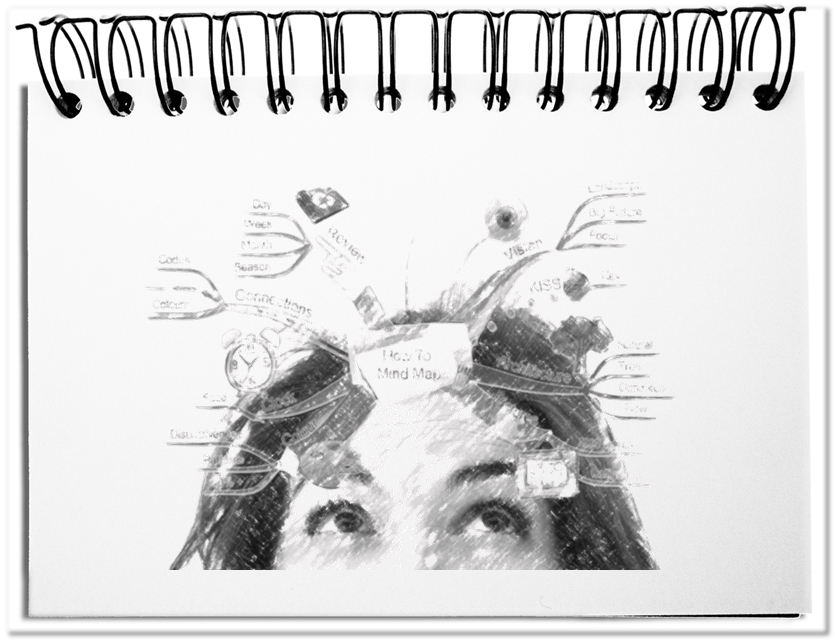
Mind map 2.0 multiplies your efficacy

In the past, we were prepared for our professional life by learning reading and writing, basic arithmetic and geometry, music, art and sport in ex-cathedra teaching. Group work and business exercises or computers and visualizations were rarely used. An example of an approach is the Mind map. All kinds of ideas, structures and sketches can be created: e.g. brainstorming’s, strategies, goal hierarchies, business developments, project plans, minutes, problem solutions, speeches, time management, etc. The efficacy of Mind mapping can be multiplied by using IT-based tools such as Mindmanager, XMind, iMindMap, iThoughts and others.

In addition to the tips and tricks, the internet also provides rules for mind mapping. The following suggestions are primarily intended to enable the use of IT tools.

  • Anything goes
    Actually when you create your mind map with an IT program, all the common rules are
    no longer necessary. The now realizable size exceeds the limits of a sheet of paper by far. This also applies to the number of branches and the number of detail levels as well as to the labels and other media (see below). The development of a mind map can be done on your own or in a team by using a beamer or large video screen, or even in virtual videoconferences with worldwide distributed participants. Depending on the number of participants, the effort for the coordination of the branches of the resulting map increases.
  • Use the media
    Whereas one is conventionally limited to writing, drawing and gluing images in paper-based mind maps, one can use a wide variety of multimedia objects to integrate them in a tool-based way – texts, images, videos, links, office files, etc.
  • Any contribution counts
    If one works on paper, then the rework, i.e. above all the simplification, is somewhat complicated. In an IT-based mind map, the branches can be reassigned as required, including all sub-branches attached to them. This supports the usual brainstorming approach of simply capturing each post without discussion. That way maps can be developed in separate working groups. The final incorporation creates an aligned, joined result.
  • Be aware of your gut feeling
    A practical feature is the subsequent arrangement of the branches. The graphical presentation supports thereby the intuitive editing of the content. You can move branches into others and get inspired by the new formation. Visual thinking does not simply follow conscious logic. Through the graphical structure, the subconscious mind assists in the alignment. In the interest of a skillful result you should always listen to your gut feeling, even if you cannot always understand the reasoning behind.
  • Keep on going
    Software tools live on their juncture to the world. The Mindmanager offers connectivity to Microsoft products, for example: MS-Excel, MS-Word, MS-PowerPoint and even MS-Project. This means that the captured content can continue to be used in the sequence. Thus, the activities of a project, including dates and dependencies, can be planned with the Mindmanager and then transferred to the MS-Project format.

Bottom line: Tool-supported mind mapping, like Mind map 2.0, expands the use of this approach. This allows the multi-medial creation of mind maps of any size. At the same time, open approaches for the development can be used and sub sequentially integrated to a coherent overall picture. With the graphic representation the subconscious areas of thinking are also used. Eventually, all the results can be reused in classic office tools. Thus, Mind map 2.0, i.e. the use of software-supported mind mapping, multiplies the efficacy of the mind mapping.