
Archiv der Kategorie: English

From nothing simply nothing comes

Common sense tells us that anything adapts to what already is there. Spheres, not cubes, come out of a sphere. In closed systems, it is unlikely that something new will emerge on its own. Except: energy is added from outside. The same is the case in human communities – working groups, departments, and firms. If something has to be changed, it needs a push to get momentum. From nothing simply nothing comes.
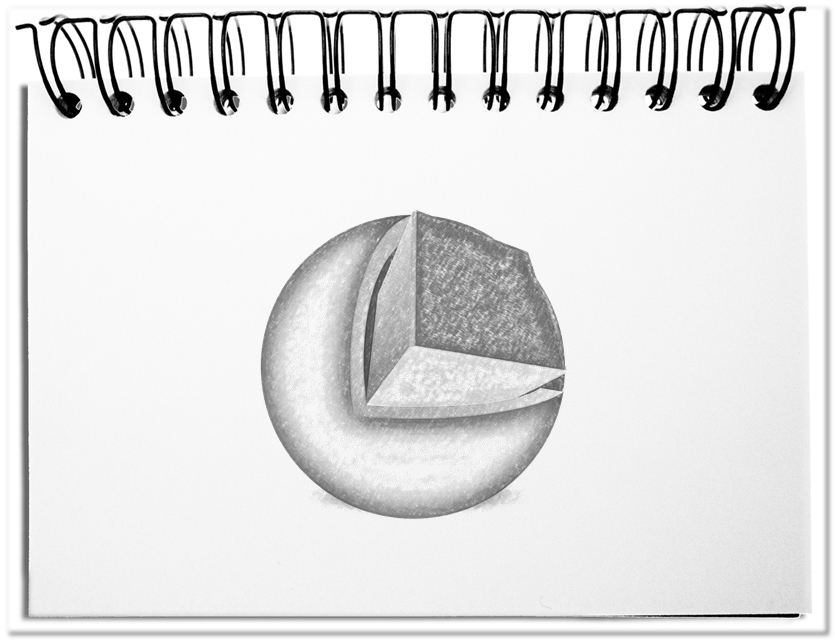
The following aspects outline some stimuli that the leaders can give in terms of energy supply.

  • Adaptability
    The persistence in the existing of individual people needs a framework that provides the necessary space for the new. In an appropriate atmosphere that gives employees the chance to make things flexibly on their own, to cooperate across borders and to apply new ideas without any effort changes happen. The customer’s needs are adequately addressed that way. If then the willingness to try new things is encouraged by stress-free, fault-tolerant attitudes and openness, collaborative learning takes place. Thus, all are able to adapt.
  • Participation
    Once you understand that the group creates many more opportunities than individual geniuses, you have to take care to put the team in the position to make decisions at the point of action. This requires that the relevant information is available and that, at the same time, all know that they can and are allowed to contribute positively as well as to plan jointly. This puts the team at the center – with all its objectives, distributed balance of power and group processes. The development of appropriate skills is crucial for the employees, as well as for the leaders, who must give up part of their ego. The contributions through participation of all members cumulate to a larger sum than the sum of individual results.
  • Consistency
    The interaction of many interests leads naturally to a wide range of solutions, which even contradict each other in the worst case. For this reason, conditions have to be created that reduce the divergence of the parties to a healthy degree. The well-known fish that stinks from the head has an important exemplary function. Above all, the desired manners have to be put on paper. This applies to the culture with its convictions, values ​​and the collaboration styles, as well as for the established ways of making decisions and agreeing. To ensure that the described behavior is also put into practice, the executives have the responsibility to take ownership of their expectations and to continuously act accordingly. In addition, they affect personally the employees by consistently expressing the common perspective and by coordinating the involved people accordingly. The consistency of statements, behavior and decisions prevent resistance.
  • Mission
    Eventually the clarification of the mission is the formal element in order to be able to cross the door to the new. The formulated snapshot of the future that describes the targeted final stations, shows the raison d’être of the company. Everyone will then develop its idea of the way to the destination. In the interest of joint collaboration, concrete milestones define reference points, which will again and again realign the forces to the common goal. The more the vision, the mission and the strategy are sharpened for the target group, the clearer they lead the employees. The formulated and accessible mission reduces the interpretation space to a minimum.

Bottom line: Even if the world seems to alter on one way or the other, change that is to be done more quickly or more fundamentally, needs efforts in advance. All those affected people must be able and be permitted to adapt themselves. Platforms for participation have to be created. All aspects of the business must be harmonized in a way that uncertainties concerning the right approach are avoided. And above all, a clear direction must be given. However, this has changed nothing yet. But without these aspects changes are almost impossible. Responsible for creating these basic conditions, which are an effort in advance, is the leadership team. Thereafter the actual change follows. From nothing simply nothing comes.
Simply overwhelming

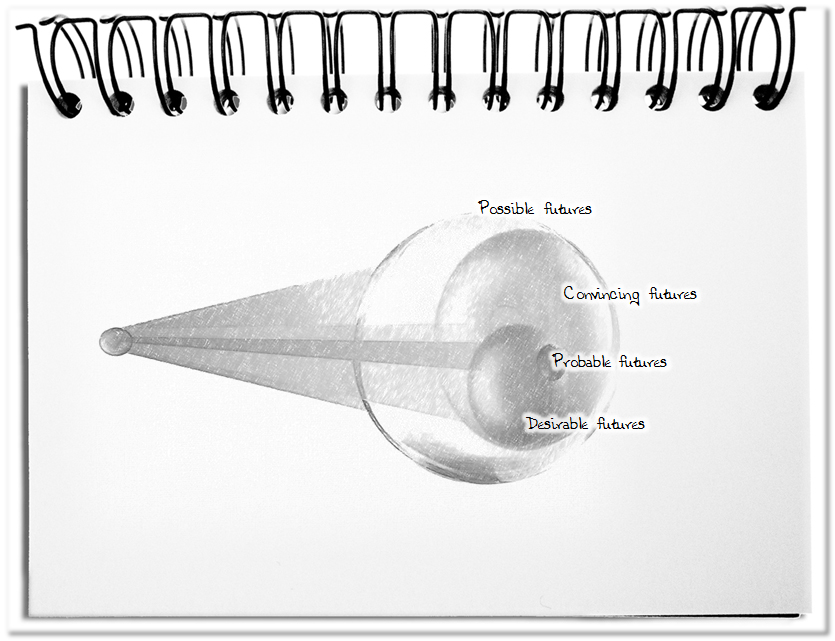
The biggest hurdles in designing the future are the constraints that slow us down because we are not aware of them. What works is not determined by natural limits, but by our inability to imagine it. While climbing a mountain is a physical challenge that requires fitness, stamina and enthusiasm, building the future is a task that requires additionally imagination and creative drive. The space for possibilities is simply overwhelming.

Before looking at the design parameters, it is helpful to become aware of the design freedom in order to better exploit the available space.

  • Possible futures
    The outlooks become possible, if they are thinkable. Thus, for some aspects, the necessary resources for implementation might still be missing. That does not mean, however, that the flight to the moon was not yet imaginable for Jules Verne. Or the electronic surveillance state could not have been brought to our attention by George Orwell. Or that Bill Gates could not have imagined that all people could use a variety of computers in their household. What is still waiting for us requires only someone to express it. The possible futures are beyond our present experience. For this reason: anything goes – as long as we can express it.
  • Convincing futures
    The forecasts are convincing, if they offer a credible picture of the future. This requires more justifications. Most of the things that determine our lives in this century already exist, e.g. 3D printing, humanoid robots, machine intelligence, networking. Even, if the 3D printing still seems relatively rough, you should remember the times of the first dot matrix printer, which could print nothing else than a black dot. Today, we print photos for a small amount of money, which can no longer be distinguished from an „analogue“ photo. As soon as someone explains the context comprehensibly and consistently, a future will be convincing. Here you find the feasible options.
  • Desirable futures
    The prospects are desirable, when they fit into one’s goals and requirements. At the same time, the intentions play a large part for desiring. In the interests of feasibility, these perspectives should be found in the area of convincing futures. In any case, the paths are different for different groups and individuals. Different beliefs and values lead to different wishes. In a value system that puts money in the center, the futures look different as in a value structure based on welfare or cooperation. The desire is fueled by the subconscious that leads to an instinctive yearning, sometimes to greed. In doing so, be aware what you wish for – it could become true.
  • Probable futures
    It is likely that the future becomes a down-to-earth, realistic vision of the future, beyond all possibilities, convictions, and desires. Interests and beliefs should only play a minor role. The shifting of inhuman work to machines with more or less intelligence and, thus, the dissolution of today’s working environment has to be expected. And that despite this outlook no one provides yet an answer to the question of the future basis of existence for the people, this future is not less unlikely. These futures require an early concern about the implications of these new societal forms.

Beyond the present, there are still other futures, which no one foresees, and are beyond our expression. That is why we are looking at the present viewpoints on the future, which differ individually and do not automatically overlap with others. The conscious dealing with futures is easier when you are aware of these different spaces. In any case, the actual future must be actively designed. If you do not participate, you leave your own future to others.

Bottom line: Infinitely a lot is possible – and if not such infinitely, then at least infinitely minus one. The space where the future happens is largely determined by our imagination. The unimaginable remains unattainable. As we deal with what is thinkable, we distinguish between possible, convincing, desirable, and probable futures. These areas are so wide that we are overwhelmed by the alternatives. Nevertheless we are called to design our future, since even if anything goes and a lot is already feasible, not everything is really thought to the end in all areas. However, we should be aware of what we wish for, as we might not get rid of it later on.