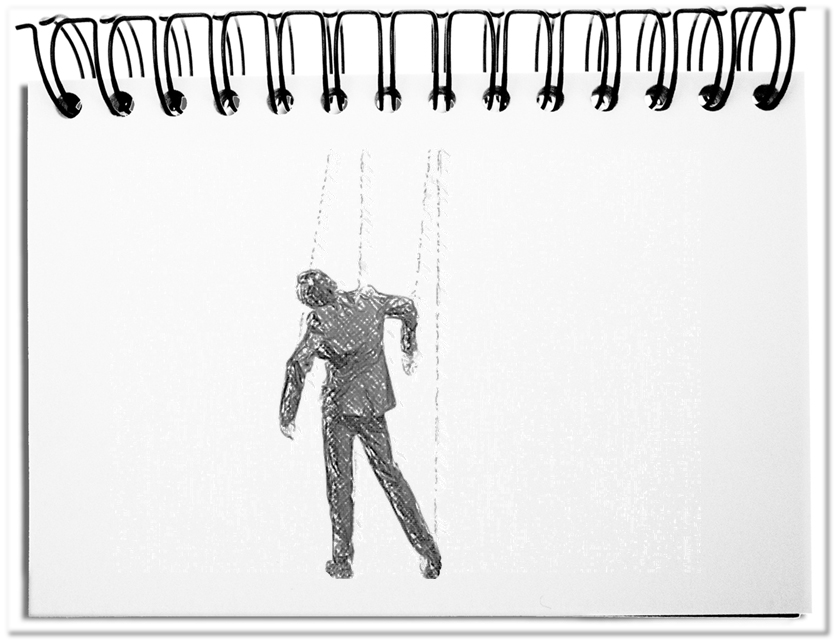
We interpret at any time a situation that results from the context, a statement or a relationship. Different perspectives create automatically different interpretations (more here: http://www.memecon.com/perceptual-positions.html). Rarely it becomes as clear as on March 15th 2015. The Greek Minister of Finance Yanis Varoufakis was invited to participate via satellite in a German Sunday-evening talk show. There, he was confronted with a video, in which he was to have apparently stuck the middle finger towards Germany. On the basis of some aspects, the vulnerability of meaning becomes visible.
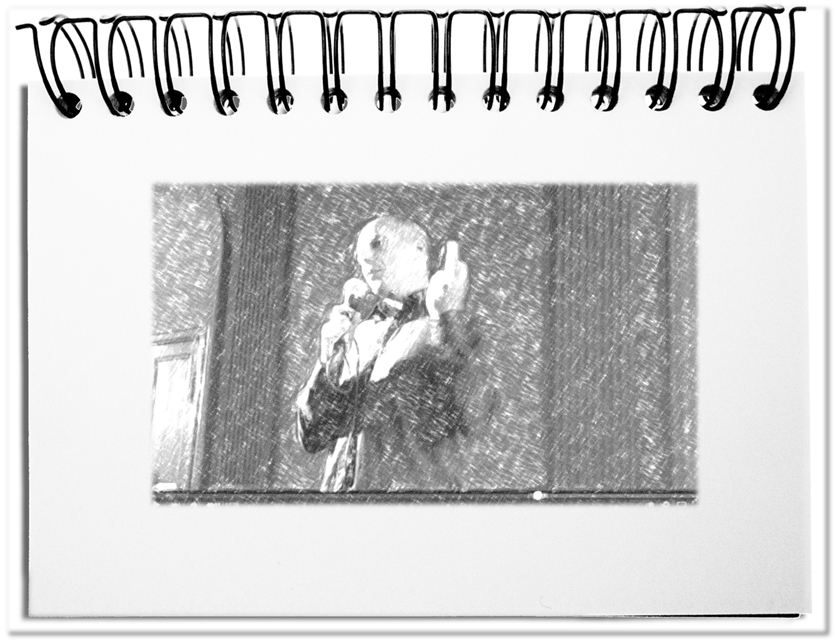
Vulgar gestures produce much attention in the public – inconvenient for the one, who hangs at the finger; pleasantly for the critical rest. In Germany people know such cases from sports and politics.
Two videos form the basis for this blog post.
- Video1 (in German here: http://ow.ly/Ld81d) shows the talk show with discussion participants in Berlin and, from Greece connected, Yanis Varoufakis. In a clip, that describes the past life of Yanis Varoufakis with some edited scenes, can be found in the broadcast from minute 23:39 to 26:13 (see below 1). The answer of Yanis Varoufakis, in which he denies the authenticity of the video, can be found from minute 26:16 to 26:52 (see below 2).
- Video2 (in English here: http://ow.ly/Ld85F) shows the original recording of the meeting of his key note about his book „The global Minotaur“, in Zagreb, on May 5th 2013. The relevant cutout from the Q&A following his presentation with the mentioned gesture starts from minute of 40:20 until 40:36 (see below 3).
The producers of the talk show create with their presentation the impression that Yanis Varoufakis stuck the middle finger to Germany in his function as Greek Minister, which would have been a disrespectful affront. The following points underline the attempt of the television producers to inject negative meaning into this gesture.
- Günther Jauch, the host, assesses the clip at the beginning with the words „… the Germans are occasionally irritated, in which manner especially you… “.
- The clip produces an ambiguous impression with historical cutouts that are incomplete and torn out of context as well as were mounted in the wrong chronological order. The polarizing speaker in the off, who produces a logical, but apparently wrong context, amplifies this impression (see speaker in the clip text below 1).
- Günther Jauch underlines his assessment with the words „the middle finger for Germany.. “
- Günther Jauch often interrupts Yanis Varoufakis.
- The non verbal signals of the discussion participants are a further attempt to underline their assessment; e.g. the surprise of Günther Jauch, when Varoufakis denies the middle finger.
- The discussions are translated simultaneously by two interpreters. You can only hear the German translation and fragments of the answers of Varoufakis. We do not know, with which words the German parts were translated. It would be interesting to hear the actual statements.
Yanis Varoufakis reacts with a general statement „ I never stuck the middle finger“, which is obviously wrong. Or did he want to say that he did not stick the middle finger to Germany?
- He was appointed in the year 2015 as Greek Minister of Finance.
- The quotation „My proposal was… “ is a suggestion for the year 2010.
The audience can make their own assessment after watching the two videos.
Result: So what drove the television producers to mount the quotations in such a way as if Yanis Varoufakis would have expressed himself disrespectfully towards Germany? We can only speculate about it. Visibly there is the attempt to deliver a certain meaning with the clip from Zagreb in the style of the “black channel” http://en.wikipedia.org/wiki/Der_schwarze_Kanal. It would be desirable, if the public would not discuss in a populist style the middle finger, but the cheap shift of meaning in the “neutral“ public service media. In any case the vulnerability of meaning becomes visible.
Appendix
1) Clip text
Günther Jauch: „The Germans have the feeling that they already were solidary with Greece for a very long time. No country gave more billions to Greece than Germany. But all the more the Germans are occasionally irritated, with which manner especially you also acted towards our country. “
Cutout of the clip about Yanis Varoufakis:
Speaker: „Then the euro-crisis. Varoufakis writes articles, he gives interviews and makes videos, in which he explains the crisis.“
Varoufakis: „The rich made profits, but the poor had to fight like never.“
Speaker: „Varoufakis wants to give new self-assurance to the Greeks.“
Varoufakis: „Greece should simply announce that it is defaulting“
Speaker: „and stands for clear messages, particularly to Germany.“
Varoufakis: „stick the finger to Germany and say: Well, you can now solve this problem by yourself.“
Günther Jauch: „The middle finger for Germany, Mr. Minister? The Germans pay most and are by far most strongly criticized for it. “
2) Answer Yanis Varoufakis
„This video is wrong. That was doctored. I never did something like that. I am ashamed for the fact that one thinks that I am capable of such a video. I am sure, that you did not know it. But this is a fake. I never showed this finger. This is a faked video. Just like another one that is shown in Greece, where I allegedly stretched out my hand to a foreign politician and withdrew it at the last moment. “
3) Original text Zagreb
“My proposal [in early 2010 added by M.L.] was that Greece should simply announce that it is defaulting – just like Argentina did – within the Euro, in January 2010, and stick the finger to Germany and say: Well, you can now solve this problem by yourself.” [The bold parts were broadcasted in the talk show.]