
Archiv der Kategorie: Management

Here you find topics like planning, organization and leadership.

The one thought before any strategizing

All activities need a compass to align with. The first thought of many strategists is to win. However, that does not always mean that you are the first, the fastest, the greatest, or that you have to grow constantly. The desired impact direction might be a fitter company or better utilization of existing means or happier employees. The selected alignments can be undermined by different simultaneous directions. The impact direction is therefore an important basis for the design of the future.
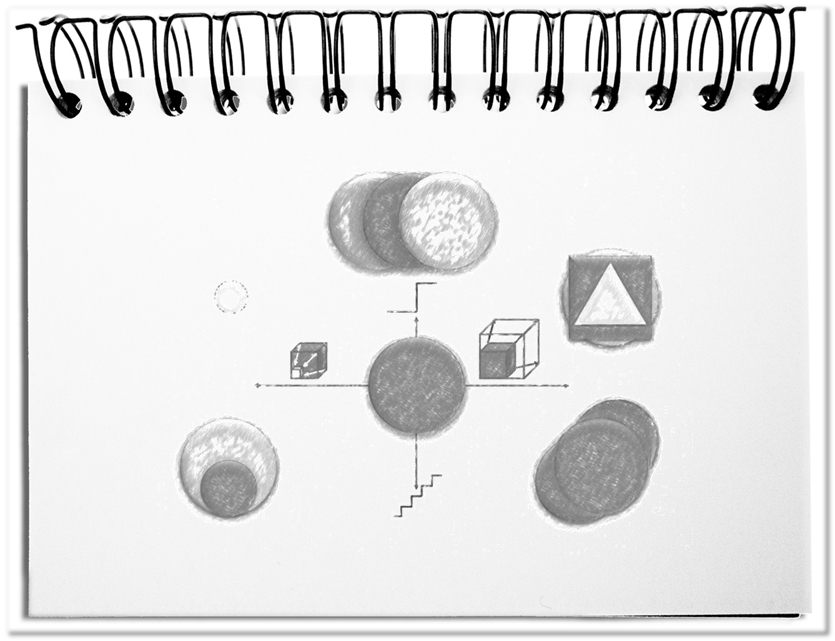
The common direction can be found between growth and contraction (horizontal axis) and gradual first order change and radical second order change (vertical axis). The following options arise.

  • Consolidate
    Making the current business more robust doesn’t sound very exciting. Securing viability on the basis of available means is a good preparation for the future. For this purpose, the offers can be enhanced, better placed and advertised. Or the chosen value discipline (customer, product or flow orientation) persistently pursued. As long as the turnover has good prospects, this is a reasonable approach.
  • Activating
    If the existing core aspects, the offers, flows and skills, are expanded, it favors the business. For this purpose, the corporate image is revamped, the culture is described and the entrepreneurial awareness of the employees is refreshed. It is a matter of better utilizing the current palette on the bogged down paths.
  • Expand
    If neighboring areas are identified and expanded, new work contents, forms and market areas emerge. This is made possible by continuous design, a wide variety of cross-enterprise teamwork and the shifting of the boundaries of end-to-end procedures. On closer look, additional sources of income can be found in customer touchpoints.
  • Reinvent
    When you leave the comfort zone, different options open up. New trades can be revealed and thereby common tasks shared. In the end, the building blocks of the business model change. The whole thing starts with radical redesign of the flows, the development of new product lines and the disclosure of completely new customer groups. Such developments are driven by individuals, who have a clear idea of what else is imaginable.
  • Concentrate
    If the enterprise body suffers from overweight and the incomes do not cover any longer the current expenses, a thoughtful compression of the activities is inevitable, if the whole does not want to be dragged into the deep. This is made possible by the sacrifice of certain tasks, the bundling of the core business e.g. in which regular handlings are outsourced. Needless business and routines arise, if you are not prepared to take care of them at an early stage.
  • Close
    When all fitness measures have been exhausted, sooner or later economic collapse will occur. In the interest of all involved people, the orderly surrender or separation of individual areas or locations is the last resort, if it enables employees to make a secure transition to new tasks. Early dissolution may allow external enterpriser to find ways to continue the business under different premises.

Bottom line: It may sound strange that the common alignment can be condensed for all cases into six possible directions. Once you have performed the clarification of the direction beforehand, you will quickly notice that debates on principles are replaced by joint plans. The unambiguous intention should be clear and all areas should be aligned to one direction. Before any strategizing it requires the one thought.

The Crux of the right time

Today’s entrepreneurs are at the mercy of a much more volatile world. Perhaps that is the reason why they are looking for the right time. In the past, the development of novelties was well advanced when marketing was put into place. Today, startups begin their PR as soon as an idea as a one page and a business plan describe the enterprise and the first three fiscal years. This enables investors to provide funds for the development of the idea at an early stage. The crux is that at this moment the future proposition is still in a vague state. Everyone has to ask the question: when is the right time to become visible in the market with what level of detail?

In retrospect, with the de facto outcomes in mind, everyone is smarter and knows why something did (not) work. For founders, however, it is helpful to have some indications of the degree of maturity of their novelties beforehand. Additionally to a realistic business plan, the product and/or service should be described in a way that the application context, the deliverable, the design and any extras are clearly outlined.

  • Application context
    Each offer has to be prepared for one or more application fields. This goes from the thematic areas of application, to the geographical locations, to the corresponding target groups, to the respective use cases. A hammer drill is rather not used in a surgery room. Software with a Chinese interface will certainly not be a big seller in Europe. Mountaineers equipment is of no use to the athlete. And only in an emergency, when there is no scalpel at hand, a surgeon will make the tracheotomy with a kitchen knife. What conditions need to be taken into account? Which target group is targeted? What are the typical use cases?
    Therefore: Clarify at least one application context with its conditions.
  • Deliverable
    A deliverable can be a product or a service, or a mix of both. Describe the features or use as well as the required inputs and generated outputs. The service consists of practical, symbolic and economic advantages. Without a sufficient description of the deliverable, you should get out of this meaningless PR loop. There is no point in talking about the best and simplest product or the friendliest and fastest service. What are the technical features of a product? What is the task of a service? How do shape, color and haptic support the application? What makes the application easier for the users? What extras are provided – advice, customer support, financing? What requirements must be met? What are exemplary results?
    Therefore: Describe the product and the customer support as if it had been on the market for a long time.
  • Design
    The design of the deliverable is decisive for the acceptance by the customer. There is no deliverable without having to be designed, since they are all part of the real world. An ugly device will not prevail. An alien user interface repels. The lack of a classified style provides a unique selling proposition, but customers initially have to get used to it. How do you want to be perceived (e.g. best product, customer-driven solution or the most economical deliverable)? Which remembrance can be linked to the customer support? Which categorizations (e.g. style, content) are possible? How clearly do you want to position yourself?
    Therefore: Design the deliverable in such a way that the desired target group is reached and convinced.
  • Packaging
    The packaging has to fulfil certain tasks – which you can see in the many unboxing clips on YouTube. The packaging should be considered from the beginning. It is used for protection, storage and transport. With the appropriate design, it serves as advertising space and also promotes sales. In the case of customer support, packaging covers the shop layout, the staff clothing and the ergonomics of the website. What packaging does the product need? In what context is the customer support presented?
    Therefore: Create appropriate packaging for the product and the customer support.
  • Extras
    Today, all offers include supplementing components such as accessories and extras that provide further incentives to buy. More and more complex deliverables require more and more professional advice and customer support. Sustained customer loyalty is promoted through informative newsletters and a lively online community. An added guarantee and favorable financing round off the proposal. Which extras can you offer additionally? How can you skillfully advice your customers? What other gadgets can be proposed?
    Therefore: The completed assortment should plan appropriate extras right from the start.

Even if this effort may seem very high, you should be aware that it is very difficult to develop marketing for something that yet cannot be explained in detail. The crux of the matter is when are you sufficiently prepared. In any case, there is a lot to be said against starting marketing early, with the first idea, or very late, when everything is finished. If people want to know more details, it’s probably not enough. If they’re waving off due to too much information, it’s probably too much.

Bottom line: The tendency of start-ups to develop their websites early on and to plan the corresponding marketing measures is clumsy, as a lot is still changing and must be adapted subsequently. The first step, in any case, is the preparation of the product and/or service: description of the application context, the deliverable, the design and the packaging as well as the extras. The crux of the right time is left over. The main thing is that you do not become active too early or too late.