
Archiv der Kategorie: Management

Here you find topics like planning, organization and leadership.

Risk light

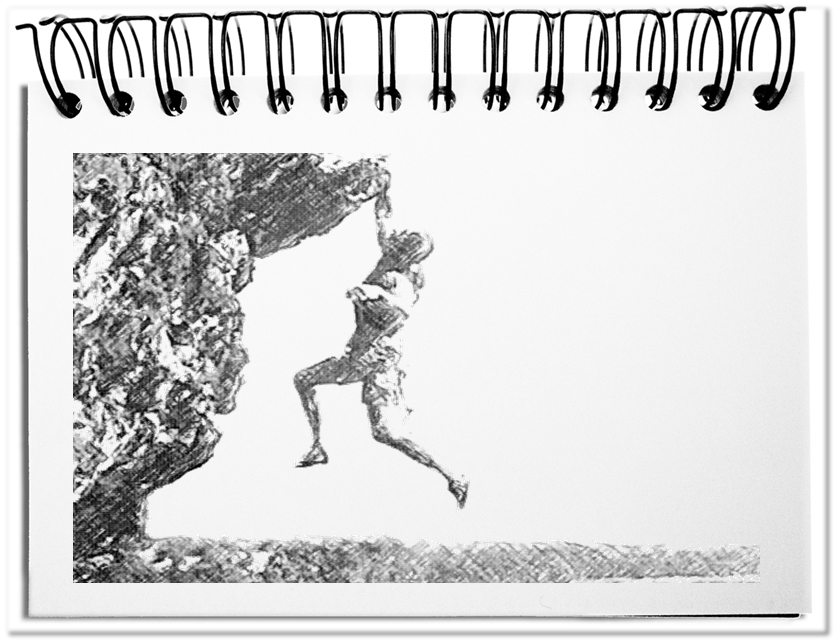
The bases of decisions become vague and arbitrary due to the increasing number of facts that are less and less reliable. For this reason decisions must be made more and more frequently based on estimations and probabilities. In risk management these accepted values are formally worked out by identifying, analyzing and evaluating risks as well as creating measures (see ISO 31000 http://ow.ly/EN5PU). Since this is always a matter of allegations, speculations and assumptions, you must ask yourself, how much expenditure you want to spend for the assessment of risks. A wasteful collection of input variables, an elusive calculation method and the lengthy reconciliation of opinions do not make the estimations reliable. Additionally, black swans, Wild Cards and Tipping points disrupt the assumed forecasts without preliminary warning. Therefore risks should be determined with little expenditure, in order to get faster and more economically to estimations. The following procedure is a simple approach for making risks manageable.
risiko

You can identify, arrange and derive measures in three steps.

  1. Identify risks
    For this purpose you scan your business model and the external influence factors for technological, cultural, organizational and economic risks (more here: http://www.memecon.com/influence-factor-model-.html). Which technological risks are in the products and services? Which cultural risks have to be considered internally and externally? Which organizational risks can be derived from the internal and external governance? Which economic risks are in your internal resources and the overall economic situation?
    Consolidate the list to 5plusminus2 risks that will be considered in the next steps.
  2. Classify risks
    Each risk on the list you assess concerning the probability of occurrence and the extent of potential damage. The scale goes from small, to medium, to high. This means for the probability of occurrence: small = no signs; medium = indirect signs; high = concrete evidence. The extent of damage can be arranged in such a way: small = costs are small; medium = considerable costs arise; high= costs exceed the financial capacities.
    Follow your gut feeling. However, ensure that you have concrete proves for the high assessments.
  3. Plan measures
    For each risk you specify counter measures based on its assessment. High risks need activities that are planned in detail and supplied with resources. Medium risks are roughly planned with financial accrues. Small risks are assigned responsibly without a concrete plan. On this basis you can quickly react, when the risks occur.
    Take care of concrete action plans that can be started at short notice as plan B of the high risks (including the project organization and the availability of sufficient resources).

Bottom line: Regardless the level of hierarchy or the size of the activity, you should always determine and assess internal and external risks as well as define counter measures. Since everything is based on assumptions and opinions that may prove to be wrong, the risks should be controlled with minimum effort.
From oil vessel to speedboat

The bureaucratization in the areas of the enterprise leads to unnecessary, but nevertheless, rising overheads. Procedures become prevention machines due to bureaucratic refinements.

  • The purchasing department only takes care of large suppliers.
  • The controlling department concentrates mainly on the large expenses.
  • The IT department is only interested in large IT systems.
  • The strategy department puts the emphasis simply on core processes and functions.

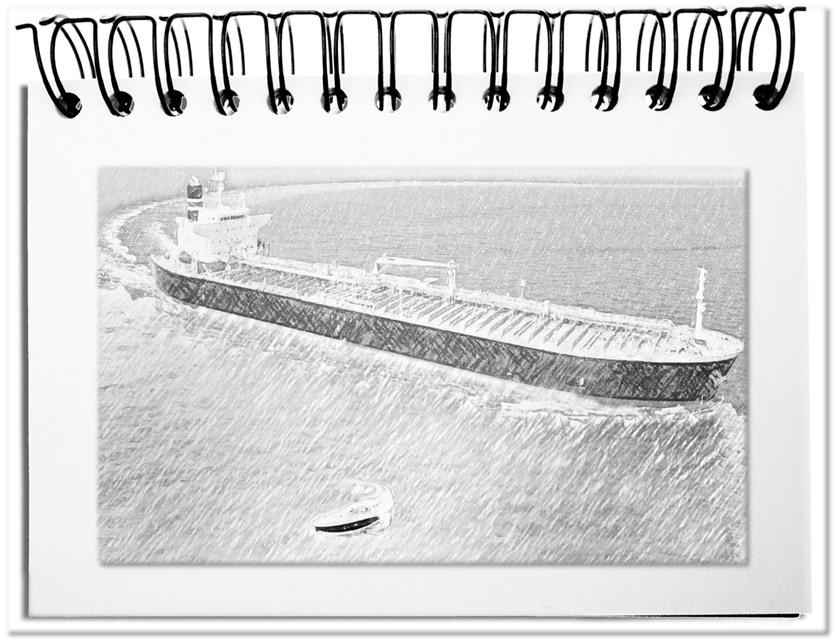
Few, large savings are obtained this way. But the many, small reductions of effort that constitute a large block in total, fall through the cracks. We have to re-think the enterprise – from oil vessel to a speedboat.

tankerschnellboot

The advantages of large tankers, the scale effects of a company, are exhausted. Now the motto should be: many pennies make a dollar. Many agile speedboats offer small potentials that supply large savings in total. For this purpose the following approaches can be used.

  • Deregulate small procedures
    The degrees of bureaucratization should be aligned to the size of the individual case. Large activities need, due to their large influences and dependencies, defined rules, in order to minimize the propagation of harmful effects. Simple defaults are sufficient for normal activities, since mistakes can be corrected quickly. Small procedures can be accomplished unregulated, since, on the one hand, the variety of the procedures can only be standardized with difficulties and, on the other hand, little damages occur when they fail. Thus, a lot of unnecessary, bureaucratic procedures that result from general standards are void. This releases work from excessive rules and creates time for the critical ones.
  • Prepare mass optimization
    Efforts for enhancements are most beneficial, if much can be achieved with simple activities. The small, regular operational sequences promise in total many advantages, due to their enormous number. These are mainly activities that take place at every workplace and occupy all employees in daily work. It includes the regular correspondence (e.g. the orders, the minutes, and the circular letters), repeating operations (e.g. the email administration, the travel preparation, and the meeting arrangement) as well as the small decisions (e.g. the task prioritization, the scheduling, and the control of quality). Mass optimization becomes possible by recognizing at an early stage the small time-sinks and by sharing solutions in the Intranet. The employee suggestion system offers a quick starting point, if the small, non-technical aspects of the daily work are also processed through this system.
  • Enable self-optimization
    It is best, if the individual employees are empowered to put the finishing touches to themselves. They need autonomous control of their tasks, authorities and responsibility. For this purpose, roles are specified for operational functions. The tasks of the functions are collected (e.g. compiling addresses, creating texts, sending letters), the necessary authorities, the power to do something, determined (e.g. access to all addresses, to send a letter to somebody), and the responsibility defined (e.g. to reach the correct target audience, error free). As soon as the employees have generally the authorization to improve their tasks autonomously, self-optimization becomes possible.
  • Reward small achievements
    The reward of small achievements promotes the rework in all places of the enterprise. On the one side, huge savings result from the large number of users and, on the other side, from their application in the long run. The reward of small, confirmed enhancements encourages the staff to take part. This should contain also long-term effects that are retrospectively identified and confirmed.

Bottom line: The time of the large effects based on large initiatives is reaching to an end. From now on, there will be many small enhancements that can be realized autonomously by all involved ones. Large savings arise from the mass of refinements and the sum of the many small savings. For large enterprises this means a new look at the own elements and interrelations – away from oil vessel to speedboat.