
Archiv der Kategorie: English

Compliance – Life-threatening thrombosis in organizations

Surprise, surprise. As soon as you offend against the law, you make yourself liable to persecution. This is valid for cartels, bribery, embezzlement and all activities otherwise prohibited by law. Additionally companies afford more and more job positions to take care about the formalization of procedures and the appropriate good behavior. The more global an enterprise acts, the more complex become the rules. How can you prevent a life-threatening thrombosis in the procedures of the enterprise?
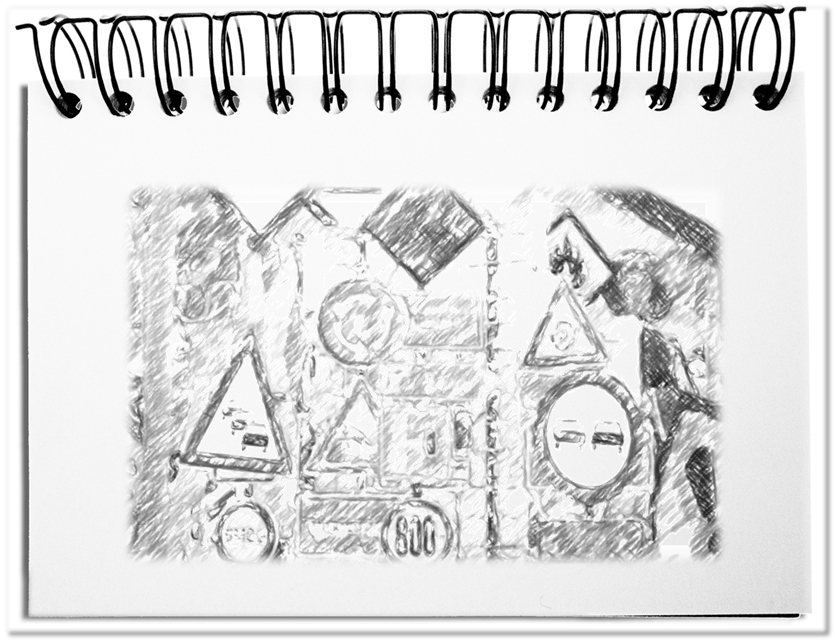
Schilderwald01

An organizational thrombosis is a sickness of business processes. In this case internal regulations pollute the free flow of data, information, deliverables and decisions. If the execution of a process is stopped, then a backlog is build that impedes the actual task that produces products or deliverables. In the worst case it will lead through bad results to an economic infarct. In medical science it is helpful to use medicine that prevents clotting as well as compression bandages, which prevent a growing of the thrombus. What are opportunities that you have in business?

  • Make laws obeyable
    Laws are developed in the interplay of the entire juridical system. It is not possible to recognize all influences from other laws in the respective law. For this reason enterprises should make the interpretation of laws easy for the employees. This enables people to act on the one hand compliant to laws and to do it with little expenditure.
  • Simplify decision paths
    The personal responsibility of leaders that results from the regulations of banks and the stock exchanges led to set frameworks on different decision levels, e.g. budget borders and scope restrictions. It is better to drive as few decisions as possible through the escalation ladder. The subsidiarity principle offers an appropriate approach. Decisions are made on the level of execution. Only, if the respective level is not able to decide by itself, the above level has to be called.
  • Focused use of digital media
    The simple usability of the Internet and email makes it easier for the employees to secure their decisions in all possible directions. Colleagues, who would not be involved in the actual decision, are also forced by respective insinuations to grapple with the resolution (example: „… as far as I understood, I assume that … “). An appropriate E-mail-Governance, which for example forbids decision making via CC as well as extensive CC-address lists or a „zero email tolerance “on weekends, purges the flood of messages.
  • Deregulate
    The number of guidelines grew over the years, without eliminating outdated rules. Most enterprises also do not have a central listing of the internal, external and international regulations. They even do not know the number of regulations. A belated listing does not help. It is a good start, if the majority of regulatory departments are reduced. Thus the rampant growth of new stipulations stops immediately. All internal rules that do not serve the compliance of laws and agreements should be replaced by basic rules, which fix the individual responsibility and self-organization. Afterwards, the remaining guidelines are valid any longer. Now the bureaucracy restarts on a low level.

Bottom line: The right moment to act against a thrombosis is always NOW. Laws become easier and obeyable with less expenditure with the help of practical commentaries. Eventually, it is crucial to streamline the bureaucracy and to resist the natural impulse of intending to regulate the regulatory madness with further regulations ;-).
What actually disturbs solving a problem?

An enemy of problem solving is the problem blindness. Problems exist, where the targets are not reached. This happens in simple activities exactly like in complex, long-term activities and projects. Even established solutions fail because of the perception of the acting people. What actually disturbs solving a problem?

Problem

The following aspects disturb solving a problem.

  • There is no problem
    Sometimes we recognize problems, where actually are none. It can be a task that is yet finished, which simply take a certain time. In other cases the problems are so big that we do not recognize them, e.g. today’s economic crises or the social shifts. Accordingly problems can be so small that we overlook them. This includes the damages that we expect in our body, by the intake of certain medicines or the drinking of water that is polluted below safety level. Already looking in another direction prevents the timely recognition of a problem. Everybody, who paid attention to the right hand traffic at a crossing and was hit from the left side, knows this. Eventually it also could be that maybe there is simply no problem.
  • The problem is not sufficiently specified
    Sometimes it is a certain cause that is missing. Who did not ever switch the PC on and the monitor remained black? If something is missing on the checklist in your head, the screen will remain dark. The way to solving the problem can be also obstructed by an insufficient description of the effects. We take our PC that is running in the meantime. Unfortunately the familiar Windows user interface does not appear. As long as your hotline does not get the message “Please do not power off or unplug your machine …”, the specialist pokes around in the dark. It becomes also very difficult, if too much information is presupposed. Thus, copying a text will become a problem for a computer beginner, if he does not know the available functions for the operation of a mouse: Clicks, double clicks, pressed mouse button, etc.
  • The problem gets stuck in unconscious assumptions
    Sometimes simply the words are missing, in order to seize the problem. Technicians often wonder that their perfect solutions do not get the expected acceptance by the customer. They overlook that customers do not consider the technical, but also the emotional aspects of the design, the usability and the haptics. Frequently the solution hides itself behind logical conclusions that are imposed by our experience. We remember the Fosbury Flop, i.e. the technology of high jump that reached new heights by the “back first” technique over the bar. Previously, everybody implied that one would have to jump forward over the bar. But it is only a matter to jump across a bar as high as possible without any means.
  • The solution is stuck in a dead end
    Sometimes, you are simply too late, because somebody else already solved the problem. If for example a colleague already put the plug of the supply cord back into the socket (see above). The solutions that we do not want are uncomfortable, because we don’t like them. Imagine that you have two important appointments at the same time in the calendar. You would not like to leave one to a colleague. But many difficulties cannot be solved alone. Then, you need the help of somebody. Some problem solutions fall into stagnation, because nobody needs them at exactly this moment. Eventually it exists always the possibility that there is no solution at all. The earlier you understand it, the better.

Bottom line: A clear problem awareness is the key to the solution.