
Archiv der Kategorie: English

The Big Brother of the street

Fundamental changes that are targeted on all road users need time and tactical instinct. Otherwise, today’s ‘Anger citizens’ go too early on the warpaths. Since the collapse of socialism, governments of the former free west do no longer know compunctions to discover the advantages of the planned economy. The current data processing offers more opportunities of an encompassing supervision that Orwell could ever have imagined. The scruple of politicians to use something like that for their own political career is approaching zero. At the same time the protective mechanisms of a society are too slow, in order to react timely to these changes. For unveiling these governmental attempts, it requires fantasy early on for refining the new plans of the public traffic financing – The Big Brother of the street.
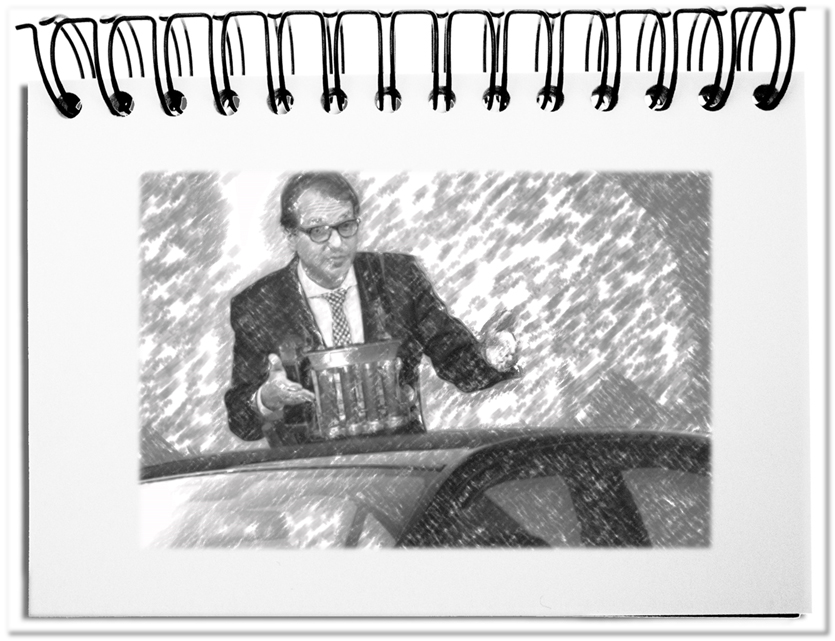
BigBrotherVerkehr

Besides the data storage of mobile communications data and the tracing of mobility patterns, the next collection net evolves the road toll facilities. The so-called reason is the participation of all highway users, including the foreign ones, in paying for the preservation of roads, bridges and the monitoring technology. Behind these installations could also exist the following possibilities that would increase imperceptibly the influence of the government.

  • Increase of the road charges
    Even if a set-off with the vehicle tax happens at the beginning, the system offers a simple set of keys, in order to increase the fees in the mid-term. If for example more and more bridges and roads have to be repaired, one can put with a shrug additional costs, in the form of fees, on the shoulders of the road users, without any literal tax increase.
  • Automatic number recognition
    The toll collect facilities lead to a new flood of mobility data of the vehicles. The position of a vehicle can be pursued on a long-term basis with this encompassing control, similarly, as with the mobile phone detection. This enables additional insights about the behavior of the citizens. For example, the link with the mobile phone data becomes interesting. The only thing that will then be missing is the implanted personal chip. We will not only know where the mobile phone or the car is, but also reliably, where the person is at any point in time.
  • Speed control
    Nowadays speed control uses fix or mobile speed cameras that measure the current speed and document a too high speed with a photo. Immediately after the misdoing or weeks later it will be punished. In the future, the time difference between two toll control places can be measured. Then the misbehavior will not only be registered point by point, but across the whole distance. If the average speed will be too high, it incurs a fine.

Even if the toll focuses at the moment only on highways, the functioning system can be expanded at any time to all kinds of road. Eventually the vehicle tax gets transformed to a fee for using the streets based on usage. The politicians eliminate then with populist fuss the vehicle tax. On the bottom line, however, the costs increase for everybody and the surveillance state will be possible in a way that can only be undone with difficulty.

Bottom line: In the plans for the German car toll system are more possibilities hidden, than one can recognize at first sight. Imperceptibly a new Orwellian system evolves that does not only cement the glass citizen. At the same time established tax models become state fees based on usage. Who already gets the idea of a flat rate, gets the point. Big Brother Traffic is an additional building block to let 1984 become reality.

Cloud or deceptive ground fog?

If you base the development of IT on a simple formula, there are still the same elements (e.g. Hardware, Software, Algorithms, In- and Output media as well as Networking) that become better. Today it is all about the mobility of the devices, agile software, the processing of Big Data and three-dimensional printing among other things. And everything happens by using global high speed nets in the Cloud. Unfortunately the IT-manufacturers are diluting the term Cloud Computing by reducing it to their own solutions. Is the Cloud

  • the relocation of Datacenters (DC),
  • the Industrialization of IT,
  • the Net-based supply of apps (i.e. individual, compatible applications out of the Net) or
  • IT as a Service?

Actually Cloud Computing includes all aspects. Enterprises controlled in the past all components of the business. Today, for example, they receive the electricity from power plants out of the public power grid. Similarly IT tasks will move into the Cloud in the future and be paid with a monthly IT bill. On this way, however, the Cloud can quickly emerge to a deceptive ground fog that can lead to negative business results.

Edge Wolke

During the preparation of the Cloud activities it is helpful to clearly define the term itself and to walkthrough the following pros and cons.

Pros

The main pros of the Cloud are

  • the outsourcing of physical computers into the Cloud,
  • the use of apps and
  • the use of IT-services out of the Net.

The virtual DC relieves from the local risks that exist in the regions, e.g. the natural disasters, political instability or lacking personnel. The buildup and sun-downing as well as the scaling of DCs follow the needs of the business and are done at very short notice.

With net-based software the long cherished dream of modularity on the user side becomes reality. As a result, all required applications are available to the users, everywhere and at anytime. Time-consuming installations and updates are no longer needed.

The regular tasks of the IT (e.g. IT-security, user administration and the regular data backup) are taken over by the service providers in the Cloud.

The Cloud offers new possibilities of the control and overview to the decision makers in IT, since the distributed IT-landscape is available in one environment and in an integrated way.

Disadvantages

At the same time the users see the disadvantages especially in

  • apparently inadequate IT-security,
  • the indirect access to the employees of the operations and
  • the difficult integration of the legacy systems.

These risks exist already today for distributed locations with their internal employees in a similar manner.

As soon as the IT is linked to the Internet, security measures are needed. The necessary measures can be established in the Cloud exactly like under present conditions. The confidence into the service provider is comparable with the confidence into today’s internal and external resources.

The largest remaining hurdle is the integration of the existing IT-systems into the new environments. In these cases the responsible people cannot avoid the migration of these legacy systems to the newest state of the technology.

As soon as the business takes place in the cloud and each employee works with mobile devices, only those systems will be used that offer the required mobility and variety.

Bottom line

The IT evolved dramatically until today. This development will continue and be hardly feasible with internal resources. Cloud Computing is the important step away from possessed IT-resources to globally available, Pay-per-Use IT-services. For the Cloud are the same risks and counter measures valid, as with all existing IT-solutions. The IT bosses need a clear conception of the term Cloud and the associated pros and cons. The future IT-department will no longer define itself by the square meters of the datacenters, the possessed network knots or the number of IT-employees, but by the available computing power, the speed of the task solution and the user intimacy. For the responsible people it is now a good moment to consider, how to deal with these changes. Otherwise the Cloud becomes quickly a threatening ground fog that tears those into the abyss, who do not prepare in time for the takeoff into the Cloud.