
Archiv der Kategorie: English

Evaporates the public opinion?

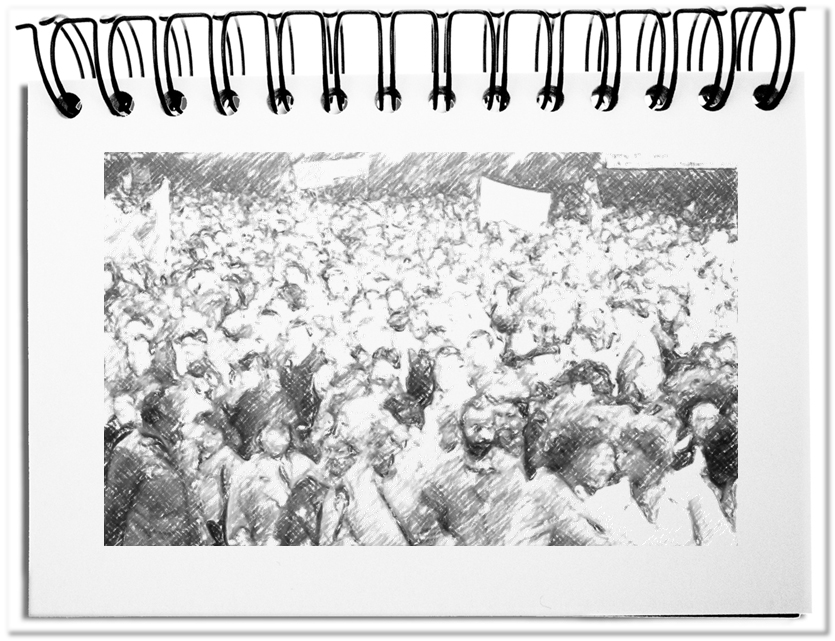
We all have our look at the conditions of the world. Currently http://ow.ly/GeMxx billions of people lives in the world. Unfortunately it is difficult from the perspective of political and economical decision makers to deal appropriately with this incredible number of views. For this reason, one considers the view points of groups, e.g. government, enterprise, lobby and other groups of interests. A universal point of view is the public opinion that represents the majority of the society. These attitudes and behaviors are detected through representative surveys. Whereas in former times people were shaped by common upbringing, education, books and mass media, today an enormous amount of channels and institutions stand equal side by side. As a consequence everyone seeks heaven in his own fashion. Does the public opinion still exist? Or does the public opinion evaporates as a practical tool from the public discourses?
WirsinddasVolk

If the commonalities of a society dissolve, the resilience is at risk, …

  • … because common sense is no longer seizable
    In the past, people were influenced with news by common channels, e.g. the local daily papers as well as the public radio and TV stations. This created a common state of knowledge and convictions. With the emergence of special-interest channels and the Internet today everyone is in the position to select ones sources. Thus, the commonalities get lost. Each perspective is cultivated and evolves in its respective direction. Therefore a common sense of the smaller groups emerges. The large, social common sense is lost thereby.
  • … because culture dissolves more and more
    Through the advancing fragmentation of the society it becomes more difficult to recognize the core elements of culture (more here: http://www.memecon.com/cultural-aspects.html). Languages, actions, attitudes, experiences and the identity are increasingly scattered across different groups. Over time incompatible groups evolve that are in competition with each other. In order to come to a common direction, for all parties’ acceptable compromises have to be concluded. The call for a common culture becomes stronger.
  • … because social cohesion disappears
    As a consequence, people orient themselves increasingly towards their group. This leads to a developing delimitation from others and a stronger emotional binding to the values of the own group. The existing energy for the common tasks is consumed in favor of petty disputes. The general problems remain unresolved and the societal commonalities get lost.
  • … because the large parties dissolve
    Even the Grand Coalition of Germany represents only 48% of all voters, considering a polling of 71,5% http://ow.ly/GeSHe. The CDU/CSU (18.3 million voters) received together just little more votes than the non-voters (17.6 million). Democracy created itself rules, in order to remain functional with such circumstances. The consequences are more and more parties and ever more populists.
  • … because the basis for governmental decisions evaporates
    With the political voting results, the parties govern without the support of the majority of the voters. This leads to a rising discontent and more public demonstrations. The new culture of protest is practiced by all segments of the population. The malicious way that the established parties show the various activists understanding is an indication for their lack of ideas of how to grapple with these groups.

The gaps that arise create the room for groups that promise to the public, what they want to hear. Populist forces already exploited in the twentieth century the weakness of many small parties. The consequences were horrifying. Without an extensive consent between the citizens that becomes visible in a convincing public opinion, we spin into an undesirable, well-known direction. Did decision makers learn something from it? Which measures do they take? Do we have to accept that history repeats itself? And afterwards again nobody knew something?
In the meantime the public opinion becomes so little meaningful that on its basis only a few commonalities can be found – except for the xenophobic developments.

P.S.: The same mechanisms can be found in corporations within their framework of the Corporate Identity.
Brainworker – Role of the future

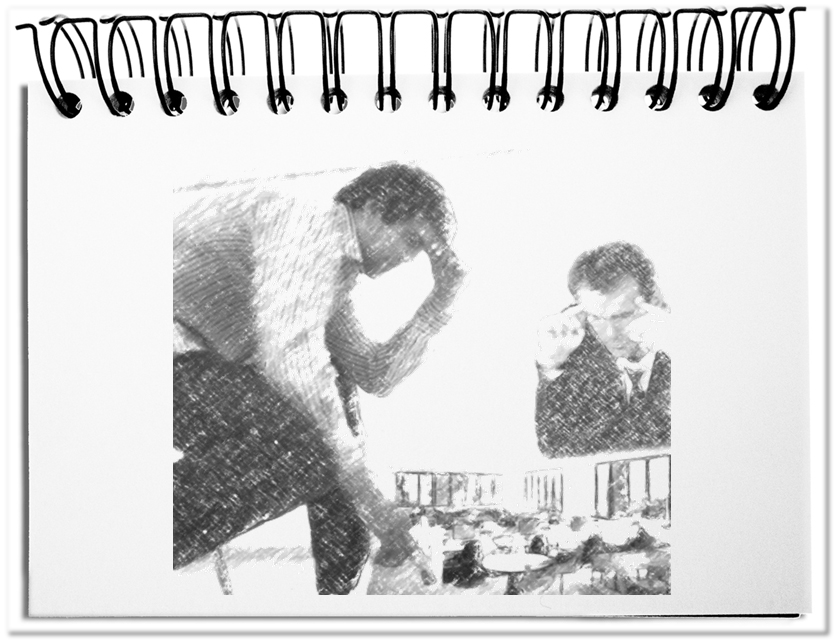
Handworkers were the driving force for the development of the economy for a long time. They had the production of tools and things of everyday life in their hands – tanners, furrier, saddlers, shoemakers, bakers, painters, smiths etc. Complexer commodities could be produced by bundling different crafts in manufactories. This initiated the transition into industrial manufacturing. The breaking down of work into individual tasks, the so-called division of labor, has passed its peak in the 20th Century. Since the computer executes the “manual” activities faster and more reliable, the question about the future roles of the staff arises. The brainworkers will certainly become a large, new group.

Kopfwerker

The new types of employee will have no longer an affect through their hand, but through their brainwork. The feedstocks are less likely of physical, but predominantly of mental nature. In both cases the smart use of tools is decisive for the performance of the employees. Hammer, screw driver and brush are replaced by the computer and its various programs. The handworkers gain their abilities through regular exercise and longtime experience in handling the tools and materials. The new brainworkers develop their abilities through training and benefit from the acquired practice in handling ideas, drafts and other reasoned outcomes. Potential familiar brainworkers are: Chief Knowledge Officer, Knowledge broker, Change manager, Organization developer, Chief Information Manager. In the future new roles will emerge that will take care of information.

Brainworkers generally have the following tasks, authorities and responsibility as well as the respective capabilities.

  • Tasks
    are the activities of a role in dealing with information. Depending on the specific task, information is created, processed, stored, searched, updated, reused and deleted as well as distributed and additionally explained. Furthermore general tasks evolve – brainworkers guarantee the flow of information, prevent the loss of data, improve fundamental methods and actions, support the daily work with words and deeds and describe general relationships. They use social networks, IT-tools and all aspects of project-related work.
  • Authority
    describes the rights of a role that it needs for the execution of its tasks. All participants must be put into the position to provide and use information according to their role. This starts with the informational self-determination concerning the own, personal representation and goes up to the production of data and reports in the business context. Search engines as well as the barrier-free access improve the quality of the outcomes. The creators must it be allowed in case of further inquiry to describe their produced contents.
  • Responsibility
    describes the obligations in managing information. Since everybody is on the one hand user AND on the other hand supplier of contents, governance is required for handling information. This includes that all creators provide the data, which represents the bases of the information, with the correct quality (e.g. correctness, completeness, consistency and up-to-dateness). During the processing the quality should be maintained. The enterprises, institutions and governmental bodies, where people work, have to ensure that on the one hand the employees can process the information in a qualified way and on the other hand that data will not get lost, wrongly interpreted, or abused in any way.
  • Capabilities
    are the knowledge and dexterities of the brainworkers. This includes technical, methodical, social and systemic abilities in dealing with data, information and knowledge. The parties concerned must be able to interpret similarly the data in the respective industry sector and business environment. They need the proficiency for the procedures of the individual tasks. Cooperation and guidance have a central role since all results are produced in teams. It is necessary to develop skills, in order to master the social networking, various IT-systems as well as methods and procedures of time and project management. Today, enterprises are less regarded as clockworks, but more as organisms. This demands holistic thinking, system understanding and change competency for all participants.

The challenges for each brainworker are the balancing act between sharing information and the sustainable competitive advantage through brainwork. Information increases its value through as much as possible frequent and extensive sharing. It becomes the common property that everyone can use for its own advantage. The knowledge advantage, symbolized through ‚knowledge is power’, is thereby replaced with the ability ‚to create knowledge’. This requires that brainworkers learn continuously, create and transfer new relationships into the business practice. In the future, the borders between hand and brainworkers will blur. But the one will not function without the other.

After thought: The transition from hand to brainworker will be revalued in medium-term. The old proverb will be valid again “A trade in hand finds gold in every land”.