
Archiv der Kategorie: English

Money still does not smell

The substantial difference between commercial and governmental economic activities is the fact that an enterprise cannot simply decide and collect its incomes, but it has to work and to negotiate with the customer for it. Taxes were always raised by various societal groups – called tribute, tithe, toll, indulgence or temple tax. Some people did not shy away from exploiting the most bizarre sources of income. A good example is the emperor Vespasian, who justified himself with the saying „Pecunia non olet “(Money does not smell). He had imposed a tax for the public convenience. Amazingly the same creativity survived until today.
Maut

Clients have the choice and adjust the prices simply by evaluating the relationship between price and performance of the offered products or services. If the ratio is not beneficial, they waive it – and the price decreases.
In contrast, the citizen has only occasionally the choice. By voting, they hand over control to political officials, who make in the course of their tenure what they want – well packed in statements like “We must only promise things that we believe that we can do.” „I believe that people understand“. In the absence of acceptance of the citizens for new taxes, they are called now income, fee, supplementary or special tax. Current examples are:

  • The extension of the solidarity surcharge
    The solidarity surcharge for the reunification was eventually accepted. But to maintain this supplementary tax is a good example, how politicians try to increase their budgets. If costs will occur in the future that should be taken by the society, then the right of digging into the pockets of the taxpayers is questionable – above all, if they cannot fend off.
  • Highway toll (Maut)
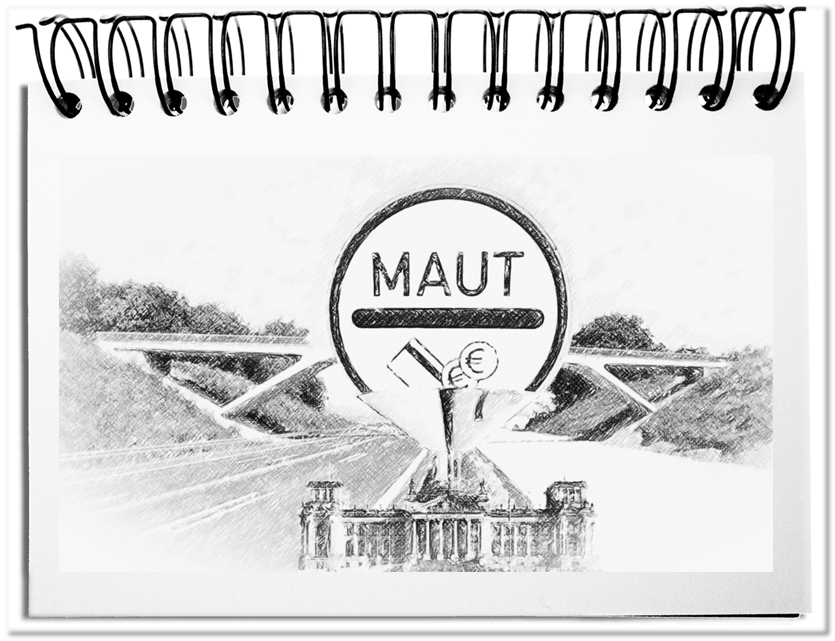
    Many countries have a fee for the use of highways – even for a few border kilometers. So far the collection of the highway toll is OK. A compensation for Germans car tax is certainly appropriate. How foolish to take back this compensation before the adoption. Thus, the toll is a hidden tax increase.
  • Cold Progression
    The cold progression is the thimblerig of the Treasury department. The citizen always has to pay extra and even does not receive an appropriate adjustment for the inflation of the past years. Eventually, the cold progression helps the government to reach the black zero.

The list of the examples could be extended, from the Riester pension to the fees for the health insurance. At the same time the employers are relieved with the justification that it secures jobs. This goes so far that enterprises can reduce their HR expenditures by benefiting from low wages and temp work. Are these the safeguarded jobs?

Bottom line: Politicians do everything possible, in order to increase their incomes at the expense of the citizens and lower the costs for the industry. This modern form of waylay will not function for a long time. The following generations will have to carry the bill. Will they then still show solidarity with the older generation? The consequences for the pension system are already foreseeable – certainly without consequences for the pensions of the politicians, who create the future problems today. Of course – money still does not smell.
The future of leadership

Guidance is one of the oldest roles in societies. And nevertheless executives are continuously looking for the right style of their role. Apart from the tasks and tools of leadership managers are concerned with the following questions.

  1. How much involvement is possible?
  2. How many rules are needed?
  3. How do I distribute tasks, authorities and responsibilities?
  4. How much loyalty do I need? How does it emerge?
  5. How do I promote cooperation?
  6. How to select executives?
  7. How much leadership do we need at all?

Do new systemic concepts like holistic, autonomous units, interconnectedness, participation, and self-organization, pave the way for new, yet not recognizable styles of leadership? How does the future of leadership looks like?

Fuehrung

Executives provide goals, organize, decide, evaluate and foster employees by using various tools (e.g. role descriptions, regular communication, performance reviews). They control with it their area, create orientation and take responsibility for the results (You find more about tasks and tools of leadership here: http://www.malik-management.com/en/malik-approach/malik-basic-models).
Without leadership, these aspects have to be developed in the team and consent has to be agreed. Positive examples of self-organizing groups are the agile teams in software development and other creative professions.

Nevertheless, new approaches imply also new answers to the questions of executives.

  1. Involvement results from democratic forms of cooperation, like having a say and participation. These can also be established in connection with hierarchical structures. For a long time, autonomous, self-organizing teams are common practice in the context of bureaucratic structures, like projects, Centers of Competence or Production islands.
  2. Regulations range from chaos to orderliness and from voluntary to mandatory. They are important tools, in order to clarify the desired behavior of the employees. These rules become meaningful with the appropriate level of detail that covers the tension between patronizing and autonomy. The joint agreement of basic guidelines in the governance minimizes the number of regulations.
  3. Task, authority and responsibility (TAR) of a role should be consolidated under one roof. The best example of the distribution of TAR is the subsidiarity principle of the Vatican. It bundles decisions at the point of action. Only if this is no longer possible, the role is established on the next higher level.
  4. The loyalty is an important element of leadership that cannot be directly created. On the one hand, it results from the authoritarian or charismatic attitudes of a leader. On the other hand, it evolves from the indirect stimulation of the commitment with personal, content-wise and formal commitment amplifiers.
  5. Cooperation can be designed in various ways by using the new possibilities of networking and self-organization. The exchange of information can be realized with common intranet sites, discussion groups and blogs. The employees access via mobile PCs or smartphones their necessary data wherever and whenever. The employees meet independently of their whereabout within phone and video conferences.
  6. The selection of executives has an influence on their acceptance. However, democratic approaches like the direct selection or recruiting of leaders by the employees, does not guarantee their effectiveness. Independently of the selection procedure, there will always be some employees, who accept the boss – or not. As you can also see in politics, democratic elections result in a distribution of 51% to 49% – i.e. half of the population does not want the winner.
  7. At the latest, when the number of members of an organization exceeds the magic Dunbar number of 150, we need leadership and an adequate hierarchy. Small organizations, like start-ups, can survive for a certain time without formal structures. We should not to forget that these are also often driven autocratically by a founder.

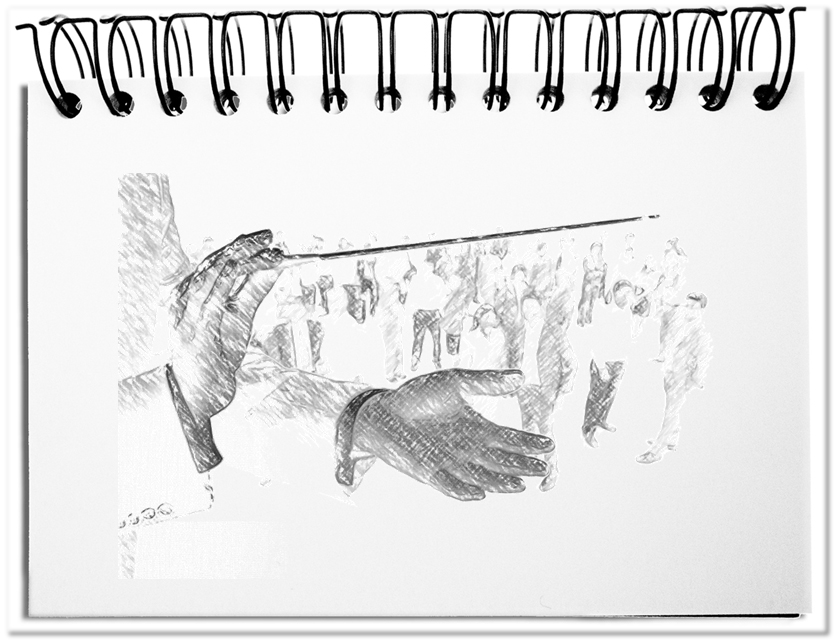
Bottom line: Like an orchestra will never like to forgo the conductor, we cannot let go the integrating role of leadership in the future. Each undertaking needs the strategic alignment and concluding decisions by executives. The guidance becomes state-of-the-art by using the new possibilities for cooperation.