
Archiv der Kategorie: English

Distributed leadership shares knowledge

The right decision needs the right understanding of the situation at the right time. Executives secured their claim to power for a long time based on the maxim „Knowledge is power “. Since in the past twenty years the Business processes, the IT and the organization were effectively streamlined, further progress can only be carried out by each individual. For this purpose, the employees receive in their role defined tasks, with the necessary authority and, in addition, the responsibility for the results. The prerequisite for this form of distributed leadership is openness through sharing the existing knowledge.
Wissen

In order to facilitate the decision making for the employees and in the interest of the joint goals, the access to the following information has to be guaranteed.

  • The context of the enterprise needs the overview of the corporate sites (incl. contact partners and local information of all kinds), the description of the market (incl. understandable market indicators and news) as well as the important internal and external stakeholders (e.g. suppliers, partners, and customers).
  • The products and services, competencies and processes that define essentially the business build together the strategic core. Thus, the employees can align their doing more easily to the value-adding functions.
  • The strategic and operational goals as well as key figures (incl. historical revenue and sales data, successes and difficulties, HR evaluation criterions) are the pre-requisites for a coordinated, successful goal achievement.
  • The description of the values, the rules and the escalation procedures shape the corporate culture.
  • The barrier-free access to all other databases (e.g. projects, products, procedures) avoids disturbing delays and reduces wasteful friction losses.

Bottom line: Enterprises cannot afford any longer to concede individuals any kind of knowledge lead. All have to be in the position to decide at any time that it is favorable for the enterprise as a whole. One of the most important pre-requisites is the equal access to ALL information. The only exception is information that is classified as secret.
30 years since the Fall of the Berlin Wall

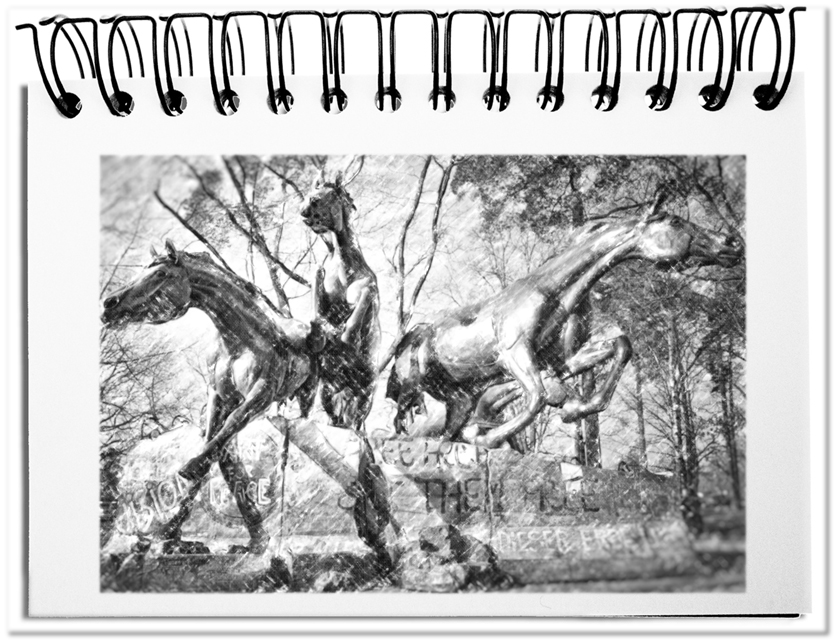
The walls of Babylon were one of the Seven Wonders of the Ancient World. The Chinese wall secured China for several centuries against the rest of the world. Even today walls are still important. Within more than twenty years, the Berlin Wall became an important part of the global memory – especially due to its fall on November 9, 1989.

Mauerfall

These 160 km that had surrounded the western part of Berlin plus the over 1300 km of border between the GDR and the FRG were a critical line of fracture between East and West – the German part of the iron curtain. Altogether at least 626 humans died in the attempt to cross this border. In the forty years of the GDR, estimated two hundred thousand detained were locked up in prison for political reasons. Three to five million people left the GDR between 1949 and 1989 (see in German http://ow.ly/DY8Zd). Over decades hundreds of nuclear missiles were ready to be launched in order to transform Germany into a nuclear desert. The damage that many people suffered cannot be undone. History will never forget these victims.
The fall of the Wall on November 9, 1989, ended the division of the world into East and West, the excessively bureaucratic and dictatorial system of the GDR as well as the latent nuclear threat for Europe. The credit for this goes to the reform movements in Poland, Hungary and Czechoslovakia and, above all, to many people of the former GDR, who fled into the embassies and demonstrated for freedom in the Monday Demonstrations. Thus, the November 9, 1989, is a turning point in world history removed the sword of Damocles of nuclear elimination 25 years ago. No gratitude of the world can properly meet this achievement.

After 25 years the separation should be overcome. Hopefully, the vanished border is not pulled up again from the west by populist propaganda.

All the best for the thirtieth!

What remains?

Still today, walls and fences exist between different ideologies, belief and economic systems. The Demilitarized Zone separates the North from South Korea. Between the US and Mexico a fence of 4m extends over 3000km. Peace lines separate Catholics from Protestants in Belfast. Europe has mainly natural borders, but in some places border installations are installed, e.g. the Spanish city Melilla is separated from Morocco by a 6-meter-high fence. A new form of border is Frontex (see https://en.wikipedia.org/wiki/Frontex).This organization secures the external borders of Europe. What does it actually take to learn from history?