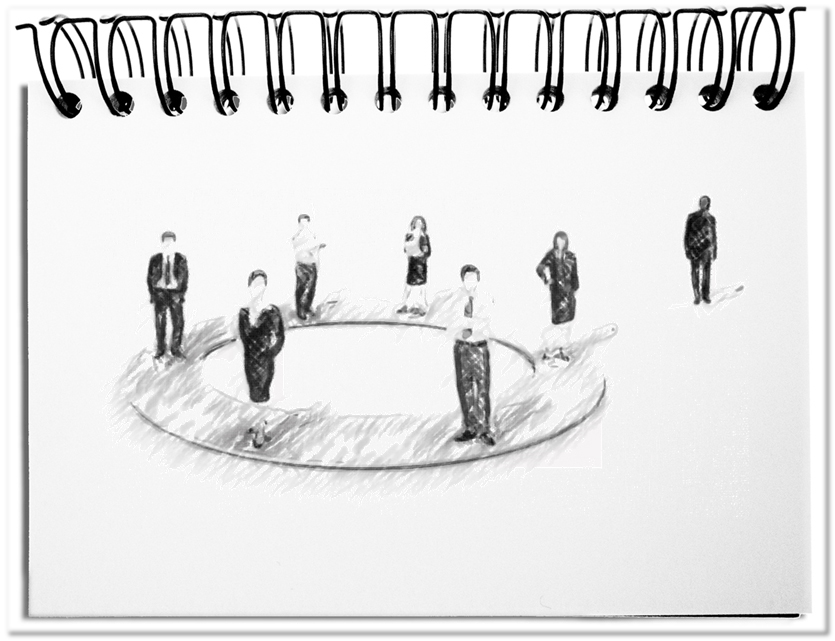
The main task of the strategy, the plan or the own initiatives, is to keep all aspects in line. It concerns the seizable products, facilities, storages, transport equipment, material as well as the immaterial, mental factors such as convictions and cultures. These mental aspects are very stable and prepared for long-term use. They change almost unnoticed in individual areas, so that there is sufficient time available to adapt to the new conditions. The life cycles of the physical aspects however shortened so that the development of a plan is nowadays a complex venture. What does this mean for humans, machines and business models?
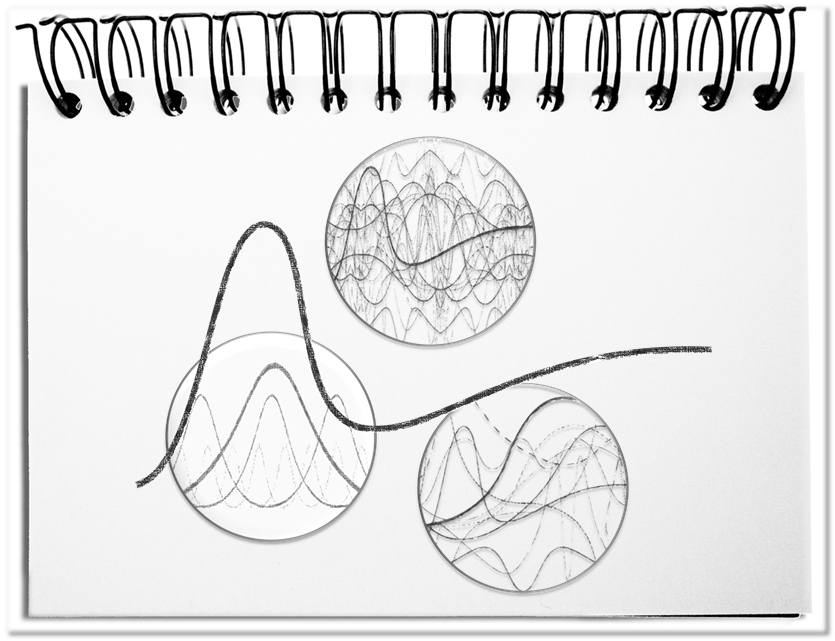
We learned that everything follows lifecycles – starting with the Kondratiev cycles that divide the last two hundred years into waves. The Gartner Group finally introduced the Hype Cycle for IT- solutions. Thus, we have a tool for a long time that arranges the elements of the business. The purpose of such curves is to make the business complexity manageable, in order to better justify decisions. Since nowadays all aspects can be described in such a way, we again have a complexity of lifecycles that can only be overlooked with difficulties. They function at the same time and affect decisions. Gary Hamel already predicted in 2000 that leading enterprises of the future are characterized by fast development and replacement of business models. Additionally, however, the interrelationships of humans, machines and business models must be considered.
- Human
Despite all the technological developments, people become more and more important for the alignment and control of business procedures. As soon as you have to make decisions outside of the routine, it requires people with their convictions, creative abilities and their sense of duty. The advancement of these attitudes is an essential task of everybody. For smart deployment, it is important to know the ways of thinking and the talents of the employees. Skill profiles and the understanding of the mental states are the basis, in order to be able to assign the suitable employees to the tasks. - Machine
The machine includes today not only the physical cogs that keep production moving, but also digital aspects that represent the physical and contentual parts in the virtual space. This covers all equipment, including the computers with their programs, databases and networks as well as all interconnected sender-receiver-systems. Together they represent the machines that keep today the momentum of the business. Each individual component has thereby its own life cycle that does not only result from the technical advancement, but also from the economic interests of the manufacturers. Unfortunately all components are in another phase of the life cycle. As soon as fundamental technologies begin a new cycle, they also carry away dependent components, which again drag others along and so on. The simplest example is the operating system of the computer. A new version of Windows requires new printer drivers, requires new printers, requires new ink cartridges … For this reason today the Enterprise Architecture management (EAM) is an important IT-task to illustrate the current and the future IT-landscape in a model and to create a framework for decision making with a roadmap. - Business model
The business model bundles the business components. This includes the following elements. The deliverable concept contains the extended business idea. The earning model describes the prepared income sources. The value creation determines the procedure of delivering the products and services. The organization is the internal network. The partners extend the internal network to the outwards. The customers are the target groups, which give the cash-flow to the enterprise, in order to act. Resources are the means that the employees need for producing the deliverables. Communication covers the channels to all involved parties. The coordination specifies the control mechanisms.
The complexity of the business model results from the different life cycles of its components and their mutual dependency. At the same time the feasibility is determined by humans and the machines. The competition takes place on the level of the business model. Customers buy the deliverables that cover their needs best. For this reason it is an important task of the leaders to develop a business model as viable and competitive as possible that is not only attractive to the customers, but also to employees and partners.
The art of the strategizing coordinates the asynchronous life cycles of humans, machines and business models. The joint initiative only succeeds, if planning is accomplished holistically and the components are manageable. It is not enough to develop visions for the machines, or social ones, or economical. The viable conception of the future evolves, if all areas are considered with their interactions. The development of the various elements requires at the same time the overarching expansion of the company. The purpose of the company should lead and not the general, technological development.
Bottom line: The business delivers the desired results, if it is based on a holistic plan that considers people, machines and the business model. Humans are thereby the mobile, formative variable that makes the machines and the business model to become real. You only have to create the appropriate conditions – capable humans, effective functions of the machines and a viable business model.