
Archiv der Kategorie: Governance

Governance covers regulations and control aspects.

Compliance – Life-threatening thrombosis in organizations

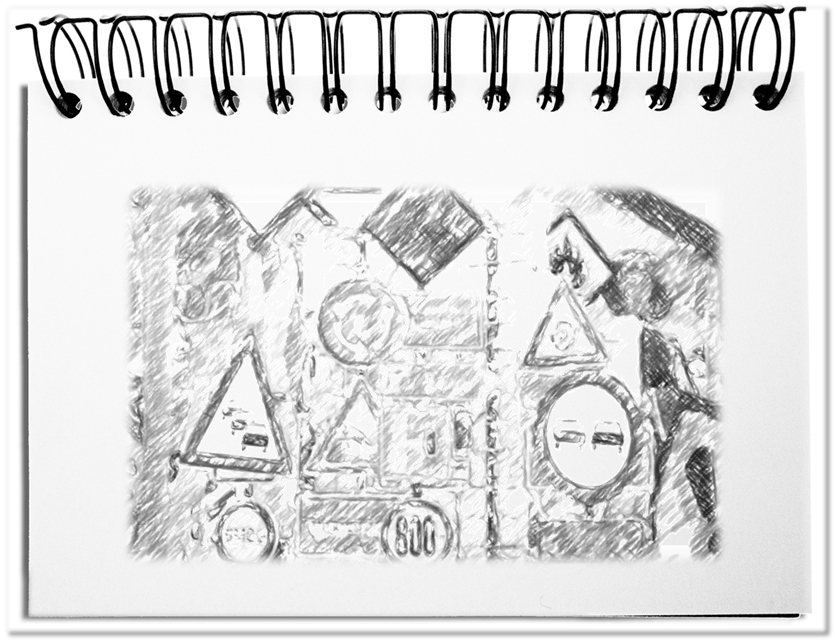
Surprise, surprise. As soon as you offend against the law, you make yourself liable to persecution. This is valid for cartels, bribery, embezzlement and all activities otherwise prohibited by law. Additionally companies afford more and more job positions to take care about the formalization of procedures and the appropriate good behavior. The more global an enterprise acts, the more complex become the rules. How can you prevent a life-threatening thrombosis in the procedures of the enterprise?
Schilderwald01

An organizational thrombosis is a sickness of business processes. In this case internal regulations pollute the free flow of data, information, deliverables and decisions. If the execution of a process is stopped, then a backlog is build that impedes the actual task that produces products or deliverables. In the worst case it will lead through bad results to an economic infarct. In medical science it is helpful to use medicine that prevents clotting as well as compression bandages, which prevent a growing of the thrombus. What are opportunities that you have in business?

  • Make laws obeyable
    Laws are developed in the interplay of the entire juridical system. It is not possible to recognize all influences from other laws in the respective law. For this reason enterprises should make the interpretation of laws easy for the employees. This enables people to act on the one hand compliant to laws and to do it with little expenditure.
  • Simplify decision paths
    The personal responsibility of leaders that results from the regulations of banks and the stock exchanges led to set frameworks on different decision levels, e.g. budget borders and scope restrictions. It is better to drive as few decisions as possible through the escalation ladder. The subsidiarity principle offers an appropriate approach. Decisions are made on the level of execution. Only, if the respective level is not able to decide by itself, the above level has to be called.
  • Focused use of digital media
    The simple usability of the Internet and email makes it easier for the employees to secure their decisions in all possible directions. Colleagues, who would not be involved in the actual decision, are also forced by respective insinuations to grapple with the resolution (example: „… as far as I understood, I assume that … “). An appropriate E-mail-Governance, which for example forbids decision making via CC as well as extensive CC-address lists or a „zero email tolerance “on weekends, purges the flood of messages.
  • Deregulate
    The number of guidelines grew over the years, without eliminating outdated rules. Most enterprises also do not have a central listing of the internal, external and international regulations. They even do not know the number of regulations. A belated listing does not help. It is a good start, if the majority of regulatory departments are reduced. Thus the rampant growth of new stipulations stops immediately. All internal rules that do not serve the compliance of laws and agreements should be replaced by basic rules, which fix the individual responsibility and self-organization. Afterwards, the remaining guidelines are valid any longer. Now the bureaucracy restarts on a low level.

Bottom line: The right moment to act against a thrombosis is always NOW. Laws become easier and obeyable with less expenditure with the help of practical commentaries. Eventually, it is crucial to streamline the bureaucracy and to resist the natural impulse of intending to regulate the regulatory madness with further regulations ;-).
The Big Brother of the street

Fundamental changes that are targeted on all road users need time and tactical instinct. Otherwise, today’s ‘Anger citizens’ go too early on the warpaths. Since the collapse of socialism, governments of the former free west do no longer know compunctions to discover the advantages of the planned economy. The current data processing offers more opportunities of an encompassing supervision that Orwell could ever have imagined. The scruple of politicians to use something like that for their own political career is approaching zero. At the same time the protective mechanisms of a society are too slow, in order to react timely to these changes. For unveiling these governmental attempts, it requires fantasy early on for refining the new plans of the public traffic financing – The Big Brother of the street.

BigBrotherVerkehr

Besides the data storage of mobile communications data and the tracing of mobility patterns, the next collection net evolves the road toll facilities. The so-called reason is the participation of all highway users, including the foreign ones, in paying for the preservation of roads, bridges and the monitoring technology. Behind these installations could also exist the following possibilities that would increase imperceptibly the influence of the government.

  • Increase of the road charges
    Even if a set-off with the vehicle tax happens at the beginning, the system offers a simple set of keys, in order to increase the fees in the mid-term. If for example more and more bridges and roads have to be repaired, one can put with a shrug additional costs, in the form of fees, on the shoulders of the road users, without any literal tax increase.
  • Automatic number recognition
    The toll collect facilities lead to a new flood of mobility data of the vehicles. The position of a vehicle can be pursued on a long-term basis with this encompassing control, similarly, as with the mobile phone detection. This enables additional insights about the behavior of the citizens. For example, the link with the mobile phone data becomes interesting. The only thing that will then be missing is the implanted personal chip. We will not only know where the mobile phone or the car is, but also reliably, where the person is at any point in time.
  • Speed control
    Nowadays speed control uses fix or mobile speed cameras that measure the current speed and document a too high speed with a photo. Immediately after the misdoing or weeks later it will be punished. In the future, the time difference between two toll control places can be measured. Then the misbehavior will not only be registered point by point, but across the whole distance. If the average speed will be too high, it incurs a fine.

Even if the toll focuses at the moment only on highways, the functioning system can be expanded at any time to all kinds of road. Eventually the vehicle tax gets transformed to a fee for using the streets based on usage. The politicians eliminate then with populist fuss the vehicle tax. On the bottom line, however, the costs increase for everybody and the surveillance state will be possible in a way that can only be undone with difficulty.

Bottom line: In the plans for the German car toll system are more possibilities hidden, than one can recognize at first sight. Imperceptibly a new Orwellian system evolves that does not only cement the glass citizen. At the same time established tax models become state fees based on usage. Who already gets the idea of a flat rate, gets the point. Big Brother Traffic is an additional building block to let 1984 become reality.