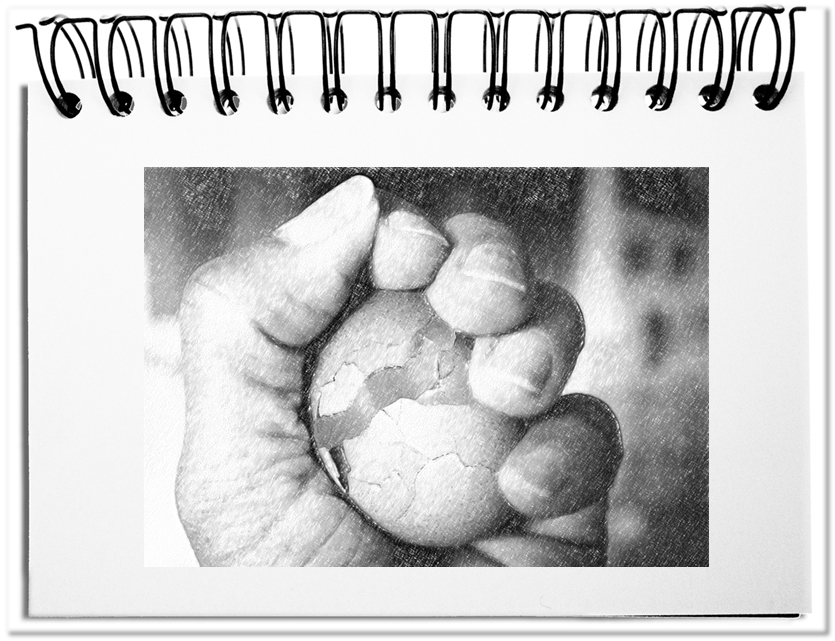
Every time I take an egg in my hand, I pay attention that it does not slip out and breaks on the ground. At the same time, I avoid making a too strong grasp, so that I do not break it. I am aware that the shell is stable, but nevertheless the careless pressure could crack it.
Aren’t executives not in a similar situation? They lead the employees and ensure that they adhere to the sets of rules that result from the laws, the corporate guidelines, contracts and other arrangements. As with the egg, the leaders have to create the balance between a too loose and a too tight guidance. If results are missing or the employees withdraw their respect, then the leader forfeits his authority. If the manager controls too pedantic, then he risks the staff commitment and loses employees through fluctuation in the mid-term. In any case the danger exists that the basis for cooperation will be broken.
In the past executives could grow into their tasks by accompanying experienced superiors. Today, after graduating, a few internships and some short professional experiences, one can already get assigned to an executive position. This trend is amplified by HR policies in large companies, which rely more and more on assessments in artificial „lab conditions “. We can recognize these bosses from their work style. They are characterized by their Micro Management, the taking over of project functions and thereby missing out the leading.
The following leadership tasks are crucial, in order to accomplish the guiding role.
- Communication
The regular exchange of thoughts, opinions and facts is particularly important and at the same time very time-consuming in groups. The more employees are directly assigned, the more time is needed for the exchange of thoughts and the less time is available for each employee. It takes time for personal talks as well as for different forms of conversation (e.g. fireside chats, coffee talks, powwows). Besides personal discussions the comprehension of the employees is increased by publishing regularly important topics as emails, newsletters or a personal intranet page. - Coordination
The skimpiest alternative of coordination is the command chain with their order and obedience. It is actually clear for most people that this model is no longer workable. Who would like to be led in such a manner! For this reason there are today further mechanisms for coordination, e.g. agreements, targets or the Linking pins. This naturally requires more time, than simply issuing an order. In the long run, however, the involved people learn to act autonomously. Then the remaining effort happens particularly in the information exchange. - Cooperation
Also executives are forced to work together with others. For this purpose an environment should be created, that facilitates teamwork. Apart from the necessary equipment with spaces and media, workshops offer a setting outside of everyday life. In these work groups people coordinate the direction of the area and business models as well as the culture.
In all cases it is crucial to find the right balance between demanding and promoting. It is not a matter of not being able to exert pressure, but to create with the right leadership results AND to keep the acceptance, motivation and commitment of the employees.
Bottom line: Leadership is a critical task, since it has a large influence on the economic well-being of the company. It is an important contribution, in order to keep the teams on track and to provide them with sufficient hold. The same way as the too loosely or too firmly held egg breaks, the efficiency of a team stands and falls with too little or too much leadership.
See also: Out of the liability