As soon as you give Mr. Hammer a hammer, everything looks like a nail. This curse began with the division of labor. This creates in parallel Screwdrivers, Sawyers, Grinders, Painters, Welders, and Gluers etc. Everybody is brim-fill of energy and designs the environment depending on its specialty. In a similar way, administrative or better bureaucratic functions evolve in the enterprises and the public administration. All undertake dedicated their tasks and produce one administrative act after the other. How can you stop this fate?
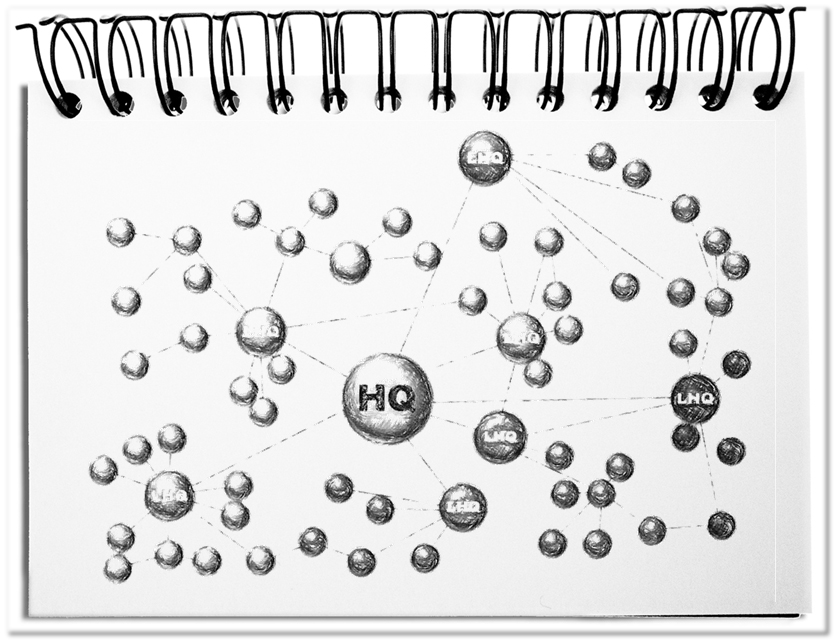
Let us consider as an example a group company that has its headquarters somewhere in the world. In different regions are local headquarters that have a similar structure and tasks. The Headquarter (HQ) controls the local headquarters (LHQ) that control the locations. All have staff positions that develop eagerly strategies, target values and guidelines – everyone, of course, for its area of responsibility. The result is a flood of regulations that develops redundantly, overlaps and often contradicts. Due to ever more hierarchical levels, this effect multiplies.
The following measures might defuse this development.
- Clear, non-overlapping distribution of tasks, authorities and responsibilities
Everyadministration gets an aligned bundle of tasks, clear authorities and obligations. This avoids duplication of work, creates fewer regulations and a smaller variety of interpretations. The related units streamline themselves. - Bundling of roles at the highest level
The higher regulations are positioned in the hierarchy, the more uniform and the more economical become the results. This is particularly valid for basic guidelines, like e.g. the reporting system, performance reviews, or travel guidelines. - Defined escalation and decision procedures
Most of the friction losses result from unclear or competitive decisions. The clear, for all available descriptions of the decision levels, procedures and related committees enables all to obey the official channels. - Defined reprisals in case of infringement
Rules that are not connected with painful punishments, defuse the requirements. An understandable catalogue of implications for offenses increases the probability of compliance.
Bottom line: In each organization, no matter how large or distributed around the world, bureaucratization can be reduced by re-organizing the competencies. For this purpose redundancy-free roles are needed that are as high as possible established, with clear official channels and are provided with valid sanctions.
P.S.: The example of the European Union shows the same tendency. As long as the European Union can afford the luxury of national right in competition to the European right, enormous amounts of tax funds are wasted on unnecessary administration – quite apart from the bureaucratic hurdles between the 28 member states. The non-overlapping distribution of tasks, the establishment of the regulating agencies on the highest level, clear official channels for each European Union-citizen and for all a binding, uniform juridical system would make bureaucratic operational sequences easier. The bundling of national tasks within the European Union could save ten percent of the national bureaucracies.