
Archiv der Kategorie: Management

Here you find topics like planning, organization and leadership.

Comparisons that over-do

All living things derive their essential energy from the environment – the vital food and liquid are absorbed. These inventories are distributed internally and used for different tasks during operation. As soon as the stocks fall below a certain degree of filling, the renewed supply of energy is inevitable and the cycle starts all over again. The required quantity is determined by the size of the body, the number of consumption points and the desired power. For deposits that are currently not needed stocks are created, which are extracted, if there is no immediate supply from the outside. These buffers also require energy to remain available. There are mechanisms, such as the feeling of satiety, that regulate the exaggerated intake. However, today we live in an organized world of abundance. Innate sensations of satiety are getting lost. And when we additionally compare ourselves with others, it pushes us beyond the limits of what is needed.

Thus comparisons are harmful for a balanced energy intake. Let’s take a look at three such areas.

  • Possession
    The easiest thing to compare are physical possessions – my houses, my planes, my boats, my cars. The 0.1% of the world population own 80% of the financial assets. However, these assets are in the virtual space. All that it takes to evaporate these values is a sufficiently large crisis. The more than 99% then lose, but only their part of the remaining 20%, which are distributed over almost seven billion people. With 5 trillion Euros of assets worldwide, this means that 34.5 trillion Euros are distributed over approx. 7 billion people, i.e. on average per capita assets 4,500 Euros of the 7 billions versus 18,000,000 Euros of the 0.1%.
  • Reputation
    A study from the US shows that well-being does not increase any further beyond an annual income of US$ 75,000. If material things are no longer important, then recognition, appreciation and reputation offer a good opportunity to compare oneself with others. The reputation results from outstanding scientific contributions, from a special moral standing or a passionate image as well as from an extraordinary social engagement. A good example is philanthropy, private welfare, which has evolved especially where the state does not assume any responsibility. To make these comparisons visible, there are corresponding lists.
  • Performance
    Benchmarking can be carried out in all areas and strata of the population – e.g. financially, professionally, spiritually, mentally, physically, in partnership, emotionally, and artistically. The development to road panzer was certainly fueled by the neighborly competition for the largest. The rivalries in professional life begin, when one compares the own progress with that of others and their advancement in the first job. The fervor of one’s own faith is defined through regular participation in religious rituals and engagement of missionary work of dissenters, so that one stands in the line for salvation before the competitors. Or let’s take as a last example any kind of physical fitness which puts, through regular training, your own body in a better shape than that of your acquaintances.

Bottom line: The comparison is an essential accelerant for the competition in all areas of life. A certain amount of competition is helpful in overcoming one’s weaker self. However, the various driving forces have no point of satiation, which leads individuals to exaggerate. These zealots are not happy with what they possess, represent or perform. The result are the excesses that generate extremism in all areas. The triggers are predominantly the everyday benchmarks that drive us forward consciously or unconsciously – Comparisons that over-do.
The ONE intention behind every strategy

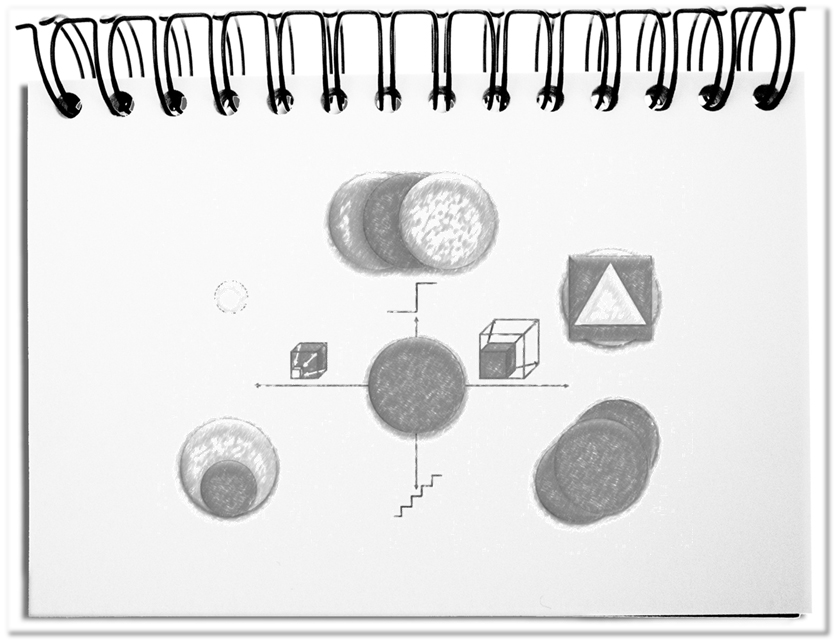
Business ventures should never be set up without a clear and comprehensible intention. This purpose gives all activities one direction. The most profane is to win. However, the intention does not always have to be the first, the fastest, the greatest, or the pressure to grow steadily. The direction could also be a fitter company, or better utilization of existing resources, or more satisfied employees. If people do not agree on one direction, any success can be undermined by concurrent disparate efforts by the various parties. That is why the intention considered by all parties is an important prerequisite on the way into the future.

The intention is somewhere between growth and contraction (horizontal axis) and between the gradual change of first order and the radical change of second order (vertical axis). Put simply, the following intentions arise.

  • Consolidate
    Making the current business more robust doesn’t sound very exciting. The protection of viability on the basis of the available means is a good measure to experience the future. For this purpose, existing offers can be developed, better placed or advertised. Additionally, the chosen value discipline (customer, product or process orientation) can be further applied.
    As long as the revenue has good prospects, this is a reasonable approach.
  • Activating
    Business can be made fit for the future by leveraging existing core aspects, offerings, sequences and capabilities and by mobilizing existing skills. For this purpose, the image of the company is polished up, the culture is described or the entrepreneurial awareness of the employees is refreshed.
    It is a question of making greater use of established paths with the current range of offers.
  • Expanding
    When adjacent fields of business are identified and decisively developed, new work contents, forms and fields of activity emerge. This is made possible by continuous creation, cross-functional cooperation and shifting the boundaries of end-to-end operations.
    The closer surroundings of the own field of activities are easily accessible and offer direct contacts for the add-on of the own assortment.
  • Reinventing
    When you leave the comfort zone of the previous market, completely new possibilities open up. New business can be exploited and previously unnoticed partners can be found. In the end, this changes the building blocks of the business. Everything starts with radical BPR, the invention of new portfolios and the opening of completely new customer groups.
    Such developments are driven by personalities, who have a clear idea of what they can additionally do for their customers.
  • Concentrating
    If the entrepreneurial body suffers from overweight and the incomes do no longer cover the current enterprise, a thought-out compaction of the activities is inevitable. The whole thing should not be torn into the abyss – e.g. closure of plants, losses or bankruptcy. This is made possible by abandoning tasks that no longer contribute, because they are obsolete or simply no longer in demand. Tasks that are not part of the core business are outsourced.
    Superfluous business and routines are proliferating, if you don’t notice the need for action and don’t take early care to shift capacities.
  • Closing
    When all measures have been exhausted, economic collapse will occur sooner or later. In the interest of all those involved, the orderly task or separation of individual areas or locations is the last resort, if it enables employees to make a secure transition to new tasks.
    Due to the early dissolution, external entrepreneurs may find ways to continue the business under different premises.

Bottom line: It may seem strange that the intentions can always be condensed into the six directions described. As soon as you start selecting the direction, you will quickly notice that nerve-wracking discussions are being replaced by joint plans. The distinct intention should be clear to every manager and every employee and the areas should be aligned in a common direction. It is the ONE intention behind any effectual strategy.