
Archiv der Kategorie: Management

Here you find topics like planning, organization and leadership.

From oil vessel to speedboat

The bureaucratization in the areas of the enterprise leads to unnecessary, but nevertheless, rising overheads. Procedures become prevention machines due to bureaucratic refinements.

  • The purchasing department only takes care of large suppliers.
  • The controlling department concentrates mainly on the large expenses.
  • The IT department is only interested in large IT systems.
  • The strategy department puts the emphasis simply on core processes and functions.

Few, large savings are obtained this way. But the many, small reductions of effort that constitute a large block in total, fall through the cracks. We have to re-think the enterprise – from oil vessel to a speedboat.
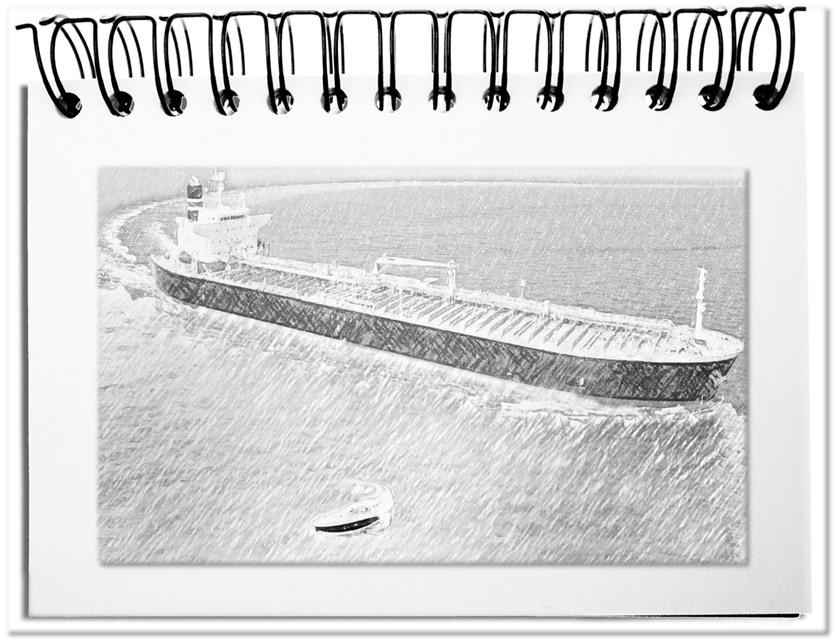
tankerschnellboot

The advantages of large tankers, the scale effects of a company, are exhausted. Now the motto should be: many pennies make a dollar. Many agile speedboats offer small potentials that supply large savings in total. For this purpose the following approaches can be used.

  • Deregulate small procedures
    The degrees of bureaucratization should be aligned to the size of the individual case. Large activities need, due to their large influences and dependencies, defined rules, in order to minimize the propagation of harmful effects. Simple defaults are sufficient for normal activities, since mistakes can be corrected quickly. Small procedures can be accomplished unregulated, since, on the one hand, the variety of the procedures can only be standardized with difficulties and, on the other hand, little damages occur when they fail. Thus, a lot of unnecessary, bureaucratic procedures that result from general standards are void. This releases work from excessive rules and creates time for the critical ones.
  • Prepare mass optimization
    Efforts for enhancements are most beneficial, if much can be achieved with simple activities. The small, regular operational sequences promise in total many advantages, due to their enormous number. These are mainly activities that take place at every workplace and occupy all employees in daily work. It includes the regular correspondence (e.g. the orders, the minutes, and the circular letters), repeating operations (e.g. the email administration, the travel preparation, and the meeting arrangement) as well as the small decisions (e.g. the task prioritization, the scheduling, and the control of quality). Mass optimization becomes possible by recognizing at an early stage the small time-sinks and by sharing solutions in the Intranet. The employee suggestion system offers a quick starting point, if the small, non-technical aspects of the daily work are also processed through this system.
  • Enable self-optimization
    It is best, if the individual employees are empowered to put the finishing touches to themselves. They need autonomous control of their tasks, authorities and responsibility. For this purpose, roles are specified for operational functions. The tasks of the functions are collected (e.g. compiling addresses, creating texts, sending letters), the necessary authorities, the power to do something, determined (e.g. access to all addresses, to send a letter to somebody), and the responsibility defined (e.g. to reach the correct target audience, error free). As soon as the employees have generally the authorization to improve their tasks autonomously, self-optimization becomes possible.
  • Reward small achievements
    The reward of small achievements promotes the rework in all places of the enterprise. On the one side, huge savings result from the large number of users and, on the other side, from their application in the long run. The reward of small, confirmed enhancements encourages the staff to take part. This should contain also long-term effects that are retrospectively identified and confirmed.

Bottom line: The time of the large effects based on large initiatives is reaching to an end. From now on, there will be many small enhancements that can be realized autonomously by all involved ones. Large savings arise from the mass of refinements and the sum of the many small savings. For large enterprises this means a new look at the own elements and interrelations – away from oil vessel to speedboat.
Less and less for more and more

With each private or business purchase we evaluate, whether the respective deliverable justifies the price. I find the practical approach of a colleague interesting, who determines the value of a book in a simple manner. First he weighs the book in his hand and feels the haptics. Then, he looks for the number of pages and judges the binding of the book. Finally, he checks the typeface, the illustrations and the wording of an arbitrary page of the book. His evaluation of the book results from all criteria, independently of the actual content.

The business procurement is not as simple, since the deliverables, the products and services, can not be checked in such a simple manner. Already the specification of smart quality criteria is difficult for the buying company. Long-time purchasing power has made the procurement forget their abilities to completely evaluate in a fair way. This is one reason that they simplemindedly want to pay less and less for more and more.

Immermehr

One approach is to evaluate objectively the people, the machines, the material, the infrastructure and the margin of the supplier. The result is a realistic price calculation acceptable for all parties, which let suppliers and companies survive and prosper on a long-term basis. Beside Specific, Measurable, Adequate, Relevant and Testable descriptions of the requirements, it is helpful to consider the following components of a deliverable.

  • People
    Each deliverable is supplied by a certain number of people. They must have capabilities and cooperate reliably. At the same time, they need humane working conditions and a remuneration that ensures them a living. If one aspect is not fulfilled, problems evolve that endanger the overall system of the procuring party.
  • Machines
    are an important component of the value chain. The reliability and the quality of the results are determined by the quality of the components and their manufacturing. Good machines cost more. Also the contribution of services requires equipment – above all computers. Their reliability determines the steady contribution of the services. Failures of the machines endanger the overall system of the procuring party.
  • Material
    Some deliverables depend on raw materials or particularly treated materials and parts. Since meanwhile there is a world-wide competition for raw materials, the suppliers do not accept any longer unfair prices. Instead the dependent manufacturers have to be grateful to receive supply. An awkward procurement policy can endanger the overall system of the procuring party.
  • Infrastructure
    The infrastructure starts with power supply, goes to the transport routes and to the various buildings. A failure of the infrastructure can happen very quickly in crisis areas. This increased risk is not necessarily part of the economic calculation of offshoring. The consequences of earthquakes, pirates and bad building structure can endanger the overall system of the procuring party.
  • Margin of the vendor
    All profit-oriented enterprises strive for growth. Unfortunately, growth always happens at the expense of others. In the last twenty years, companies adapted their procurement in such a way that long-term contracts give them constantly sinking prices. The supplier has only a little leeway. (s. the previous bullet points). What remains is the renunciation of parts of the margin. If the supplier waives these non-profitable businesses, it can endanger the overall system of the procuring party.

Under the motto of a competitive procurement, companies delude themselves to the fallacy that they always have sufficient suppliers, in order to be able to negotiate ever lower prices. The former officially preferred supplier that made 80% of their business for one company, reorient oneself and supply perhaps only 20%. Thus, the purchasing power of the companies evaporates slowly, but constantly. Today the suppliers gain control and determine who gets what. A reasonable comparison of the deliverables is the basis for close, trustful cooperation that let participate in the past all companies involved in the success.

Bottom line: Each deliverable, whether it is a product or a service, creates expenditure for its production. As soon as this expenditure is not rewarded, not only the lowly paid supplier suffers. This will lead sooner or later not only for the supplier, but also for the procuring company to a collapse. Only with prices that ensure the viability of all involved parties, the overall system will survive.