
Archiv der Kategorie: Management

Here you find topics like planning, organization and leadership.

Less and less for more and more

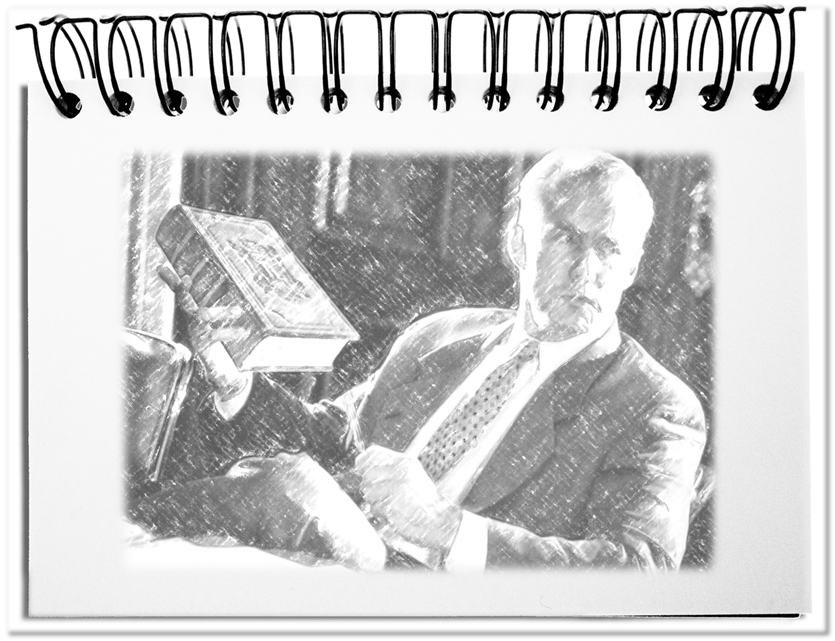
With each private or business purchase we evaluate, whether the respective deliverable justifies the price. I find the practical approach of a colleague interesting, who determines the value of a book in a simple manner. First he weighs the book in his hand and feels the haptics. Then, he looks for the number of pages and judges the binding of the book. Finally, he checks the typeface, the illustrations and the wording of an arbitrary page of the book. His evaluation of the book results from all criteria, independently of the actual content.

The business procurement is not as simple, since the deliverables, the products and services, can not be checked in such a simple manner. Already the specification of smart quality criteria is difficult for the buying company. Long-time purchasing power has made the procurement forget their abilities to completely evaluate in a fair way. This is one reason that they simplemindedly want to pay less and less for more and more.
Immermehr

One approach is to evaluate objectively the people, the machines, the material, the infrastructure and the margin of the supplier. The result is a realistic price calculation acceptable for all parties, which let suppliers and companies survive and prosper on a long-term basis. Beside Specific, Measurable, Adequate, Relevant and Testable descriptions of the requirements, it is helpful to consider the following components of a deliverable.

  • People
    Each deliverable is supplied by a certain number of people. They must have capabilities and cooperate reliably. At the same time, they need humane working conditions and a remuneration that ensures them a living. If one aspect is not fulfilled, problems evolve that endanger the overall system of the procuring party.
  • Machines
    are an important component of the value chain. The reliability and the quality of the results are determined by the quality of the components and their manufacturing. Good machines cost more. Also the contribution of services requires equipment – above all computers. Their reliability determines the steady contribution of the services. Failures of the machines endanger the overall system of the procuring party.
  • Material
    Some deliverables depend on raw materials or particularly treated materials and parts. Since meanwhile there is a world-wide competition for raw materials, the suppliers do not accept any longer unfair prices. Instead the dependent manufacturers have to be grateful to receive supply. An awkward procurement policy can endanger the overall system of the procuring party.
  • Infrastructure
    The infrastructure starts with power supply, goes to the transport routes and to the various buildings. A failure of the infrastructure can happen very quickly in crisis areas. This increased risk is not necessarily part of the economic calculation of offshoring. The consequences of earthquakes, pirates and bad building structure can endanger the overall system of the procuring party.
  • Margin of the vendor
    All profit-oriented enterprises strive for growth. Unfortunately, growth always happens at the expense of others. In the last twenty years, companies adapted their procurement in such a way that long-term contracts give them constantly sinking prices. The supplier has only a little leeway. (s. the previous bullet points). What remains is the renunciation of parts of the margin. If the supplier waives these non-profitable businesses, it can endanger the overall system of the procuring party.

Under the motto of a competitive procurement, companies delude themselves to the fallacy that they always have sufficient suppliers, in order to be able to negotiate ever lower prices. The former officially preferred supplier that made 80% of their business for one company, reorient oneself and supply perhaps only 20%. Thus, the purchasing power of the companies evaporates slowly, but constantly. Today the suppliers gain control and determine who gets what. A reasonable comparison of the deliverables is the basis for close, trustful cooperation that let participate in the past all companies involved in the success.

Bottom line: Each deliverable, whether it is a product or a service, creates expenditure for its production. As soon as this expenditure is not rewarded, not only the lowly paid supplier suffers. This will lead sooner or later not only for the supplier, but also for the procuring company to a collapse. Only with prices that ensure the viability of all involved parties, the overall system will survive.
The future of leadership

Guidance is one of the oldest roles in societies. And nevertheless executives are continuously looking for the right style of their role. Apart from the tasks and tools of leadership managers are concerned with the following questions.

  1. How much involvement is possible?
  2. How many rules are needed?
  3. How do I distribute tasks, authorities and responsibilities?
  4. How much loyalty do I need? How does it emerge?
  5. How do I promote cooperation?
  6. How to select executives?
  7. How much leadership do we need at all?

Do new systemic concepts like holistic, autonomous units, interconnectedness, participation, and self-organization, pave the way for new, yet not recognizable styles of leadership? How does the future of leadership looks like?

Fuehrung

Executives provide goals, organize, decide, evaluate and foster employees by using various tools (e.g. role descriptions, regular communication, performance reviews). They control with it their area, create orientation and take responsibility for the results (You find more about tasks and tools of leadership here: http://www.malik-management.com/en/malik-approach/malik-basic-models).
Without leadership, these aspects have to be developed in the team and consent has to be agreed. Positive examples of self-organizing groups are the agile teams in software development and other creative professions.

Nevertheless, new approaches imply also new answers to the questions of executives.

  1. Involvement results from democratic forms of cooperation, like having a say and participation. These can also be established in connection with hierarchical structures. For a long time, autonomous, self-organizing teams are common practice in the context of bureaucratic structures, like projects, Centers of Competence or Production islands.
  2. Regulations range from chaos to orderliness and from voluntary to mandatory. They are important tools, in order to clarify the desired behavior of the employees. These rules become meaningful with the appropriate level of detail that covers the tension between patronizing and autonomy. The joint agreement of basic guidelines in the governance minimizes the number of regulations.
  3. Task, authority and responsibility (TAR) of a role should be consolidated under one roof. The best example of the distribution of TAR is the subsidiarity principle of the Vatican. It bundles decisions at the point of action. Only if this is no longer possible, the role is established on the next higher level.
  4. The loyalty is an important element of leadership that cannot be directly created. On the one hand, it results from the authoritarian or charismatic attitudes of a leader. On the other hand, it evolves from the indirect stimulation of the commitment with personal, content-wise and formal commitment amplifiers.
  5. Cooperation can be designed in various ways by using the new possibilities of networking and self-organization. The exchange of information can be realized with common intranet sites, discussion groups and blogs. The employees access via mobile PCs or smartphones their necessary data wherever and whenever. The employees meet independently of their whereabout within phone and video conferences.
  6. The selection of executives has an influence on their acceptance. However, democratic approaches like the direct selection or recruiting of leaders by the employees, does not guarantee their effectiveness. Independently of the selection procedure, there will always be some employees, who accept the boss – or not. As you can also see in politics, democratic elections result in a distribution of 51% to 49% – i.e. half of the population does not want the winner.
  7. At the latest, when the number of members of an organization exceeds the magic Dunbar number of 150, we need leadership and an adequate hierarchy. Small organizations, like start-ups, can survive for a certain time without formal structures. We should not to forget that these are also often driven autocratically by a founder.

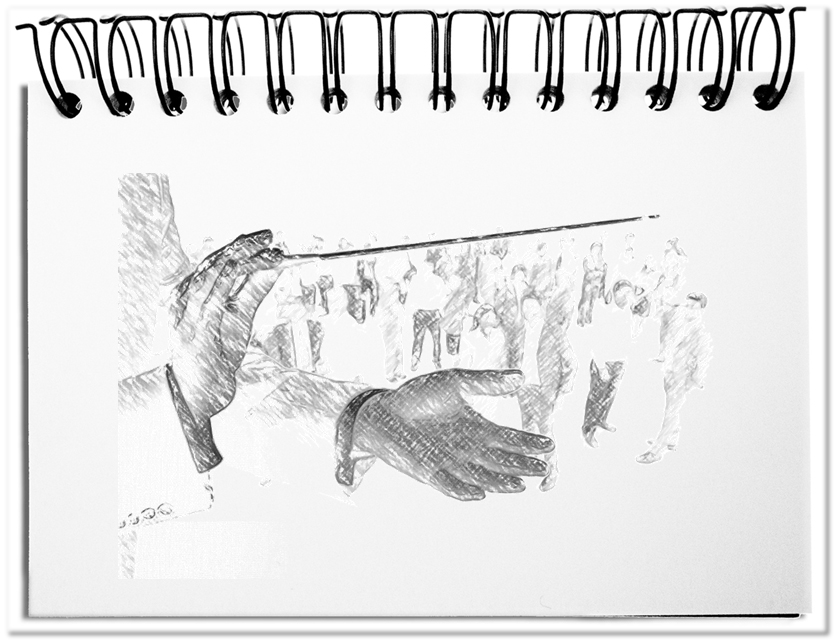
Bottom line: Like an orchestra will never like to forgo the conductor, we cannot let go the integrating role of leadership in the future. Each undertaking needs the strategic alignment and concluding decisions by executives. The guidance becomes state-of-the-art by using the new possibilities for cooperation.