
Archiv der Kategorie: English

Contacts with a difference

With the increasing popularity of social networks, new forms of the contacts evolve. The respective network gives different names to these contacts – contact, friend, circles, follower. The users decide individually on the range and/or size of their net. It reaches from the family cocoon, to traditional circle of friends, acquaintances and colleagues, to like-minded people or fans. The number of contacts goes from a handful up to tens of thousands, in special cases to millions (e.g. Lady Gaga has already more than 30 million followers).
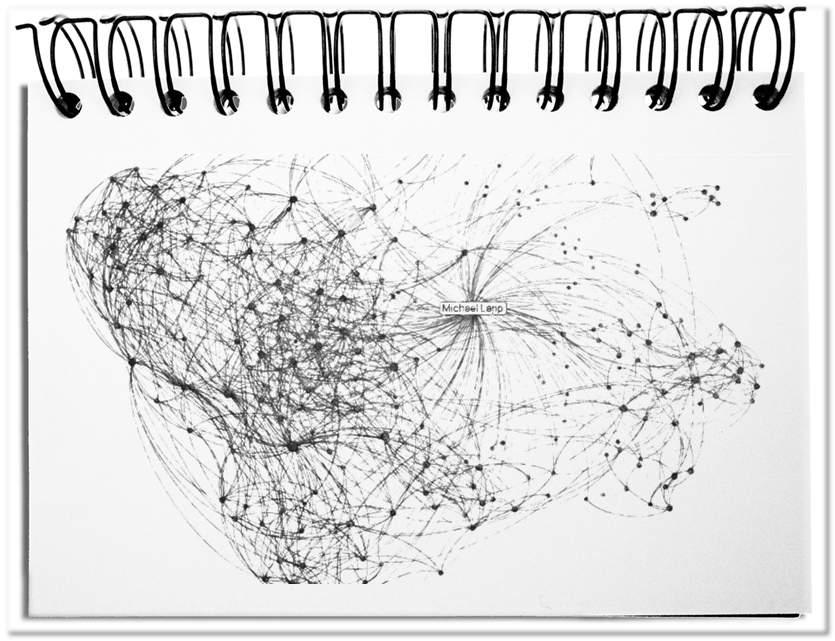
SozialeNetzwerkBsp

It is clear that the contacts with the best friends have other qualities than the relationship between Lady Gaga and her followers. One contact is not better than the other, but different. Let’s look at the contacts with a difference.

The number of on-line contacts often exceeds the number of traditional relations that exist without Internet (between 100 and 250). On Facebook, a user had in 2013 on average 342 friends. However, mutual communication takes only place regularly with approx. ten people.

This offsets a little the hype about the social networks. Eventually, the number of relationships regulates themselves to a manageable number by the available time. For the personal assessment of the own network, the contacts can be organized according to two aspects: Type of relationship and Contact strength.

Types of relationship

The type of relationship describes the social proximity and, in a certain sense, the purpose of the relationship.

  • Family/ close friends
    Here you find the direct members of the family (parents, brothers and sisters)and friends, with whom one has certain things in common. Here are the ten contacts that are maintained the most.
  • Friends/ closer acquaintance/ kinsfolk
    Friendshipsand acquaintances result from collective activities (school, study, work, and hobby). The kinsfolk cover the extended family circle (grandparents, grandchilds, uncles, aunts, nieces, nephews, etc.). The number in this group depends substantially on the user. Taking into account the common activities, it could be easily 40 to 100 contacts.
  • Personal acquaintanceships
    You are not regularly in contact with people, who you met personally and with whom you exchanged addresses. However, there is a link due to the personal encounter. This group grows with increasing age and will become over time a three-figure number.
  • Potential mailing list
    Thelargest group is those people, with whom you exchange the contact in the Internet due to common interests or something similar. Also without personal encounter, there is the possibility to contact personally or to send information. The number in this group depends substantially on the individual activities in the social networks. You can quickly develop a four-digit number of contacts. My largest Xing contact has more than 74,000 contacts.

It would be interesting to perform a study concerning the average number of contacts for the different types of relationship.

Contact strength

The second aspect is the contact strength. In this case, you look at the mutuality of the contact.

  • None/ one-sided exchange
    This is about the contacts that consist of a mere confirmation. The partners do not or very rarely exchange messages.
  • More outgoing than incoming
    In this relationship sends one partner substantially more direct messages than the other.
  • Equivalent outgoing and incoming
    This is a balanced mutual relationship.
  • More incoming than outgoing
    In this case one partner receives substantially more direct messages than he/she is sending.

In the first case, it is the natural noise that exists in social networks. The most contacts are the personal acquaintances and the potential mailing list.

Bottom line

It looks like those social networks behave as communities of the past. The core circles are still the visible 100 to 250 persons, with whom we always had a relationship. Regular, mutual contacts are take place with around ten people.

Further links:
Maintained relationships in Facebook

Dunbar’s number

Persistance of social signatures in human communication

Free willing – Deciding without obligation

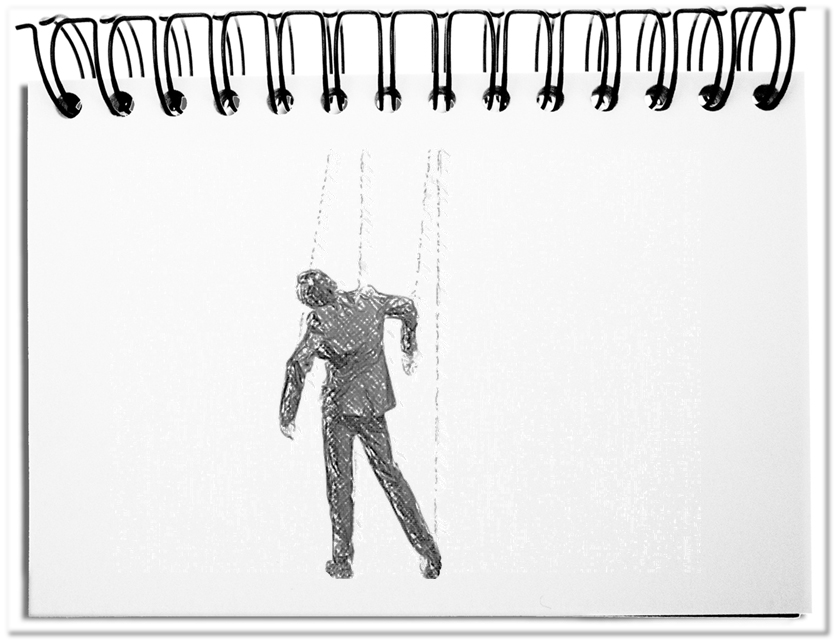
Free will is an important quality of our life. For example the fact that you clicked this article, is the result of a decision that you made freely. Possibly some key attractions, like e.g. the words free willing, accompanied you since hours, days or weeks and made you susceptible to click on this link.

The free will is used increasingly, in order to analyze the situation of other people and cultures. This can be clothing styles, questions about employment, political elections or cultural rituals. How free can somebody decide to be dressed casual on Fridays? Is it possible that sex workers do voluntarily their trade? How free are elections that obtain over 90% voter turnout? Do Japanese go voluntarily to their Nomikais (i.e. drinking meetings)? To what extent these are decisions of one’s own free will is judged more and more by outsiders. In this context arises the question, what free will actually means. Free will – Deciding without obligation?

Freiwillig

As soon as someone acts without wanting it, we call it compulsory. This is valid for example for the 20% of the employed part-time women in Germany, who would readily work longer, but have to accept part-time jobs. In all other cases, we actually speak of free willing, since the decisions are made with more or less freedom. The following free willing variants go from forced up to unconsciously coincidentally ones.

  • Threats – I want, because I have to.
    Activities that are accepted due to fear of negative effects. This includes the menaces of violence and the fear of losing something, e.g. an employment, property, or a partner.
  • Feigned, false facts – I want, because I believe.
    Activities that are done based on wrong assumptions. This includes wrong promises of politicians, lobbyists or other opinion leaders.
  • Necessities – I want, because it is necessary.
    Activities that are executed due to comprehensible reasons. This includes the insight to go to work, to stop at a red traffic light, or to obey laws.
  • Conscious, personal motives – I want, because I would like to.
    The closest to the natural term of the free will are activities that are decided due to personal motives. This includes the accumulation of possessions, quitting a an unloved job, or the marriage of the beloved partner.
  • Unconscious, personal motives – I simply want.
    Spontaneous activities that take place based on subliminal, personal motivation. This includes gut decisions for an impulse buy, the selection of today’s lunch, or the book for bedtime reading.
  • Unconsciously and coincidentally – (Just do, have, or think)
    Unforeseeable activities that take place for no obvious reason. This includes haphazardly strolling, a spontaneous talk with an unknown person or a daydream.

The question that remains is, whether these freedoms are not also an illusion.

  • Do we really have the opportunity to decide differently, if we are threatened?
  • What is the free space that the wrong basis for decision provides?
  • Do taught reaction patterns offer real options to specific needs?
  • How free are we, if we make our decisions based on conditioning through advertisement and society?
  • Do we really decide or is it the belly?
  • Is it free will, if we are simply driven by fate?

This shows that even free will decisions are not completely free from influence. To what extent this influence allows freedom at all is disputed. http://en.wikipedia.org/wiki/Free_will

Bottom line: The free will is stretchable. For this reason, evaluations of free will of third parties should always be checked, whether it is actual obligation or one of the voluntary variants. Beware of cheap propaganda that is using the free will as a mean to slam potential opponents.