
Archiv der Kategorie: English

The metaphor – The key into the deep

The most important hurdles to exchange information are the attention of the target group and the sustained remembering of contents. Messages always stands in competition with the other flood of information. People memorize particularly well emotional contents, since these connect easily with existing experiences. A key into the deep of the consciousness is the metaphor.
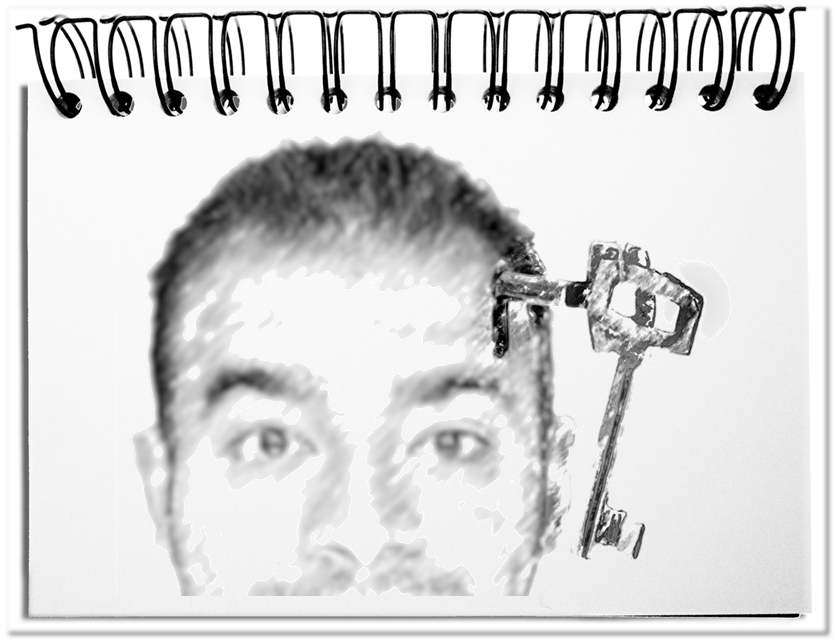
Keyintodeep

The metaphor works like a Trojan horse that gets easily from outside to inside (see also: Meta model of the language). It links basic qualities and insights with the message that is conveyed. Through the surprising link, it activates the attention and keeps it longer in mind.

The following elements facilitate the finding and the formulation of a metaphor.

  • Metaphor group
    Describe your target group and use the found characteristics for the meaningful development of the metaphor, e.g. John Doe and his everyday experience.
  • Metaphor field
    Find a common area of life that is familiar to all and releases emotions, e.g. technology. Then, the metaphor can consist of things, activities or roles, e.g. a closed door with a lock and a key.
  • Metaphor attributes
    The actual characteristics of the metaphor are derived from context-related procedures, relations and logical levels, e.g. closed doors can be opened with a key.

The usage of the various channels of perception strengthens the effect. Your message is better memorized, when you use the language, the jargon, of your target group and show a not necessarily realistic picture of your message.

Bottom line: The metaphor is a key from the surface structure into the deep structure. The narrative elements in word and picture create the desired attention and improve the retentivity.
Dynamic limits

In a world that is evaluated and assessed become more and more limits significant. It is difficult to get through the jungle of data. For this reason orientation levels are determined, so-called limits. In Germany, for example, the limit for radioactive radiation is 20mSv per year and/or 400 mSv for the entire working life. In Japan, TepCo increased the limits in the course of the accident of Fukushima from 100 to 250 mSv per year. This shows that limits are not cast in stone. Limits change.

Blutbild

The variability is defined by the appropriate organizations – authorities and specialized institutions. Goal is the definition of the value from where negative effects are expected, e.g. health risks from radiation, noise or harmful substances in food.

Limits have the following weaknesses.

  • They refer to separated circumstances – individual substance or an individual sound.
  • They relate to a certain period.
  • They are defined for healthy people.
  • They are valid for average humans.
  • They do not consider reciprocal effects or gradual accumulations.

and

  • They are not naturally given, but bureaucratically determined.
  • They are compromises between the involved stakeholders.
  • They depend on the state of science at the moment the definition.
  • They depend on scientific proof.
  • They are changed again and again.

and

  • Within the limits, it is by definition healthy.
  • Outside of the limits, it is by definition unhealthy.
  • The difference between healthy and not healthy is very small – for people exposed to radiation in Germany 19 mSv per year are considered harmless and 21 mSv per year as dangerous (Japanese limits see above).

Bottom line: Limits should be looked at critically, since they suggest security, but are based on determination that can be changed at any time. Neither the basic conditions of the definition, nor the interaction of different aspects or the apparently objective criteria provide watertight statements. Limits develop continuously to a political instrument. For these reasons, they should always be questioned critically.