Most of the time we are all customers. Nevertheless, it seems to be hard in business to leave the own view, the provider view, and switch to the client standpoint. As a consequence, the offers are treated from one’s own angle. Unfortunately, customers are only secondarily interested in the suppliers and how they intend to make the customers happy or which customers they already have. First and foremost, the clients use their own vantage points to check the proposal. These glasses not only filter out certain aspects, but they also act like blinders that only allow seeing a limited section of the picture. Suppliers should always keep these views in mind, when preparing their quotation – in the end, the bait must taste to the fish, not the angler.
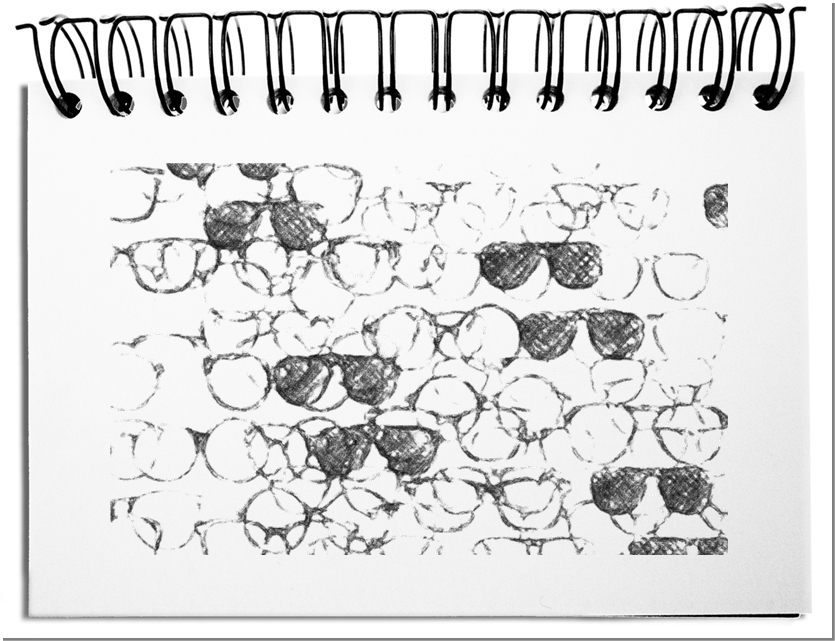
Let us look at the important customer glasses.
- What it is all about
If only the deliverables were offered that have always been available, only a little better, then marketing would still be promoting fist-wedges. The changes that brought Gutenberg, Benz, Jobs or Hopp et al. to the world were not directly understandable to the people. Printing, Automobile, PC and Standard software were disruptive paradigms, which only became visible over time. The customers are occupied since always in favor of their own core business and have little time to invent innovations from outside of their field. This is another reason, why they turn to external suppliers. However, customers need proper explanations of the topics, goals, functions, and the meaning of the solutions for their business to spark their interest. The argument „They know that“ increases the probability that others will win the contract.
Fundamental aspects should never be assumed but be explained in a way that suits the target group. - What makes it attractive today, and in the future
It is possible that an bidding attracts the attention of the public especially through its mystical innovations. Just think of Andreas Pavel, with his patent for a „body bound small system for the high-quality reproduction of audio events“, which liberated the stationary music experience. Who would have asked for a Walkman in a hi-fi store? There are the factual and emotional reasons that irresistibly attract customers – i.e. the functionality offered, the ability to integrate into the existing landscape, the ease of use and support during application, as well as references from existing customers and, above all, the design of the quotation.
Even if the factual arguments seem to be in the foreground, the gut feeling determines the outcome. The look through the customer’s glasses shows the components that make the customer curious and that should be particularly highlighted in the proposal. - Why it is viable or not in the long term
The long-term viability of the offered deliverable plays a major role in the evaluation by the buyer. The reliable deliverable delivery is the focus, especially under the specific conditions of the customer. If limits to endurance arise, fitting expansions should ensure long-term use. Since most of the building blocks are not set up on a greenfield site, connectivity to the existing building blocks must be ensured. There is no point in advertising connections that are not required by the respective customer. These criteria apply not only for the moment of introduction, but also in the future for operation and final disposal.
The bid should be tailored to the customer’s particular circumstances. It guarantees the completeness, increases customer confidence and thus long-term customer loyalty. - What has to happen to be feasible
Since not all circumstances are known in advance, the requirements for use should be clearly described. 1) The employees should be able to master the new. Remember the introduction of PCs. At that time, the problems did not start with the business application, but already with the new input device, the X-Y position indicator for a screen system – later called mouse. 2) The infrastructure must be able to accommodate the product – it must be shippable and have sufficient space and connections. 3)Geographical and cultural specifics must be considered – e.g. different languages, and culturally determined controls.
Customers honor it, when their general conditions are recognized and considered – or at least the premises are clearly described. For this reason, the known guard rails should be mentioned, and requirements should be clearly indicated. If the quote does not fit, sooner or later the missing feasibility will become visible anyway. - Which expenditure is necessary in total
Once you know the proposition, it is worth to take a look at the required effort. What does it cost? What has to be spend for the introduction? How much does the operation cost? And what does the maintenance require? It is all about the necessary finances, the time required, which can lead to delays in daily business, and the necessary personnel (internal/external). The available resources should be determined where possible or at least accepted in order to prepare an adequate tender. A low price with a much lower performance is always worse than a high price with a much higher performance. If the planned effort of the customers is not known, at least the required outlay should be clearly shown. The customers can then decide for themselves. Suppliers, who do not disclose their cards, will lose out in the long run. - What speaks for or against it
Helpful customer glasses convey the expected advantages and disadvantages. These can also be inquired or anticipated in order to adjust the proposal accordingly. The customer-related business case, where all components are listed and evaluated, provides the relevant aspects: e.g. cause of the enquiry/ reasons for the project; action alternatives; expectations concerning benefits, risks, costs, and time frame. Various scenarios ensure that other important solutions are not overseen and excluded from the outset.
The customer should be enabled to evaluate the advantages and disadvantages not only on the basis of calculations but also from an emotional perspective. The determination of the expected pros and cons helps in understanding the customer.
Bottom line: The different types of customer glasses provide the supplier with the key points on which the proposition is based. The individual customer does not need all these views. If you know the needs, you can adjust to its own point of view. Which perspective is decisive for the customer’s purchase can only be seen afterwards. In summary, the customer should understand the purpose of the offering, it should be attractive, usable in the long term, feasible with the existing conditions and provide more advantages than disadvantages. You do not sell the deliverable that you prefer as a provider, but the one that the customer likes. The bait does not have to taste the angler, but to the fish.