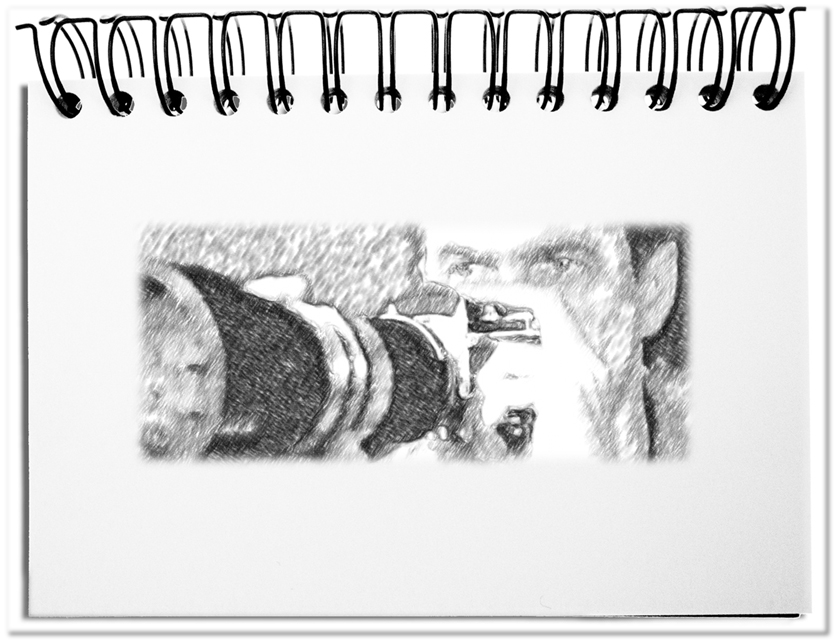
In business you are repeatedly exposed to energy hijackers, who exploit our zest for action to their own advantage. It’s hard to escape. They impose themselves and thoughtlessly occupy seemingly free capacities and are incapable of noticing when they cross existing borders. Often these are those, who see the glass half-empty, constantly criticize, are in love with themselves and suffer from hubris. They steadily complain, mostly about others, moan about their problems, tell negative stories, spread displeasure and create insecurity. They have perfected their talent to exploit others unsuspectingly and without consideration, and feel confirmed by the apparent successes they achieve. They contaminate groups of all kinds and poison everyday life. But how can one push these energy hijackers to the sidelines so that the momentum for the important tasks remains intact?
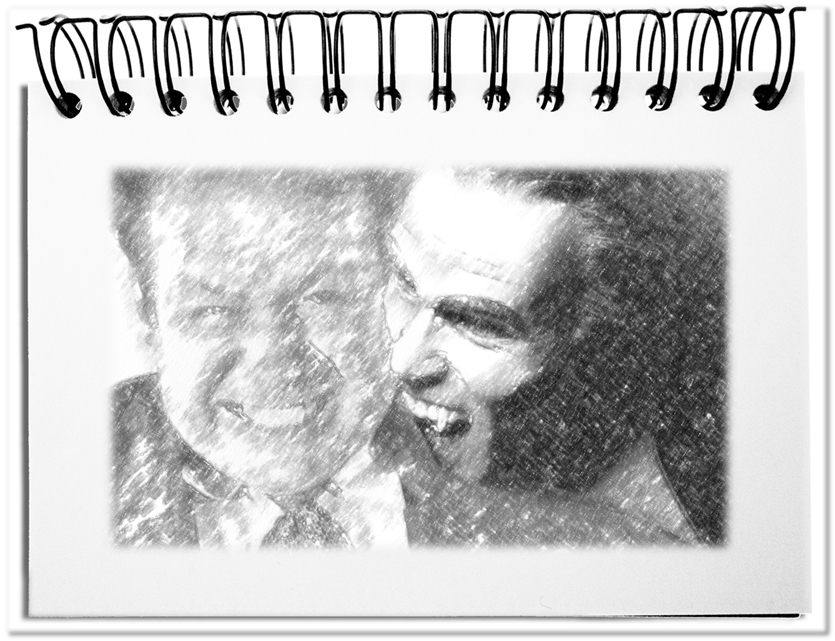
The difficulty is that the energy hijackers are noticed, when it is almost too late. It requires attentiveness in order to recognize the attempts to influence and to be able to react appropriately. Potential clues are:
- Continuous stress generation due to excessive requirements and appointments of blame
- Lack of appreciation through unbalanced criticism – constant focus on weaknesses
- Imbalanced win-win due to one-sided exploitation of cooperation
- Uneven exchange of information through inadequate information sharing
- Lack of opportunities to prove oneself by consistently favoring other people
- Wasting time with unplanned and unnecessary meetings
- Surprising praise through compliments and positive mentioning of earlier successes, but without contributions in the here and now
The following measures protect your own vigor from exploitation.
- Keeping distance
The best way to stay away from the corresponding energy hijackers is to avoid occasions in which they are present – informal meetings, working groups, meetings, projects and especially semi-private events. - Drawing borders
It is not always possible to keep the necessary distance. Therefore, setting clear boundaries is the last way to keep energy hijackers off your back by clearly and respectfully saying what you want, what you are ready to do or what others should refrain from doing. As soon as you let them get too close, they take merciless advantage of you. - Preventing appropriation
Often the energy hijackers are not aware of what they are doing. The preparation of an appropriation does not necessarily have anything to do with the actual interest. At the latest, when the attempt becomes clear, restraint is required and, in an emergency case, a decisive „No“. - Rejecting responsibility
The increasing appropriation is the explicit assignment of responsibility. It is the most normal thing in the world to take responsibility for your actions and results. However, not if it is only a matter of prophylactic assignment of guilt. - Doubting
Intuitively we know trust is good. Likewise we have learned that doubt is better. Not because everything we are told is wrong, but because distortions creep into utterances – one time by mistake and another time to exploit our energy reservoirs. - Being self-confident
Knowing one’s own limits and possibilities as well as the willingness to go beyond helps, if you get involved in teams. It’s always your own decision, whether you’re ready to do something or not. And most of the time there are so many things to do that something is left behind in any case – why not the energy hijackers? - Politely turning away
If everything is of no use, the opportunity to escape still remains. If one notices too late the loss of momentum in favor of an energy hijacker, then is still the possibility to retreat. Every agreement is always open for cancellation – modestly, exculpating and politely.
Bottom line: The biggest productivity killers of groups are energy hijackers. These are people, who exploit others for their own advantage and thus harm the whole. They are difficult to identify, but some clues expose them – the stress they create, the lack of appreciation, the lack of win-win, etc. (see above). Depending on their personality, they are noticed sooner or later. However, once you realize that this is a person, who is exploiting you, you can defend yourself appropriately – e.g. by keeping distance, drawing borders, preventing appropriation, rejecting responsibility, etc. (see above). Even if these people give the impression that they increase the productivity of a company, they destroy it in the long run – the overall performance decreases, the motivation crashes and the energy hijackers destroy the cohesion with their manipulations. For these reasons, energy hijackers should be isolated and rendered harmless.