
Archiv der Kategorie: English

Talked its way out of the advantages

It is a long way before different interests are harmonized and eventually benefit from a partnership. It is important to understand what you are prepared to give up and, above all, what you hope to get out of it. Some memberships are the result of negotiations. Others can be bought by paying a certain fee. After successfully joining, you make the best of it. The EU is such a club, which has grown over the years. However, some members do not seem to want to follow the rules of such a membership. They take advantage without fulfilling their duties. And then there are the English, who believe they can leave and still continue to benefit from the merits of the common market. They talked their way out of the advantages.
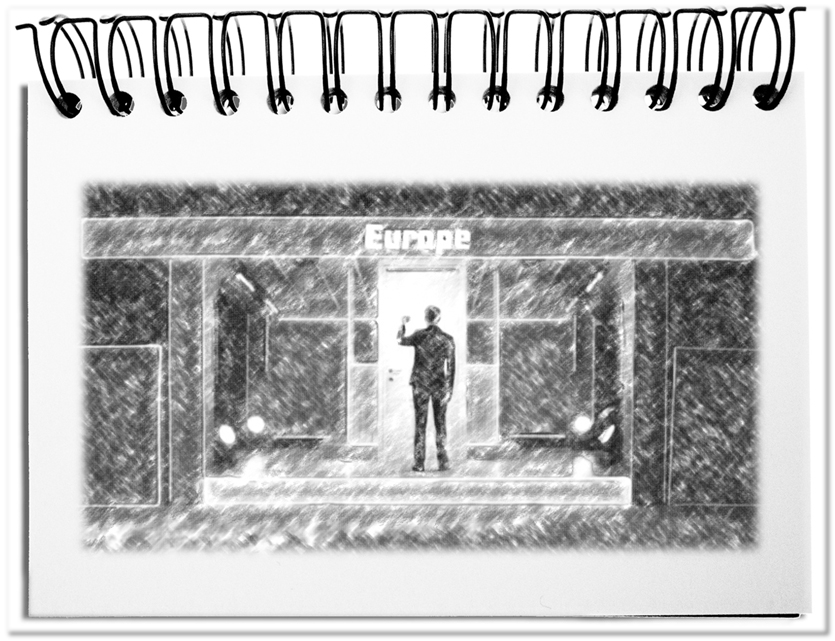
Actually, the principles of membership are common property.

  • Admission criteria
    Clubs don’t accept everybody. You have to meet certain conditions to become a member. The definition of these accession criteria is always well defined. The Copenhagen criteria apply to the EU, e.g. institutional stability, the rule of law, a functioning market economy and the adoption of Community law. In other accessions the payment of membership fees is sufficient. As long as the criteria are met, you are entitled to the benefits offered.
  • Membership start
    The membership happens at ones own desire by means of an application and the successful fulfilment of the accession criteria. For the EU it is a complex procedure, the assessment based on a comprehensive questionnaire, the so-called screening. Then negotiations begin, which ultimately end in the accession treaty. Similar steps are also carried out in other associations. The size of these assessments is determined by each individual fellowship – from the receipt of the membership fee to an elaborate procedure, albeit not as extensive as in the case of the EU.
  • Membership benefits
    The main advantages of a membership are the opportunities offered within the association. In the EU these are all the advantages of the internal market, freedom of movement for workers, the abolition of border controls and, of course, the Euro. No matter how one perceives the individual aspects of the EU, the Community seems to be so tempting that countries want to join. The same applies to all memberships. There are interesting offers that have to be balanced against the expenses for the affiliation. If the rating is positive, you become a member and enjoy the advantages as long as you are part of the community.
  • Membership termination
    Each membership may be terminated by either party. So far no one has been forced to leave the EU. On the contrary. The Community has always endeavored to help countries, which have experienced difficulties. With the BREXIT, British policymakers have won the vote of the population to withdraw by presenting the obligations as disadvantages. The procedure promised negotiations about an orderly resignation. Unfortunately, the English have ignored the most important principle of membership: If you leave a club, you are also losing the advantages. This applies to every membership, no matter how difficult the access was.

Bottom line: There is a lot of talk about an orderly or a disorderly exit of England. The calls to order in Parliament no longer help. Probably the only purpose is to bridge the time until 29 March 2019. However, the damage caused by the withdrawal of European businesses will continue to affect the British for many years to come. The hoped-for relief is far exceeded by the follow-up costs. It should be noted that not all of Great Britain will be affected. The Scots will strive for independence and in the end Ireland will likely converge. The English will beam themselves out of the EU into meaninglessness, if they don’t change tack NOW. Following the usual practices, it happens exactly the same as with each cancellation. There are no more fees and one waives the merits. That way they would have talked themselves way out of the advantages.

Let Loose Borders

In times of the classic chain of command, many links wanted more openness. The stronger the participants are concatenated, the longer and more inflexible the companies are moving. With the introduction of computers, the interaction was accelerated by virtuality. However, at the same time, each component was refined more and more and the number of connections increased. As structuring progressed, there was a call for more openness – more flexibility, more contact opportunities and more cooperation internally and externally. Today, digital transformation enables companies, groups and individuals to network globally. In turn, this openness scares many people nowadays – there are no clear boundaries, no opportunities for identification and no framework for action. Stiff does not work and open does not work. What can be done? Let Loose Borders.

Let’s take a look at how stiff openness can be imagined. Let’s work along the words „Let Loose Borders“.

  • Borders
    This word defines a system with certain characteristics that makes some feel committed and excludes different ones. The cohesion is determined by common goals, rules, and beliefs.
    What makes the difference in this case is the permeability of the borders – closeness by insurmountable dividing lines; permeable openness in both directions.
  • Loose
    If you bundle a lot of individual parts lightly, you get a charge that is processed in one swing. This could also be a number of incidents that fluffily rain (un)advantageously down on somebody. Or the starting shot without rigid standards.
    What makes the difference in any cases is the action that is executed decisively – doing something and facing the consequences.
  • Let
    The willingness to get involved in something or to allow oneself to get involved has a great influence on the impression of the close- or open-mindedness of a system. Stress arises when cohesion gets tensed and aggressively defends its boundaries. And also, when the cohesion dissolves through unlimited influx of the unfamiliar.
    What makes the difference is the growth – the healthy balance between content-related stiffness and dissolution.
  • Borderless
    The avoidance of borders goes hand in hand with the loss of identity. The feeling of belonging results from common values and rituals. Without the definition of boundaries, individuals cannot find their place or exchange ideas.
    The difference is the form of demarcation – dogmatic borders create violence; unconditional openness leads to unfulfilled self-confidence, and eventually also to violence.
  • Let Borders
    Simply opening boundaries is awkward, as the members of a group are not necessarily happy about the lack of boundaries (see above). Ignoring the delimitation, we are driven by our genes to defend our territory.
    The difference makes tolerance – walls do not have to be immediately torn down, but only need appropriate passages and rules to exchange ideas.
  • Let go
    One should not stick to what limits thoughts and action or insist on the traditional. A new way of thinking is only possible if one at least allows the familiar to pause. This creates openness and the necessary meeting points to improve and expand due to new ideas.
    The difference arises with the continuous expansion of the system – systems that do not open will collapse; systems that use openness for their own development grow sustainably.

Bottom line: Whether you now let go the boundaries or leave them borderless is up to the reader. The mixing of the words has hopefully made clear that it is about the gray zone between boundlessness and the iron curtain. Systems have no chance to survive, if they encapsulate or fractalize themselves borderless. Let Loose Borders – the interpretation is in the eye of the beholder.

P.S.: Whoever recognizes the limit of today’s drawing has understood.