
Archiv der Kategorie: English

The costs of the unconsidered

When decisions are made, in the slipstream swirl known and unknown consequences into advantages and disadvantages. Any measures that grant one-sided advantages to a few beneficiaries let cry out loud the self-appointed partisans from all corners of society. To what extent the disadvantages of the huge rotor blades of a wind power plant are more harmful than the MCA (Maximum Credible Accident) of a nuclear power plant seems to be in the eye of the beholder. Or is it more about the windmills that spoil the vista of some individual residents? People have been using windmills for over four thousand years. In the 16th century, there were documented 10,000 windmills in the Netherlands, and at the beginning of the twentieth century, over 18,000 in Prussia. Where would we be today, if the citizens at the time had opposed technological advances as the zealots of various faiths do today?
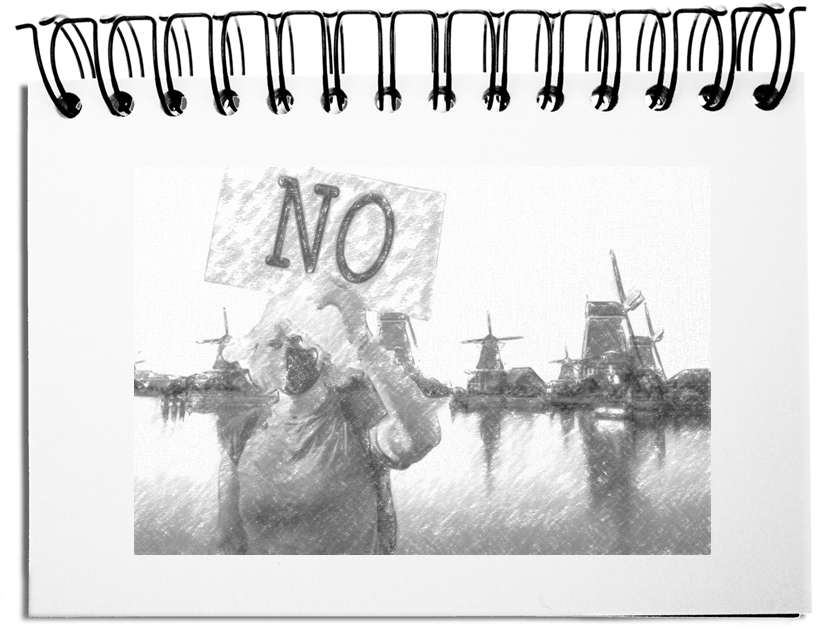
Current types of Luddites can be found in all age groups, political parties, and social classes. They got used to rate the world from their polarizing point of view. Usually, only the pros and cons of the desired outcomes are thought through. We need to neutrally expand the radius of our observation radar when making choices – regardless of the interests of the beneficiaries.

  1. Involve deciders in all impacts
    Decisions lead to advantageous and disadvantageous consequences. If the decision-makers do not admit the disadvantages that arise, then criteria that have nothing to do with the matter move to the center. The bases of the decision change substantially if the deciders also go along with the burdening effects.
  2. Consider all consequences
    The most significant bias in decision-making is caused by a limited view of one’s advantages. In addition, recognized disadvantages are belittled. When assessing, the fading out of collateral consequences, in particular, distorts the broad perspective. Therefore, several scenarios must be developed that equally consider ALL opportunities and risks: the two sides of doing and not doing.
  3. Charge the total costs of resistance
    The follow-up costs of actions should be distributed among all those affected. This means that proponents AND opponents contribute to the charges. Depending on the on-site density of wind turbines, the price of electricity could be set as low as zero or multiplied if there is local resistance. It is up to everyone to decide whether to vaccinate. However, opponents of vaccination must expect disadvantages in the feared triage – to be relegated to the back of the queue according to the lack of contribution to society. With such burdens, the resisters receive additional criteria that they can consider in their resistance.
  4. Decide independently of who shouts the loudest
    Unfairly, those who shout the loudest tend to win the argument – self-absorbed politicians, demonstrators, and lobbyists. Fake news and propaganda create an additional flood of data that blurs the objective overview. Non-profit decisions should serve society, not personal interests. A typical example in politics is the intention to preserve jobs. With this argument, employees today receive lower pay, and what used to be mandatory employment is replaced by temporary contracts. Expanding precarious jobs leads to increased gains for corps and their functionaries – and politicians get their re-election sponsored.
  5. For a common future with community spirit
    When the results are no longer contaminated by personal motives, more objective and faster decision-making gets facilitated. For this, all participants need a sense of community that weighs the alternatives in the interest of the whole. The advantages and disadvantages of doing AND not doing and the indirect effects in adjacent areas must be considered.

Bottom line: The community benefits from results that generate advantages for society instead for a few. This is possible by considering all perspectives. Calculating the outcome as low as possible leads to delayed disadvantages. Furthermore, the effects of doing nothing and the pros and cons of the affected area must be considered. What surplus is created by the additional power sources of a new wind farm? What loss? What are the benefits of no wind parc? What are the cons? Which areas are additionally affected positively and negatively? No matter how you decide, those affected should be involved – directly or indirectly. Taking all effects into account reduces the follow-up costs. The individual parties pay their share of the total costs of their intentions in the way they gain. Deciding according to who shouts the most ignores relevant influences and reduces the intended benefit. Only with community spirit desirable prospects for all are open to society. Luddites who threaten this future must be held accountable for their acts. Angry citizens, opportunists, lobbyists, economic deciders, conspirators, and other ostracized extremists must bear the resulting costs of the unconsidered.

The energetic sense(ly) image

We are stuck in the dilemma of being exposed to an increasing flood of data at shorter and shorter intervals. There is not enough time to process it adequately. In addition, culturally conditioned means of expression burden the exchange. When high-context meets low-context, the unfamiliar style of the counterpart triggers unexpected reflexes: Boredom or impatience, lack of and misunderstanding, and, in the end, differently construed outcomes. If signs, words, and expressions are interpreted differently, this puts a strain on mutual understanding. This pressure is especially true if the content is not conveyed with sense(ly) images.

The contents become symbolic by not limiting themselves to numbers, data, and facts, but by additionally describing sensual aspects: visually, auditorily, kinesthetically. For this purpose, we express an issue through multiple channels. Vehicles for this are metaphors, analogies, or symbols, which we describe in writing or pictorially.

  • Symbol – the minimalist meaning carrier
    A symbol is a simple sign that represents complex facts. In South Africa’s Blombos Cave is the oldest symbol found to date (estimated to be 75,000 to 100,000 years old) – a type of cross-hatching (more about such discoveries: here). Currently, anthropologists believe that it is magical good luck mojo for hunting. Experienced shamans, immersed in a trance, painted them on the walls of uninhabited caves. Nowadays, we know symbols in different areas. In politics, we are familiar with national flags, crests, and party logos. The followers of a religion draw a lot of strength and community spirit from their signet. This is true for the Christian cross, the Muslim crescent moon, or the Jewish Star of David. In PR, we find precious logos, such as the Olympic circles, the Audi circles, or Apple’s apple. Technicians use graphical symbols to represent complex relationships in their blueprints, process descriptions, and structural diagrams.
    A symbol is an emblem and a sign of recognition. It refers to the extensive facts of a subject area. On the one hand, a sign warns against the undesirable or the rejected. It deters and alerts with a warning against deer crossing or with a skull against a poisonous substance. On the other hand, a symbol creates a sense of community and thus an identity.
  • Analogy – by virtue of the same properties
    An analogy occurs when two circumstances or things have the same characteristics. In the simple case, it is a matter of similar attributes. An example is the comparison of Xi Jinping with Mao Zedong (both are paramount leaders of China). Complex cases arise from similar, indirectly derived features. The clockwork and the tayloristic company structure have some things in common. Take as an example the property that they are made up of parts that together serve a purpose and are comparably vulnerable.
    The analogy thrives on the fact that we recognize similar patterns in different circumstances by which we notice the same characteristics. It does not matter whether or how we evaluate the overlapping features. Wooden and plastic bricks have the same properties. They can be combined in any way and reused infinitely. In addition, they train fine motor skills, create a sense of creative achievement, and can be applied regardless of age.
  • Metaphor – the thrilling analogy
    Metaphors describe sophisticated analogies with additional aspects, adapted structures, a purposeful storyline, and convincing arguments. If we look at the construction of an edifice, it resembles a project. Both consist of various tasks, roles, interdependencies, sequences (with a defined start and end), milestones, and much more. When building the pyramids, we think of huge building elements, „slaves“, resources, transport routes and techniques, rooms, rituals, and much more.
    The metaphor thrives on an exciting story. It sweeps the audience along with the help of a sophisticated arc of suspense, and effectively conveys the actual message. When, for instance, building blocks create unexpected structure like a bridge that carries three people and spans a three-meter-wide stream. And more than 500 people build the whole in 60 minutes. The story conveys that we can achieve the seemingly unthinkable if we try. The astounding conclusions have a lasting effect on the audience, reaching them emotionally and anchoring them in their minds.

Bottom line: The desire to present content or oneself in the best possible way leads to supposedly complete content overloaded with data. Prosaic presentations are difficult to process and remember because they are free of emotional anchors. Using a sensually charged metaphor increases the likelihood that the audience will pick up the desired core messages. At its simplest, signs create a curious symbol that reminds people of the topic when it appears. A sensually charged metaphor makes it more likely that the audience will take away the untended core messages. A metaphor has a lasting effect if it presents the features and components in an exciting way. The coherent flow ends up justifying the theme presented. The sense(ly) image provides the energy that permeates all participants and their activities and preserves the momentum.