
Archiv der Kategorie: Governance

Governance covers regulations and control aspects.

Money still does not smell

The substantial difference between commercial and governmental economic activities is the fact that an enterprise cannot simply decide and collect its incomes, but it has to work and to negotiate with the customer for it. Taxes were always raised by various societal groups – called tribute, tithe, toll, indulgence or temple tax. Some people did not shy away from exploiting the most bizarre sources of income. A good example is the emperor Vespasian, who justified himself with the saying „Pecunia non olet “(Money does not smell). He had imposed a tax for the public convenience. Amazingly the same creativity survived until today.
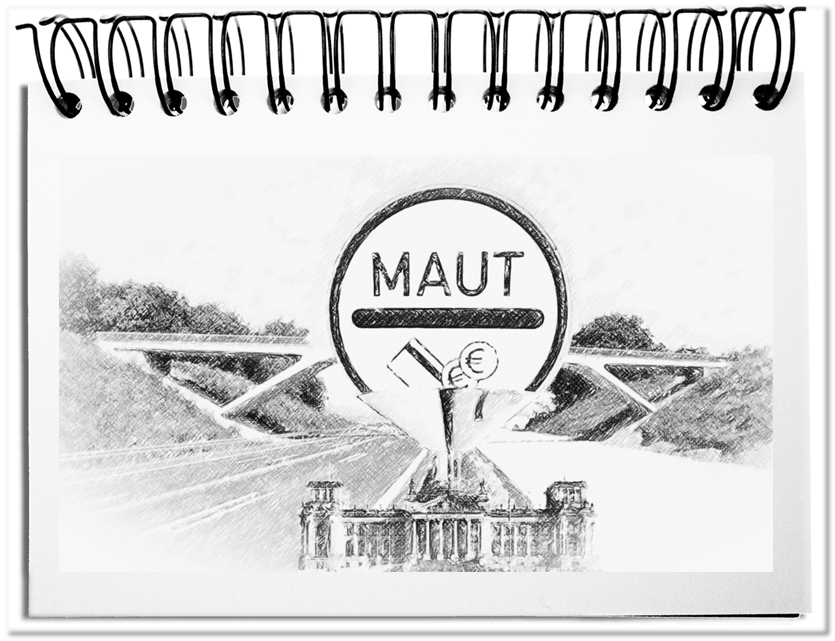
Maut

Clients have the choice and adjust the prices simply by evaluating the relationship between price and performance of the offered products or services. If the ratio is not beneficial, they waive it – and the price decreases.
In contrast, the citizen has only occasionally the choice. By voting, they hand over control to political officials, who make in the course of their tenure what they want – well packed in statements like “We must only promise things that we believe that we can do.” „I believe that people understand“. In the absence of acceptance of the citizens for new taxes, they are called now income, fee, supplementary or special tax. Current examples are:

  • The extension of the solidarity surcharge
    The solidarity surcharge for the reunification was eventually accepted. But to maintain this supplementary tax is a good example, how politicians try to increase their budgets. If costs will occur in the future that should be taken by the society, then the right of digging into the pockets of the taxpayers is questionable – above all, if they cannot fend off.
  • Highway toll (Maut)
    Many countries have a fee for the use of highways – even for a few border kilometers. So far the collection of the highway toll is OK. A compensation for Germans car tax is certainly appropriate. How foolish to take back this compensation before the adoption. Thus, the toll is a hidden tax increase.
  • Cold Progression
    The cold progression is the thimblerig of the Treasury department. The citizen always has to pay extra and even does not receive an appropriate adjustment for the inflation of the past years. Eventually, the cold progression helps the government to reach the black zero.

The list of the examples could be extended, from the Riester pension to the fees for the health insurance. At the same time the employers are relieved with the justification that it secures jobs. This goes so far that enterprises can reduce their HR expenditures by benefiting from low wages and temp work. Are these the safeguarded jobs?

Bottom line: Politicians do everything possible, in order to increase their incomes at the expense of the citizens and lower the costs for the industry. This modern form of waylay will not function for a long time. The following generations will have to carry the bill. Will they then still show solidarity with the older generation? The consequences for the pension system are already foreseeable – certainly without consequences for the pensions of the politicians, who create the future problems today. Of course – money still does not smell.
The dark side of the standards

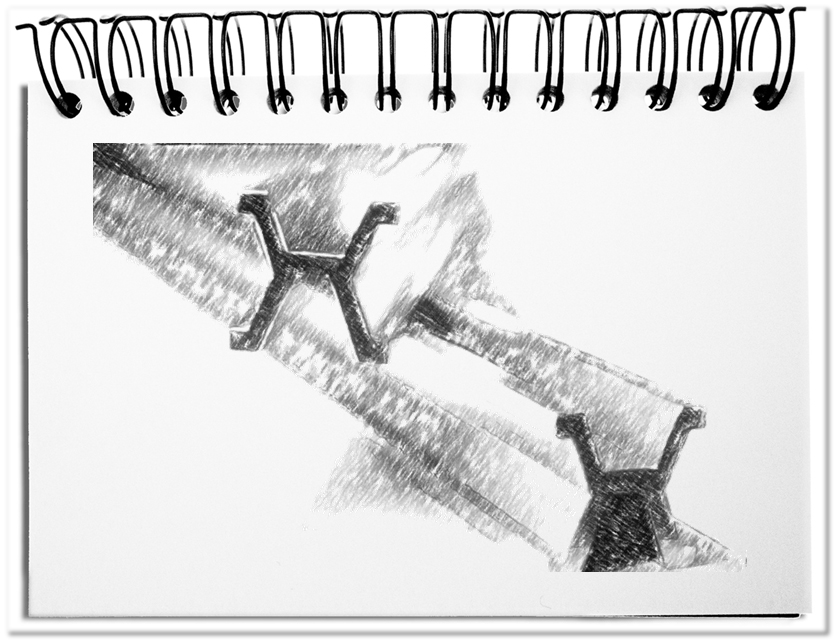
Standards are requirements, specifications, guidelines or properties that are intended to ensure the quality of materials, products, processes and services.*1 They facilitate the production and exchange of goods, the provision of services and the collaboration. Examples are units of measurement (e.g. the International Prototype Meter; see picture), the DIN paper measures (e.g. A4, A5), computer standards (e.g. Unicode, HTML, UML) or quality standards (e.g. the ISO 900x standard) *2. All agreements between contracting parties would have to be negotiated and agreed in detail without standards. Thus, standards are actually useful for everybody, because they

  • reduce the variety,
  • improve the structures and the procedures,
  • increase the efficiency,
  • secure the compatibility,
  • protect people’s health and the environment,
  • determine the characteristics for the quality, security and usability,
  • make the requirements comparable,
  • increase the satisfaction of the customers,
  • simplify the compliance to regulations and
  • facilitate the negotiations as well as the collaboration.

However, there is a dark side of the standards that undermine the advantages.

Urmeter

The following aspects undermine the advantages of standards.

  • National standard
    Standards that are only developed for the local market, can lead quickly to trade barriers. For example, cars are not allowed to be used in a certain market, because they do not fulfill the local standards.
  • Certifications cost time and money
    Certificationsneed external and, above all, internal capacities for the first certification and the regular renewals. It is difficult for small companies to provide continuously the necessary capacities for certifications.
  • Flexibility gets lost
    Standardsrequire defined procedures, even if a need-oriented variant would be better. This limits the flexibility, for example, if the requests of the customers require a quick reaction.
  • Variety is limited
    The strengths of standardization is at the same time a disadvantage, since products and services become more and more interchangeable. The properties of the products and the related operational procedures always follow the same standards.
  • Pro-active thinking is not supported
    Over time the work becomes a prosaic observance of the standards. Thus, the employees lose their natural creativity. The ability of the enterprise will suffer on a long-term basis to create new solutions.
  • Improvements are difficult
    Bettersolutions are hard to establish, even if the current standards do not meet the state of the art technology. This leads even that far that the company does not take care of improving, but rather hopes for further development of the standards and waits.

In today’s technical and organizational complexity, it will not work any longer without standards. It is important to establish worldwide standards, since otherwise the compatibility of the various systems will not be ensured internationally. However, we should not forget the dark side of the standards.

*1: http://www.iso.org/iso/home/standards.htm

*2: http://en.wikipedia.org/wiki/List_of_technical_standard_organisations