
In the downtown shopping streets you encounter sporadically people, who make their displeasure free rein. Sometimes they carry a signboard with the words “I am against it!” and sometimes they simply yell their indignation into the crowd. How would it be, if these people would get personally snotty with us or shout out details from our private life or offensively insult us or would pillory us? Unthinkable?
Meanwhile in the Internet this became reality. And this is more harmful than in the above example, since everybody has access to the vulgar remarks and the Internet is not forgetting – whether the postings are correct or not. I am sure that nobody would like to be the victim of such attacks. But it seems as if the rule does not count anymore: „ Don’t do unto others what you would not have done unto you “.
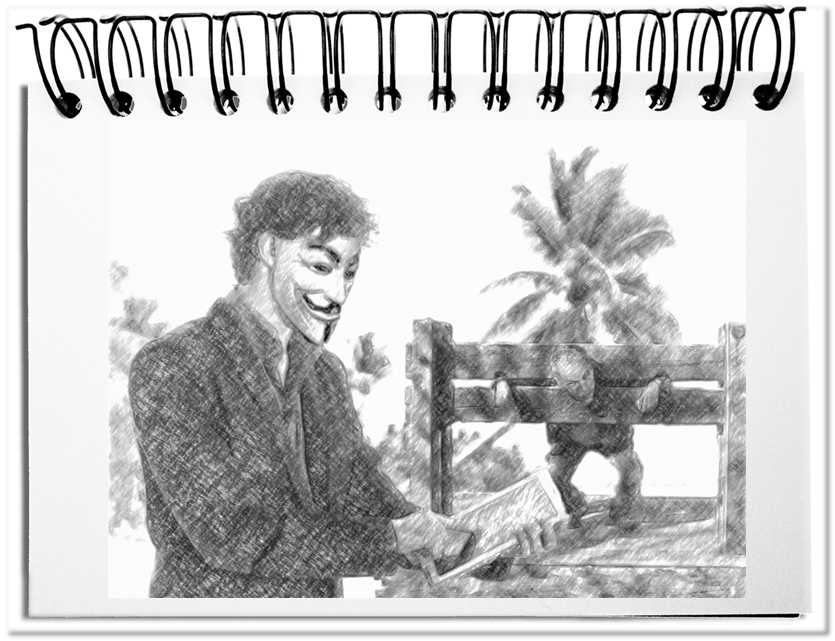
The moderating rules of forums and other virtual meeting places are specified and converted in all conscience by the providers of social nets (e.g. Facebook, Xing and LinkedIn). They offer functions that allow moderators to intervene on a regulatory base. LinkedIn enables every user to mark with a click of the mouse the contributions of other users as inadequate (Report Spam). As soon as users are labeled in such a way, this evaluation is valid in ALL forums. Subsequently all contributions of the stigmatized user must be checked and released manually for a certain time by the administrators of ALL LinkedIn groups.
As such, the self-organization of the users is empowered – if there wouldn’t be the black sheep’s, who exploit these possibilities to censor unpleasant opinions. The criticism with negative Likes is done anonymously without any documented reason or explanation. Since Orwell’s 1984 and Bradbury’s Fahrenheit 451 such denunciators are not tolerated in democratic societies. Why do providers of social nets implement this kind of subversive functions without protection for the victims? Sooner or later we need rules that regulate the increasing misuse of the net. The following aspects should be thereby considered.
- Neutral checkpoints
The providers of social nets should not simply delegate completely the responsibility for the orderliness of the contents to users, e.g. to the responsible moderator of a forum. As in the product liability of other industries the ultimate responsibility for a product or service belongs to the provider, who is earning money from it. For this purpose contact persons should be made available, who have the last decision concerning the legitimacy of a posting or a user account. That way unwanted users could be excluded with the cancellation of the account and the reimbursement of the fees. At the same time the excluded people would have a contact to negotiate the rightfulness of a measure. - No anonymous accusations of other users
The psychological barrier for an assessment in form of a Like or a Dislike, as a comment or similar would be substantially higher, if the criticizing users could not hide behind their accounts or anonymity. This requires that the access to authors of inadequate postings by neutral checkpoint is possible. Thus, the natural sense of responsibility of each contributor would be activated. - Explain each accusation
As soon as public accusations are formulated, the users should be obligated to justify those on demand. Through a “legal” evaluation the actions of the “accused” and the “prosecutor” should result in concrete consequences for one or the other. - Legal measures against cybernetic social misfits
In all areas of life you find regulations for those, who behave outside of social standards. Only in the Internet everything is possible without consequence for the perpetrator. As long as this lawless space is not regulated by law, the situation will become worse. The victims are the children, young people and adults, who become the target. It can happen to everybody.
Bottom line: Under the cover of the liberty of speech meanwhile everything becomes possible in the net. It is not the question, whether the net is regulated, but when. Too many victims got harmed already in each age group, class and in all countries. Since the natural rule “Don’t do unto others what you would not have done unto you” does not seize any more, we will not be able to avoid implementing binding social standards for the Internet.