
Archiv der Kategorie: Management

Here you find topics like planning, organization and leadership.

Batch processing – memory of the future

An important reason for the introduction of writing 6500 years ago was, besides religious and ritual reasons as well as writing chronicles, the administration of lists and tables in the context of bookkeeping. In those days there were certainly moments, in which the scriveners could not perform their tasks in a timely matter and created that way piles of unfinished tasks. In this case the employees had to invent accelerated transactions, in order to process the piles. Even if there were no electronic data processing at that time, with no doubt they already had invented the batch processing.
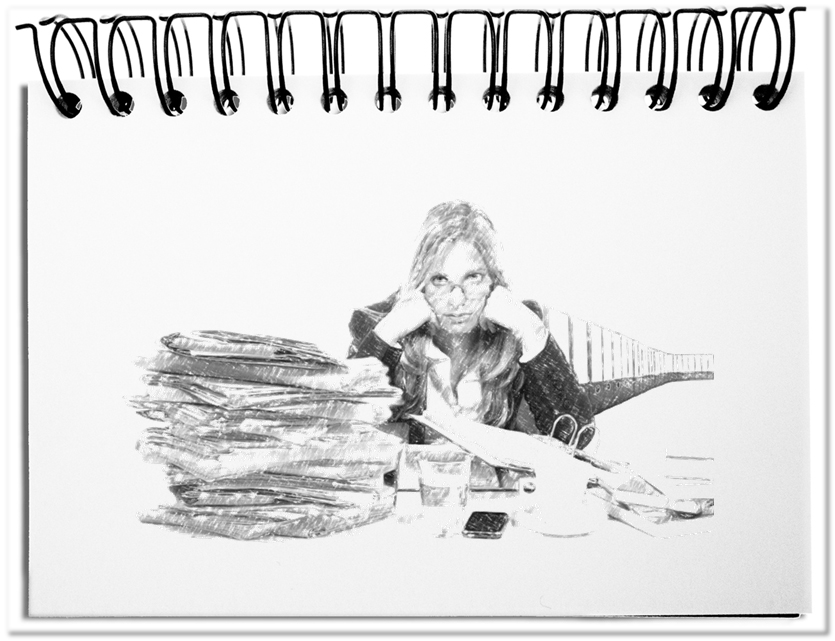
papierstapel

On the mainframes of today the batch processes are running over night, which transfer the accrued data of the day into the respective systems and databases. If the night is not long enough, the appropriate batch window must be expanded by additional computer capacities. The processing follows thereby different patterns.

  • First come, first serve
    In medieval times strict grinding rules were defined, in order to prevent fiddles. Until today this rule provides fair handling for requests that are submitted one after the other. The sequence results from the entry. The pile grows and the affairs are processed from bottom up.
  • Nip the things in the bud
    The advantage of preferring the last entry comes from the fact that the file already lies on the table and thus does not have to be sorted. As long as you have sufficient resources, you can avoid this way any piles. Since this leads to a waste of capacities, if there are no orders, this approach is only economical, if it saves costs of pile administration or storage space.
  • Burning issues
    Already Eisenhower was concerned with the question, what should be first dealt with. The matrix that was named after him, recommends to immediately take care of the urgent things or at least to delegate them to competent employees. The sequence depends on the expiration date of the task. For this purpose you need a good overview of the due dates in the pile.
  • The more danger, the more honor
    In this case you engage with the most extensive tasks first. They can stem from the value of the result, from the required effort for processing or the number of involved people. Naturally they take especially long. With the earliest possible beginning, the probability rises to finish timely. For this purpose the procedures must be evaluated according to their extent and then be sorted in descending order.
  • Many pennies make a dollar
    In this case you emphasize on the tasks with the fewest extent first. Also here, as within the last bullet point, the importance is derived from the value of the result, from the required effort for processing or the number of involved people. These tasks will probably need less effort. By the preferential processing of these tasks the pile quickly gets significantly smaller. The procedures are also evaluated according to their extent, but then be sorted in ascending order.

In data processing the data are not processed with one of the above procedures, but after the logical relationships of the databases and files. The goal is to have a consistent volume of data the next day. The height of the pile depends thereby on the IT for collecting the procedures. Appropriate rules bring the data already into a format that can be processed faster, when they are typed in.

In the agile projects of today you use piles, the so-called Backlogs, likewise. Here you simply collect the tasks that are not yet realized. The Product Owner, i.e. a decisive representative of the field, determines after a sprint, which tasks are developed in the next sprint. A sprint is a two to four-week work cycle, in which the developers have full control of the conversion.

Thus, the night window for the completion of batch runs corresponds to a sprint. The substantial difference is that the batch window must complete all planned procedures, since otherwise the consistency of the data is no longer secured. If a task is not finished in a sprint, you can use the subsequent sprint or put it pack into the backlog.

Bottom line: Batch processing was always needed. The difference results from processing and the sorting of the piles – FIFO, LIFO, FEFO, HIFO, and LOFO. In the context of the agile organization the Product Owner makes the decision, but they also still follow the same patterns. That makes the batch processing a memory of the future.
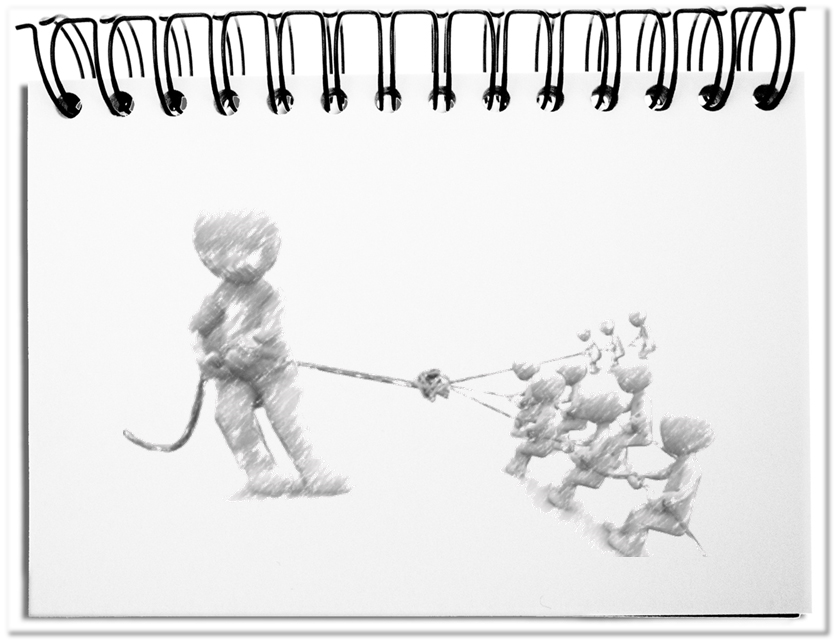
Cooperative Metamorphosis

Henry Ford introduced that assembly-line. He was inspired by Taylorism and also made efforts, to get all levels of value creation under his control. For this purpose his enterprise had temporarily one hundred percent depth of production – plantations for rubber, glass factories, steel plants and power stations for the required energy. The automotive depth of production is on average approx. 20 percent. Thousands of suppliers share three quarters of the value of a car, from simple rotary switch to complicated injection or navigation systems.

Now, for the first time, this decrease of production depth has to be paid for. It took the small supplier’s years, but now they seem to be on eye level with those, who ruled the prices for years with their market power. At VW the production lines stopped, because obviously purchasing gambled away. Are we standing in front of a cooperative metamorphosis between manufacturers and suppliers?

Monopolist

After VW sound the bell for the last transformation, when they hired José Ignacio Lopéz and brought suppliers a new role, VW can not do other than delivering a reorientation concerning the interdependence between manufacturers and suppliers. The stop of Golf production in Wolfsburg that presumably creates for 20,000 employees short-time work is the wake-up call for the entire industry. The following mechanisms burdened the harmonious cooperation over the years.

  • Adjustment of the supplier portfolio
    After the internal improvement efforts and due to the low depth of production, there are not so many opportunities for reducing the expenses. All that remains is reducing the costs for the externally delegated 80 percent. In the absence of monetary incentives, the outside vendors could only be provided a benefit with the privilege of being part of the supplier circle. This means sometimes that they can participate to bid and to receive the traditional title purveyor to the court, as so-called strategic suppliers.
  • New pricing models
    Only the enormous quantities offer a large lever that result in favorable conditions and prices. The huge numbers of items are the incentive for the suppliers. Simultaneously the timely and variant-oriented deliveries require further resources that additionally diminish the yield.
  • Exhausted terms of payment
    The payments are not aligned to the need that the suppliers receive their money quickly, but they are based on the financial reporting dates. Consequently, the supplier carries the expenditure of the financing. This means that we talk about six months of prefinancing in the case of the procurement of material. However, there is no payment after delivery, but manufacturers wait, based on agreed payment targets for over three additional months to eventually pay their dues. The bridging of these time spans has to reproach the supplier – beside the raw materials, the wages and salaries, the storekeeping, the operation of the infrastructure etc.
  • New forms of negotiation
    The personal negotiations in private that were the basis for trusting cooperation, are replaced by formal tender procedures and electronic forms of negotiation. The personal contact is removed from the businesses. This leads to quasi-automatic decisions based on good value for the money and general quality standards without personal impressions.
  • One-sided contract terminations
    In many purchase departments still prevails the illusion to sit at the longer lever, since there are world-wide enormous amounts at suppliers, who seem to be ready to deliver at lower costs. This results quickly in the fact that a supplier, who falls in disgrace, will be eliminated in the blink of an eye.
  • Risk delegation to the suppliers
    The upstream procurement of material and the stand-by resources increase the risk unilaterally to the disadvantage of the suppliers. If a contract expires or the manufacturer terminates a running contract, this can quickly lead to insolvency.

The possibilities to reduce the costs at the expense of the suppliers reached their limits. Also suppliers use outsourcing into country with low-wages. However, considering the narrow margins and the interdependence, new models for cooperation have to be found. The required exchange of information must take place mutually and count on Win-Win. In the future it will be essential that the buyers will be in personal contact with the suppliers, in order to get a local impression and to get in such a way to realistic estimates. The persistent compliance that was introduced particularly in the interest of the shareholders did not prevent abuse by particular people and harms cooperation.

Bottom line: Interaction between manufacturers and suppliers must be brought to a new level of confidence and joint benefit. The distribution of the value creation needs a reorientation in the economy and even for the politicians, who nowadays stand up for VW although they silently sat out the precarious situation of the suppliers for years. At the end of this phase the industry will be empowered, since the current inclination will be balanced out. This metamorphosis will again weld together manufacturers and suppliers, since the one cannot without the others.