
Archiv der Kategorie: Culture

Here you find posts about life styles and mindsets of different countries, indtustrial sectors and business functions.

The culture of pointing the finger at others

The index finger is the most used independently of the other fingers. An embarrassing function of showing is the accusation of other persons. It is overlooked that when pointing to other ones, three fingers show back to oneself.

Pointing

Failures are committed in all cultures. The difference that makes the difference is the handling of charges in the public. To accuse other people is a cultural trait that is located in the West. The concept of guilt is here connected with the idea that guilt can be paid off with penance. In contrast, the Middle and the Far East follow the concept of shame. It has no back door that allows to atone for the failure. The face loss is irreparable.

The everyday use of public criticism and the use of the index finger is rather a characteristic of the west. People are quickly more or less formally accused to be responsible and defend themselves instinctively.
In the East, accusations are rarely discussed in public, in order to give the responsible persons the opportunity to be ashamed publicly and to draw the appropriate conclusions.

Practitioners of finger pointing overlook that pointing with the finger provides extensive conclusions about them.

  • Accusers show the self-understanding to be in the position to accuse other people with the lifting of the index finger. However, as long as the role of the prosecutor is not formally assigned, there is no authorization to actually criticizing other people. They usurp this role.
  • Recognizing the failure presupposes a good understanding of the failure. This gives in return the basis for speculations about the context of the prosecutor. This circumstance is best expressed with the Bible saying, „Who is without sin, casts the first stone “.
  • There is an intention connected with each accusation. This reaches from a fundamental desire for justice, to self-righteousness, to interests that do not have anything to do with the actual failure. So the reason of an accusation can be to improve the own competitive position, to call for attention, to settle old scores or something else. The intention mostly remains secret. As soon as the actual purpose is recognized, it provides additional indications for the assessment of the situation.

Bottom line: Finger pointing is a dangerous action, since independent third parties could draw conclusions about the personality and intentions of the accusers, which are not wanted.

How do you recognize a truly transnational company?

Transnational enterprises develop, produce and sell their deliverables worldwide. For this purpose, they need a self-understanding that integrates different ways of thinking under one supranational roof. Should this multi-cultural claim not always become visible?
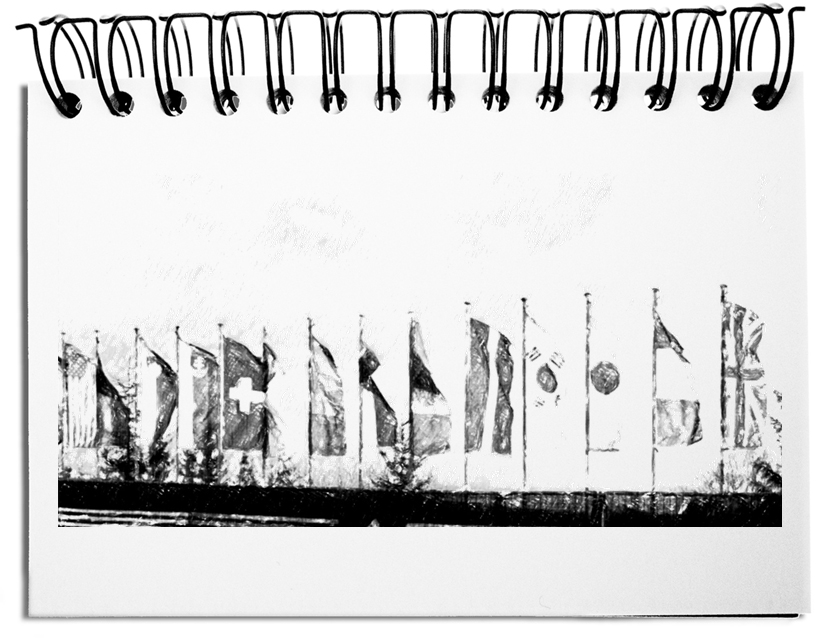
GlobalCorp Flags

The following bullet points provide indications, how far an enterprise fulfills its global self-conception.

  • Advertisement
    Customers develop over time  a glocal  image of the enterprise, if local references are avoided and a brand or a product are in the focus of advertisement.
  • Localization
    If the products are adapted to local conditions, like customer culture or prevailing market conditions, the customers can identify more easily with the enterprise.
  • National flags
    The flagging with banners of all countries that belong to the enterprise underlines the internationality of the enterprise.
  • Multilingual sign-posting
    The writing and language of the guide-posts within the locations should be at least in local AND English language or at best in all languages of the company.
  • Internationalized HR policy
    The job offers should contain international requirements like mobility, multilingualism and interest in other cultures.
  • International board
    The board of a transnational enterprise should be composed out of various nationalities.

Truly transnational companies do not practice cultural imperialism, like Americanization, Europeanization or Chinaization. They have a global identity that integrates the various cultural strengths to an advantage for the enterprise.