
Archiv der Kategorie: English

The concept is feasible, if it functions comprehensibly

In art and entertainment, you can find formats that are based on improvisation. Action Painting, Jazz, Improvisational theater or talk shows offer a simple framework where the participants create results that are not previously planned in detail. In the construction of buildings, the programming of IT-applications or the foundation of an enterprise, a more extensive preparation is indispensable. The various parts are developed in relationship to one another. They are supposed to fit eventually as planned. One of the leadership tasks is it to ensure a consistent concept, besides the self-management, the coordination, the communication and cooperation. At best, one starts with a short description that shows that the intention is logically feasible.

Konzeption

In this first sketch, the following four aspects should be described in a way that one can decide, whether the effort of a detailed concept is worth it.

  • Goals
    This is to describe the desired target state as goals – the main goal and the corresponding sub goals. They should be formulated in a way that also outsiders understand the project.
  • Premises
    Thepremises describe the conditions that have to be fulfilled, in order to realize the project. This includes the required number of employees, the needed financial means, the necessary infrastructure (i.e the hard and software, spaces and media of all kinds) as well as the crucial skills and knowledge.
  • Results
    Theresults are always products and/or services. Products are split into expendable or durable goods. Services are person- or object-related. At this point, the understandable, complete list is better than results that are described in detail. In later preparation, the individual results are specified in more detail.
  • Explanation
    Theexplanations should further clarify the project to the reader. The vision and the mission obtain thereby the purpose of the plan. The listing of the substantial functions and processes convey the way, how the individual elements work with each other. The history and additional interesting information complete the picture. The explanations should be limited to those aspects that clarify the project and be formulated short and simple.

The biggest challenges in describing the concept are the determination of the length and the level of detail that should be prepared at this point of time, at the beginning of the process. Since the size of a project differs very much, there is no clear answer about the number of pages or other key figures. As rule of thumb, consider the following:

  • Outline as extensive, as necessary for understanding.
  • Describe as detailed, as necessary for the current decision.
  • Invest as little time, as possible.
  • Illustrate always goals, premises, results and explanations, as clearly as possible.

Eventually, you should be able to say: The concept is feasible, if it functions comprehensibly.
The dark side of the standards

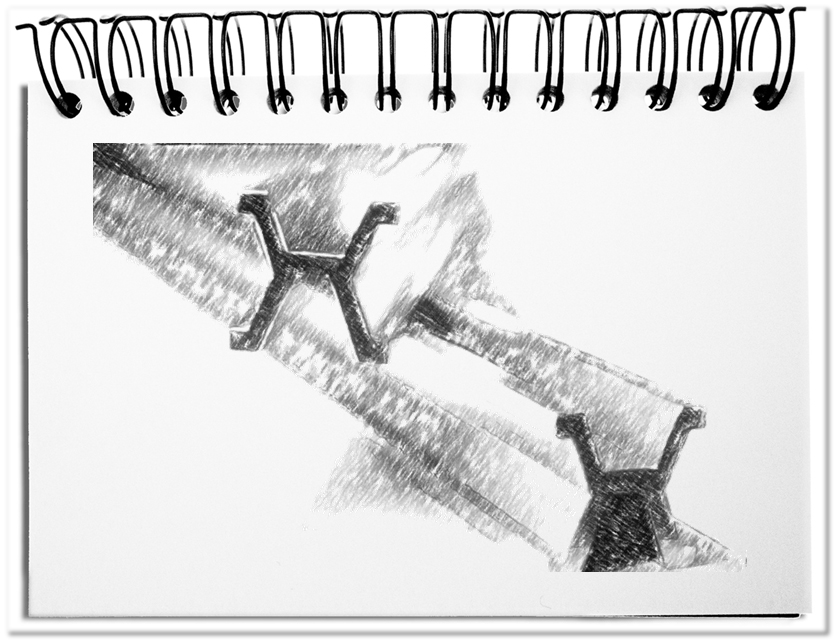
Standards are requirements, specifications, guidelines or properties that are intended to ensure the quality of materials, products, processes and services.*1 They facilitate the production and exchange of goods, the provision of services and the collaboration. Examples are units of measurement (e.g. the International Prototype Meter; see picture), the DIN paper measures (e.g. A4, A5), computer standards (e.g. Unicode, HTML, UML) or quality standards (e.g. the ISO 900x standard) *2. All agreements between contracting parties would have to be negotiated and agreed in detail without standards. Thus, standards are actually useful for everybody, because they

  • reduce the variety,
  • improve the structures and the procedures,
  • increase the efficiency,
  • secure the compatibility,
  • protect people’s health and the environment,
  • determine the characteristics for the quality, security and usability,
  • make the requirements comparable,
  • increase the satisfaction of the customers,
  • simplify the compliance to regulations and
  • facilitate the negotiations as well as the collaboration.

However, there is a dark side of the standards that undermine the advantages.

Urmeter

The following aspects undermine the advantages of standards.

  • National standard
    Standards that are only developed for the local market, can lead quickly to trade barriers. For example, cars are not allowed to be used in a certain market, because they do not fulfill the local standards.
  • Certifications cost time and money
    Certificationsneed external and, above all, internal capacities for the first certification and the regular renewals. It is difficult for small companies to provide continuously the necessary capacities for certifications.
  • Flexibility gets lost
    Standardsrequire defined procedures, even if a need-oriented variant would be better. This limits the flexibility, for example, if the requests of the customers require a quick reaction.
  • Variety is limited
    The strengths of standardization is at the same time a disadvantage, since products and services become more and more interchangeable. The properties of the products and the related operational procedures always follow the same standards.
  • Pro-active thinking is not supported
    Over time the work becomes a prosaic observance of the standards. Thus, the employees lose their natural creativity. The ability of the enterprise will suffer on a long-term basis to create new solutions.
  • Improvements are difficult
    Bettersolutions are hard to establish, even if the current standards do not meet the state of the art technology. This leads even that far that the company does not take care of improving, but rather hopes for further development of the standards and waits.

In today’s technical and organizational complexity, it will not work any longer without standards. It is important to establish worldwide standards, since otherwise the compatibility of the various systems will not be ensured internationally. However, we should not forget the dark side of the standards.

*1: http://www.iso.org/iso/home/standards.htm

*2: http://en.wikipedia.org/wiki/List_of_technical_standard_organisations