
Archiv der Kategorie: English

Five more ear sharpeners

Ear sharpeners are phrases that require attention. Messages consist of descriptions that are intended to convey facts. Additionally, speakers send hidden messages about themselves. The key to these disclosures often lies in the first words. The background can be deciphered by asking appropriate questions.
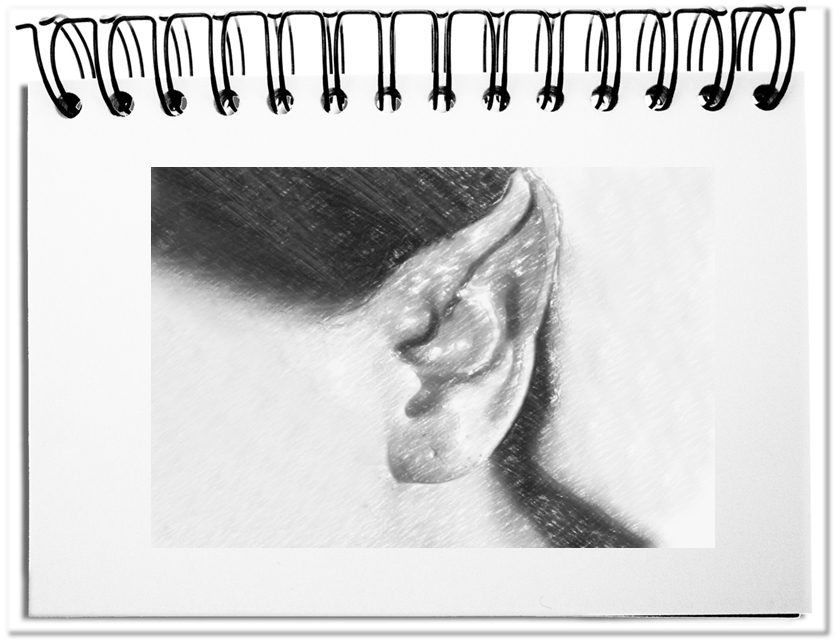
Let’s look at some new ear sharpeners.

  • I would…
    The good news that is signaled with this beginning is that someone is thinking about what to do. If the sentence furthermore starts with „I“, the probability increases that the person is trying to find the solution by oneself. But if then the word would follows, it is unclear whether this person is willing to get involved personally. Example: I’d like to try another solution.
    To keep the speaker active, you can immediately react: Good idea! Go for it!
  • Objectively speaking…
    Statements can be interpreted in different ways. In order to give more weight to the content, one eliminates the conceit of personal bias by explicitly emphasizing objectivity. This neutrality does not exist, since all propositions are always subjectively colored. Statements always depend on the location and experience of the observer. This becomes apparent, when several people describe the same facts differently. Example: From an objective point of view, only these options remain.
    In order to ensure that you come as close as possible to the actual facts of the case, further evidence can be asked for: Are there any other factual contributions?
  • I really mean it!
    Statements can announce activities and convey opinions and feelings. They concern the speaker or represent his or her assessments. The real intentions of a person cannot be seen in the utilized words. For this reason the speakers underline their importance by making the seriousness clear through this ear sharpener. Example: We have to try harder to reach our goal, otherwise we will have problems. I really mean it.
    In order to use the momentum of the speaker’s decisiveness, one should challenge its seriousness: Let’s immediately sit together and determine the next steps.
  • That’s just the way it is.
    Some conversations end with the statement that there is nothing more to say, because that is simply the way it is. This classical killer phrase is an attempt to nip any statements and contradictions in the bud. Example: We can’t do this. That’s just the way it is.
    In this case you can help the speaker out of his resistance: What could we further use so that it works differently?
  • Based on my long experience…
    A particularly immodest statement is the reference to one’s own competences. Since a speaker always talks about himself or herself with his or her words, it is important to focus attention on possible weaknesses or concerns of the person. Example: I know this weak point based on my long experience.
    This is a good opportunity to reuse the wealth of experience by asking: How have you solved this so far?

Bottom line: Statements often contain additional signals that help to better understand the speaker’s intentions and to react appropriately. Theorists, realists, serious, simplifying and experienced people deliver messages in addition to the content, which make their real intentions recognizable by the used phrases. It is worth paying attention to these ear sharpeners and using them as an amplifier for oneself.

Learning to fly

Since everybody is latently connected with everyone and is exchanging constantly data, we have to deal with too much of too many. Per minute almost 200 million emails are sent, 50 million messages are transmitted and more than six hours of video material are uploaded to YouTube. Nearly one third of the world’s population uses Facebook, 2 billion YouTube and even more than 300 million LinkedIn. The call for more information is still ongoing, even though users are looking for filters to handle the increasing amount of data. At the same time the information bubbles are perceived as disturbing. We need a new vantage point that allows us to keep the overview.

In the end, it’s all about triggering appropriate activities that take you further towards the desired future. The following aspects create a new perspective.

  • Accepting dynamics
    The more data that pours down on you within a moment, the more volatile are the insights that can be derived from it. It remains to be seen to what extent scientific studies are able to generate timely propositions before conditions are moving on to change. Already today, many results cannot be implemented because too many studies are being developed. At the same time, never trust any investigation that you have not done yourself.
    In order to continue to be able to make decisions, you have to accept the VUCA world and again form your own opinion. Developing your own thoughts and explanations, which adapt incessantly to the changing circumstances, is the maxim, in order not to fall behind due to static thinking.
  • It all starts with oneself
    Usually explanations are searched at first in the environment. No one is an island, which leads to permanent influences from the outside. A circumspect investigation always includes considering external factors (e.g. STEP). The social, technological, economic and political framework conditions determine the scope of action. If, however, you limit yourself to that, then you would clearly miss the point. It is one’s own ideas and convictions that mostly work unconsciously.
    It is anyway more difficult to achieve changes in the external environment than within oneself. Before you start wanting to change the world, it is easier to change oneself – once you have become aware of the limits. The own parameters only have to be activated by rethinking – from the responsibility of others to your own.
  • Overlooking the whole
    More data always means more details, which often do not fit together. After entering a forest and getting closer and closer to the fauna and flora, more and more subtleties show up. If one looks at the individual aspects, the context gets lost and the forest disappears behind the individual tree, bush or moss. If you save a bush, it has little effect, without measures for the forest as a whole. The same applies to all daily tasks, which, the finer they are drawn up, the lesser they have an effect on the overarching unity.
    If you look at the forest as a whole by looking at it from a helicopter, you can see relationships and building clusters. Measures taken at this altitude provide more to the whole than the detailed, endless preoccupation with the subtleties. We have to move away from the part to the whole.
  • Ensuring survival
    Over the past centuries, the economy has learned to think big. In order to be able to afford the big things, the decision makers have learned to make decisions at the expense of the future. With the assumption that growth secures the future, the funds generated are used to expand the business. This is similar to a pyramid scheme, where the current profits pay off the debts of the previous deals. This short-term thinking ensures the bonus of decision-makers who move on, before the consequences of their decisions reach the company.
    In order to maintain the business for all participants, measures are needed to ensure survival – human image of Theory-Y, organizational fitness, long-term cooperation, minimum viable product (MVP). Away from growth thinking, towards profitability.

Bottom line: In times of alternative facts (don’t trust any statistic that you haven’t falsified yourself) the question arises, how to make decisions even though the basis of the resolutions evaporates. In this context, systems thinking is a good idea. To do this, we must a) accept the dynamics, b) understand that we are primarily responsible, c) redirect our attention from the part to the whole, and d) shift the focus from growth to viability. This means for the many detail-obsessed people to dissolve themselves from the facts and to learn to fly.