
Archiv der Kategorie: English

Out of the dilemma

It is a difficult balancing act to filter one out of two unpleasant solutions. The choice between pest and cholera only gives hopes that both will not happen – although fate could still pass you by. And then, because of the different interpretations, additionally many have the public hounding them. There seems to be no way out for the favorable representation of one’s intentions. No matter which solution you choose, you will always be shown that it is the wrong one. A good example is the current debate on the sponsorship of events by political organizations, such as the EU. Can a soft drink producer support an event financially without being under general suspicion of trying to influence?
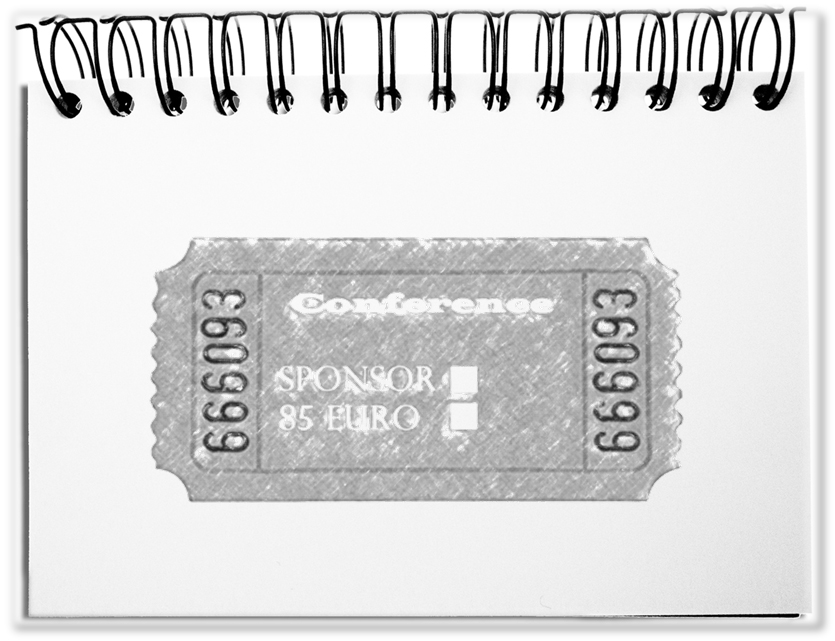
This is a dilemma for the organizers. If sponsoring takes place, it is assumed that the companies buy favorable decisions from politicians. If the organizers renounce the funding by the industries, it could result in the fact that somebody is accused of wasting public funds. Where is the way out of this dilemma? The following steps will help you find your way out of this desperation.

  • Understanding
    Nowadays, news are almost simultaneously in the media. The immediate consequences often only become clear afterwards. The experienced reporter has a sharpened eye for interesting matters. If then the logo of a soft drink manufacturer is emblazoned on the event sign of a political association with the note „sponsored by“, then speculations start. It is important to understand the situation. Sponsor or not? Influenced or not?
    The real dilemma should be clear; otherwise you will make the wrong conclusions.
  • Rating
    After recognizing the dilemma, you should work out the pros and cons. What speaks for one perspective and what for the other? What are the reasons against it? With this ProCon list you can classify the different options – by the way also the possibility of choosing none of the alternatives. This way you choose the lesser evil.
    The real dilemma resolves by itself, since a reasonable decision is prepared.
  • Dissociating
    The consequences resulting from the dismantling of the dilemma unfortunately still remains fatal. For this reason, the risks are separated into factual consequences and undesirable impressions. Factual consequences are physical or human damages. Damage can be minimized by means of preventive risk limitations or short-term crisis management. Public evaluations are opinions that damage one’s reputation. A coherent reasoning and comprehensive publication can help the audience to better understand their own point of view. However, in the end, the public still values at its own discretion based on the mediated „reality“
    If the dilemmas are not practical emergencies, such as natural disasters, economic threats or war, then these are often political reasons that should be confronted politically with clarifying statements.
  • Accepting
    The decisive factor of a dilemma is the fact that the predicament is not under control, but that somebody has to choose one of several undesirable alternatives. Doing nothing by shock-induced paralysis is only the last option. Through the above steps you understand better, which possibilities exist with which consequences. Since it is not possible of safely getting out of this clamp, it is important to accept the insolvability and to decide on one of the alternatives. You are aware of the consequences and initiate appropriate countermeasures.
    The dilemma disappears, when you adopt the chosen solution – and above all when you are convinced that you are doing the right thing.
  • Explaining
    The most important part of the solution is the justification. Since everyone is always the victim of a limited range of vision, we should always explain our solutions in such a way that others can develop their own opinions based on the available arguments. However, poor processing throws oil into the fire. For this reason, well prepared public relations are indispensable.
    The dilemma is mitigated by proactive media work.

Bottom line: With the sensory overload in the media, attention is becoming an increasingly scarce commodity that everyone is ripping off – with the aim of selling products, services, or themselves. In this context, clever expressions about decisions that can be evaluated differently are a good way to fight for one’s share of attention. This means that all kinds of decisions are always placed on the gold scale. Starting point are mostly dilemmatic situations, such as sponsoring political events. If you get sponsored, you get suspected of being impressionable. If you pay, you waste taxpayers‘ money. This desperation is solved by choosing an alternative, usually the one with the least damage. For this purpose you should understand the dilemma and estimating the advantages and disadvantages. As soon as you dissociate the consequences, you select a solution and explain it to the public. Do the least bad thing and talk about it. That’s how you get out of the dilemma.
Learning is a completely personal matter

Already in the Politeia Plato formulated „what the ignorant has to suffer duly … is to learn from the knowledgeable“. Basically, it was clear from an early age that learning has to do with personal passion. Only the interested and curious have sufficient tenacity to expand their knowledge beyond the comfort zone. This becomes visible subsequently in their behavioral changes, which become possible through observations, experiences and exercises. Although this has been known for two and a half thousand years, the idea still prevails that one could instill people the desired knowledge. This ignores the fact that, at best, data is transferred. However, some people consider this data as unnecessary noise, when they have no motivation to process the received, initially incomprehensible data. Learning cannot be forced, since it is a completely personal matter.

The learning process takes place exclusively in the mind of each individual in his or her own personal way. Neither information nor knowledge or wisdom can be passed on, since they exist only in the minds of every person – even if artefacts such as books and films give the impression that there is more than just the transmission of data. To illustrate this, let’s take a look at the elements of meaning that build on one another.

  • Sign
    The starting points for our contact with the environment are our sensory perceptions, which we absorb via the eyes, ears, body, nose or tongue. The flood of stimuli we are exposed at is unimaginably great. In order not to go crazy, we unconsciously suppress most signals. The remaining signals arouse our attention and become thoughts on a still unknown path that can only be described to a limited extent – except the facts that we are able to encode as data.
  • Data
    We convert this data into messages, which we pass on with our means of expression, e.g. with the help of spoken or written language or music or visualizations or our behavior. The sender encodes its thoughts as well as possible. A popular metaphor is the data processing of a computer – although our brain does not work that way. The computer works with ones and zeros (001000111). Although we measure electronic activities in the head and can assign brain areas to certain mental processes, we do not know yet exactly how our consciousness evolves as a result. The previous describes the transmission of data that can become information in the next step.
  • Information
    The receivers that are able to decode the received data convert the data stream into a number (e.g. 39). Only by linking it with other data it becomes information. As soon as the addressee realizes that the value comes from a thermometer used to measure a person’s temperature, we recognize that someone has a fever. If this is a new fact or an update of an earlier measurement, the data becomes information that requires our attention. Now, medical knowledge is required.
  • Knowledge
    Depending the state of knowledge, certain people, for example medical doctors, can order the application of calf compresses or the administration of an antipyretic based on available knowledge. Such conclusions could be drawn by a computer. The real difference in treatment arises, when wisdom is added.
  • Wisdom
    Over time more and more knowledge accumulates, which leads to wisdom in combination with already existing knowledge. Accordingly, the wise doctor not only observes the thermometer, but has a holistic look on the patient. Upon further examination he discovers an open wound and other symptoms. Based on his experience and his foresighted wisdom, he detects blood poisoning. Now the calf compresses aren’t sufficient.

The shown levels of meaning are often mixed in everyday life. With the assumption that it is information, many think that all levels are easy to transport and communicate. In fact, however, only data can be disseminated. A group of dashes can have a lot of meaning for the sender. For those who do not know the writing or symbolism of a picture, these signs remain incomprehensible – a good example is the Voynich manuscript. Even data often remains closed off – or who understands this?

· − − · · · ·  − − −  · · −  − ·  − · ·  ·  · − ·  · · ·  −  · −  − ·  − · ·  · · ·  −  · · · ·  · ·  · · ·  · · − − · · 

Only the data that the sender combines to a message can be transmitted. In the receivers’ head, the data he or she understands becomes information that is linked to other information about the context. In the interaction with existing knowledge, actions are eventually derived. The transition to wisdom is fluent, takes a lot of time and motivation to learn. The knowledge and the linking of different fields of knowledge ultimately lead to extraordinary possibilities.

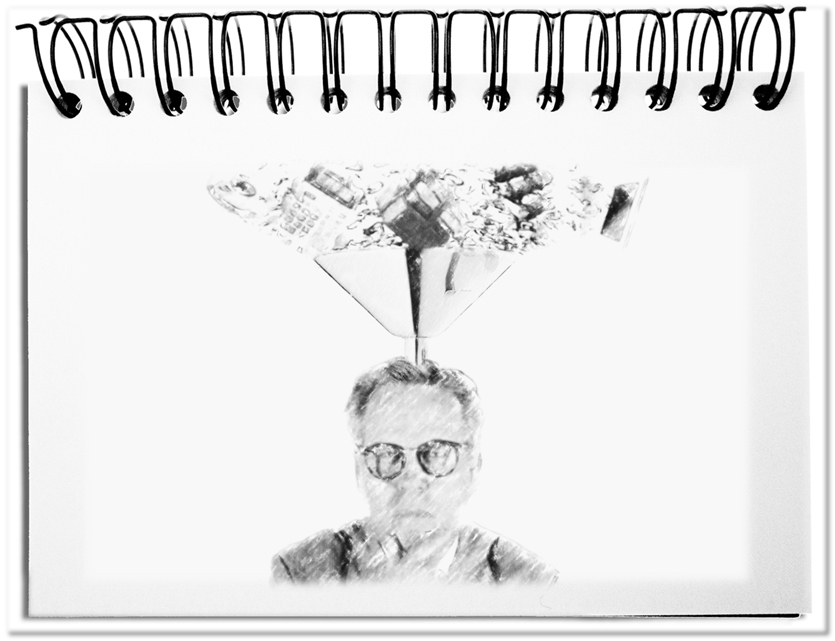
Bottom line: Information exchange, knowledge transfer, knowledge management, knowledge mediation or Nuremberg funnels with which knowledge is to be disseminated are apparently pragmatic approaches, but often fail due to a lack of willingness to learn. Since only data can be transmitted, it is necessary that the individual makes an effort to convert the data into information, process it into knowledge and at some point has enough experience to speak of wisdom. In communication, the receiver decides on the meaning with its horizon of experience – each person has its own viewpoint and therefore accumulates its own personal insights. For these reasons, learning is a completely personal matter.