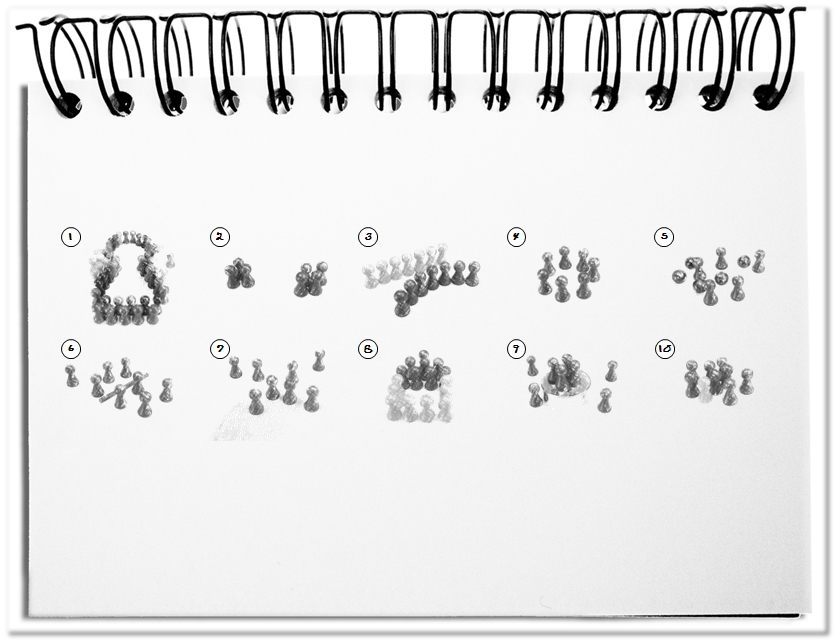
For a very long time, the horizontal and vertical division of labor was the basis for the breakdown of economic endeavors. The lack of availability and the slow flow of information required many handover points to propagate the intentions of the management and to create transparency of the business. At the same time, the tasks, authorities and responsibilities were designed in such a way that the actual value creators could fulfill their tasks without understanding the big picture. With the introduction of computers and their interconnectedness nowadays, all parties involved can reach the relevant information wherever and whenever, without the need for additional coordination expenditure. Since the companies reached the end of the one-way street of reducing costs, they are looking for new approaches, e.g. Holocracy, Platforms, Agility, Connected Company, etc. Although, there is already an approach available for a long time that fits perfectly with today’s requirements – the VSM.
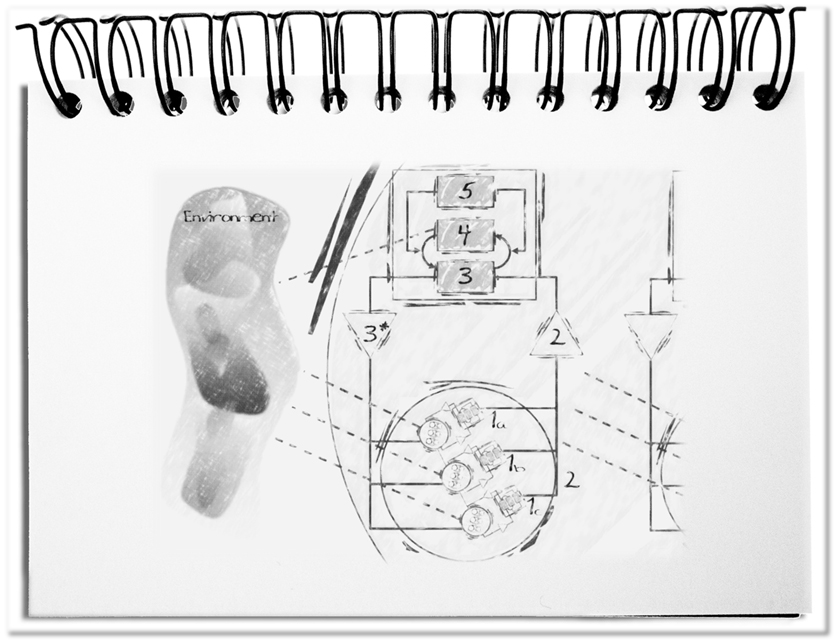
The Viable System Model (VSM) describes the setup of a viable distribution of tasks. Stafford Beer introduced this model as early as 1959 in his book Cybernetics and Management. The VSM is part of a new view that has been developed for decades under the term System Thinking in the shadow of classical organizational theory. In this article we start looking at the model in general. Henceforth there will be more blog posts on this.
- System 1 – Value creation (S1)
In this area subsystems generate the deliverables. The products are manufactured respectively the services are executed. There is a direct contact with the environment, for example with the customers, the suppliers, and partners. This is where the value-adding activities take place. Each of these units is by itself a VSM with the corresponding components. In the new approaches these would be the sub-circles, the producers, the agile teams or the pods. - System 2 – Harmonization (S2)
The value creation takes place in a small „company” (S1a) that behaves autonomously and self-organized. So that the individual subsystems interact, it is necessary to agree on the scope, the functionality and the interfaces. The vague exchange of information of the new approaches is made more specific in the VSM. - System 3 – Coordination (S3)
Even though the everyday interaction in the S2 is harmonized, there is still a need in the here and now to focus on the big picture. For this purpose, the means to be used, the responsibilities and decisions are here made and disseminated in the operational units. Besides S3, an independent unit (S3*) is available in order to collect information that reflects the current state of the value creation as unspoilt as possible. The new approaches coordinate with, for example, backlog refinements and daily scrums, interaction platforms and governance. - System 4 – Alignment (S4)
The company is constantly on the move in a direction that should be determined. This adjustment is influenced by the opportunities that arise in the environment. The direction of the company is determined by the leadership based on the new technical solutions that will be incorporated into future deliverables and on market opportunities that emerge. The insights will then be digested into a strategy and the associated planning that have an impact on all areas, including the development of employees and executives. In the new approaches, the alignment is left to the acting people. - System 5 – Final instance (S5)
The areas of tension between the present (S3) and the future (S4) as well as between the company and the environment can not be resolved in Systems 1- 4. The last authority for such dilemmas makes the decisions that prevent the company from being damaged by its different internal interests. In contrast, the new approaches are based on a natural resolution of disputes through transparency and open exchange of positions.
Bottom line: Companies can not avoid putting themselves in a position that serves their purpose. The division of labor that eventually has a henchman performing simple activities dissolves. These same processes can nowadays be performed by machines and robots. The cascade for the distribution of information is also no longer needed due to the pervasive availability. As a result of the increasing digitization, there is a need to re-position the own company. The VSM provides, what everybody needs, since it allows realizing the bundling of tasks, authority and responsibility in one hand at the point of action as well as the agilization of lumbering companies.