
Archiv der Kategorie: English

Right or wrong – a question of the point of view?

Still thirty years ago, you one reached the public by means of special channels – daily papers, magazines, radio, and television. Nowadays, everybody can place its expression in the Internet and latently reach three billion people. Without the filters of the professional news makers the question arises, which information is right or wrong. Nevertheless, there was always fake news. This goes from a German cell of the Ku-Klux-clan, to the stone louse invented by Loriot (a German humorist), to the Hitler diaries that were published by the Stern (a German magazine). News developed in such a way are nothing else than lies. However, where does the truth begin and where does the lie ends? Right and wrong is maybe a question of the point of view.
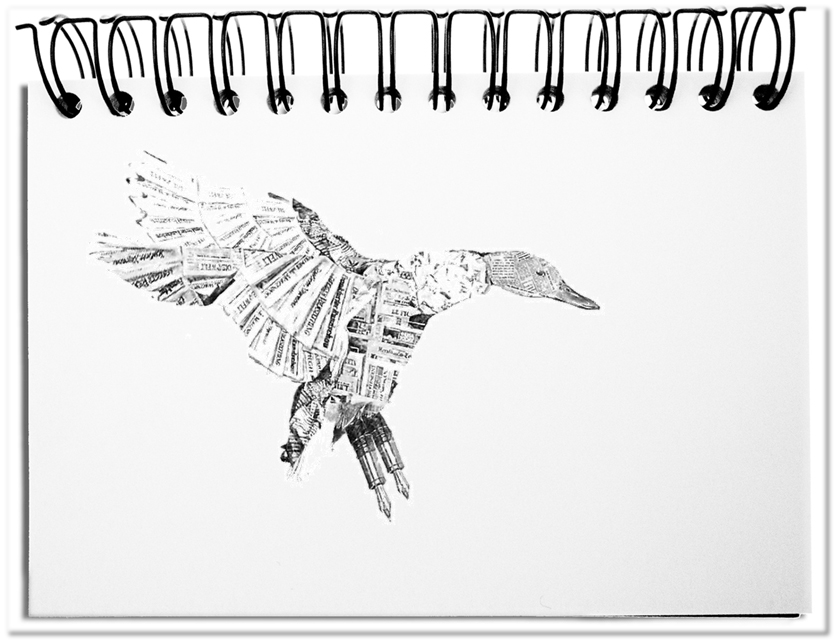
A look at some aspects clarifies the difficulty.

  • Points of view make a difference
    Depending on where you are and into which direction you are looking, you see facts differently. The point of view is limited in any case. The involvement determines what you see and evaluate. If you belong to the group of victims, the unjustified act is your focus. Perpetrators are looking on the conclusive reason of their action. As an outsider you have a neutral standpoint due to missing background information. But which point of view is eventually right or wrong?
  • Contacts make a difference
    A second-hand report provides mostly different, contradictory perceptions. The statements are determined likewise by the role (see above). Additionally the perceptions are limited by the filters of the Meta model of the language. Contents are simply erased or generalized or distorted. How can you tell, what is right or wrong?
  • Culture makes a difference
    Depending on the affiliation to a culture differs for example the kind of information exchange, the dealing of people or the description of the time factors. The style leads to detailed or vague reports, depending on the presuppositions based on the prior knowledge of the target group. Cultural emphasis by looking at individual persons or at groups makes a difference. The handling of time leads also to a justifying look at the past or a simple description of the present or a consideration of future consequences. What is then correct or wrong?

The quest for truth was asked by all philosophers since the ancient Greeks. With the Internet there is a medium that can be used by everybody to reach everybody. Thus, it opens the flood gates for spreading all conceivable statements. What corresponds to the truth or at least gets close to it, is not finally decidable due to the different points of view. The attempt to create neutral authorities for the certification of contents, will not fix this issue.

Bottom line: In the absence of a guaranteed truth, we must learn to deal with different versions of facts. As soon as we understand that different perspectives produce different, possible realities, we are warned and it will be easier to deal attentively with the presented proclamations. In the end depends right or wrong on the standpoint – except in case of a deliberately intended lie.
The flipside of the way of the slightest resistance

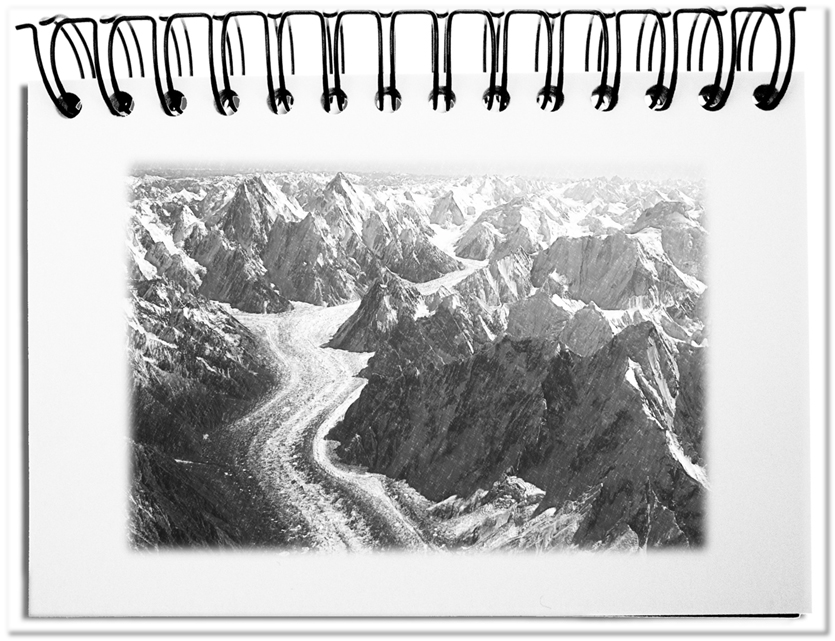
Water and sand, bees and ants as well as large herds and crowds, all follow a common principle. Frozen water sticks to it and aims for the valley. Pheromones show it to ants. Herds of animals adapt to each other, in order to find it. Even in the crush of a crowd of people, they all find it and create thereby order – the path of least resistance.

For some people it is the best way, since they connect little effort with maximum impact -although some aspects are not always desirable.

  • The way that everybody goes
    As soon as this path appears, all and everything follows this way. Regardless of whether it is snow or sand, the discovered attractor, i.e. the place, where all energies go, attracts you magically. In competition that is not really the path that should be aimed for, since you will be where everybody is and the fewest differentiators are found. The answer to the question about your originality, the Unique Selling proposition (USP), lets you stand out of the other crowd and makes the intended laurels on a long-term basis possible. As soon as you get lost on the path of least resistance, the search should start for a different approach. Even though this leads to larger efforts, it yields more in the end. Otherwise nothing else remains than resting in mediocrity.
  • The way that the problems go
    Mountain climbers know that the areas of the least resistance should be avoided, since there is the largest risk to be caught by an avalanche. The business problems also find this direct way, in order to spread at no expense. This begins with computer viruses that spread within networks from one computer to the next. It goes to the particularly harmful fight for market share that is fought through prices. Surprisingly the understanding that the cheaper offers are reduced, not necessarily equal services is missing to the customers. All pounce on this simple way of competition, without considering that the own viability is at risk. Their offers suffer one day under the bad quality and destroy the customer confidence. Certifications are worth nothing, since the customers already turned away.
  • The way that passes real opportunities
    The way of the slightest resistance is not necessarily the best, since outside can be found significantly more. In business the genuine opportunities are also outside of the well-trodden tracks. In the context of former conditions only a few people thought about the fact that a World Wide Web creates new possibilities. Meanwhile everybody understands. And already niche markets are emerging that promote again more physical community – meeting places, where one enjoys its coffee with a group of people; teams that co-ordinate their tasks personally in daily stand ups; meetings, where music is made again by hand. Since the daily routine leads to more and more regulations and standards, the responsible people forget to dare a view beyond the edge of the plate. Thus they miss lucrative opportunities.
  • The way that often takes detours
    With a river that flows in its natural bed, the way of the slightest resistance appears. It meanders itself in far and close, again and again changing loops. This shows that the nature does not follow the most direct or shortest way. In business life intuitive operational sequences are also not looking for the fastest way. On contrary, they lead often to much branched out and difficult-to-understand processes that cannot be steered out of one hand. Distributed, self-organized leadership is essentially more effective, as long as it concerns naturally grown sequences. Procedures that must be implemented in IT-programs, limit this free run of the things. The standardization is thereby a compromise that has to reconcile all interests and to overcome resistances.

Each of us will also take the way of the slightest resistance again and again. Why should you make it difficult for yourself? We are afraid of uncertainty and rarely change something that worked well so far. This is valid also for those, who always take the way of permanent change and who will therefore never come to peace.

Bottom line: The way of the slightest resistance is despite its momentum and its apparent coziness the least way to strive for. Here you find most people. Here the problems are happening. Here you have the smallest chances to set off from the pack. Here you accept detours. And nevertheless many let themselves drift and complain afterwards that they didn’t get more out of it. As soon as you feel the fact that you are on this path, a side step or a spontaneous direction change or just trying out something completely different is recommended. The flipside of the way of the slightest resistance is the unnoticed corset that prevents long-term viability.