
Schlagwort-Archiv: Time

Using MONO/POLY

With more and more precise watches, we seem to get closer to the phenomenon of time since the sundials of the Egyptians. However, our everyday experience creates the expectation that time is running constantly – at least as long as we don’t climb a mountain or leave Earth with a spaceship. And in addition, our perception also beats us so much. If a lot happens, then we get into the flow and the diverting span from the last look at the watch to the next passes without noticeable duration. On the other hand, if nothing happens, you develop the boring feeling that time stands still. The dynamization of time can be perceived in moving pictures, the film – 24 frames per second provide a smooth flow. Movies are also captured with special cameras that deliver 360 to 25 million frames per second, which allows the stretching of time (slow motion) by playing the movie at normal speed of 24 frames per second. In addition, two basic time cultures have evolved – mono vs. poly.

To understand the differences between Mono and Poly, we’ll look at the following areas.

Areas Monochronic Polychronic
Activities Monochron is determined by a line of events that take place one after the other – one section at a time.
Activities follow a schedule.
Private and business are stubbornly separated.
Appointments are considered as one point in time.
Breaks and personal time are stubbornly adhered.
Polychronic can be seen at parallel events taking place in one time frame – many things happen simultaneously.

Activities are harmonized through personal relationships.

Private & business are always interwoven.

Appointments are regarded as a vague range.
Breaks and personal time are adapted to the circumstances at any time.

Relationships Personal relationships are subordinate to schedules. The current schedule is subordinate to the personal relationships.
Structure Time is considered fixed and stable, clearly distinguished sections are considered separately and time flows linearly. Time is seen as fluid and variable, sections are overlapping and running again and again.
Norms Monochronic guidelines insist on appointment arrangements, speed and punctuality. Polychronic rules allow vague appointments, sedateness and unpunctuality.
Regions Monochronic societies are found in:

·    Central and Northern Europe

·    Japan

·    North America (USA, Canada)

Polychronic societies are found in:

·    Southern Europe (Mediterranean)

·    Middle East

·    South America

Tensions arise when these opposing time feelings meet and have to work together. The completely different expectations cause stress in the other people. Since the individual parties cannot simply switch over, at least those involved should be aware that the conflicts that arise are not malicious, but different, valid approaches.

Bottom line: Mono- and polychronic sense of time determines the rhythm of everyday business life. The resulting incompatibility of time cultures influences activities, relationships, structures and norms in the different regions of the world. The conflicts arise, when appointments are seen as binding or not, or time dominates relationships or vice versa, or when fixed times meet fluid times, or when punctuality meets unpunctuality, if there is a meeting at all. These resulting difficulties are the outcome of the respective education and not an expression of lack of respect. Since one group cannot imagine that the other is ticking differently, it is important to be aware of these differences and to react tolerantly. In the end, the two concepts of time complement each other and can be used to the advantage of the company in certain situations.
ProCons of networks

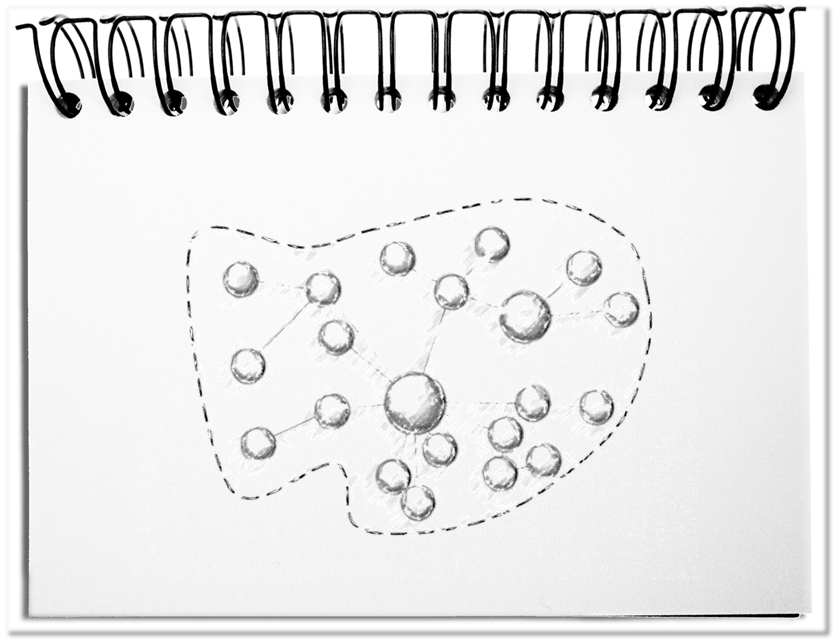
Increasing volatility, uncertainty, complexity and ambiguity (VUCA) can no longer be mastered with the rigid structures of the past. Collaboration takes place across borders, wherever you look. The related structures are constantly changing and subsist on self-organizing actors who build, use and eventually resolve the necessary relationships. The result is a more or less dense network. Aside from today’s needs, where everything is just one click away, there are some arguments in favor of and against the use of networks.

The following ProCons affect not only networks but all types of communities.

Pros

The benefits cover more than just the economic interests of the companies.

  • Competence advantages
    The network draws its strength from the purposeful connection of resources and capabilities. The participants‘ intrinsic motivation provides the network with a long-term advantage ahead of other forms, which on the one hand require a lot of setup time and on the other hand never have comparable access to this amount of competencies.
  • Information advantages
    The actors provide a lot of information. This includes experience and knowledge about different markets, customers, products, technologies and, above all, business processes. By sharing this information (push vs. pull), they reach all network participants at a relatively high speed.
  • Resource advantages
    The actors already provide a variety of resources – material and immaterial goods and especially people. Contrary to other forms of organization, the network offers an adjustable openness that makes it possible to expand resources faster. Just the use of these resources of the actors provide means that otherwise would have to be procured with much effort. In addition, this tool is usually better suited that is brought by the craftsman.
  • Social advantages
    Getting to know like-minded people is a huge advantage for the actors. The sense of community offers an environment in which you can expect more pleasant working conditions and a trustworthy cooperation due to the same interests.
  • Economic advantages
    Looking at the entire network, there are many savings for the company. Cost advantages arise when the actors already bring additionally to their commitment many resources that do not need to be purchased. The combined competence accelerates the business and reduces the risks. Practicing self-organization in a network avoids delays caused by a hierarchical structure with its long decision-making and communication paths.

Cons

Against networks speak especially apparent extra efforts, unpredictability and the difficult control.

  • Time
    Even with all the advantages, networking requires active involvement of its members. The open procedures and the lack of centralized control require other efforts of the participants, which are perceived at first glance as additional expenses. However, much higher overall savings can be made for the company.
  • Redundancies
    Even with a lot of engagement in disseminating information, there can be more double work in the self-organized network than in a tayloristic organization. The lack of control can lead to a competition for the best idea that would be wasteful.
  • Increased communication effort
    The multiplicity of actors increases the coordination effort, which can even not be avoided with agile approaches. New insights and experiences simply have to be shared, absorbed and processed. This effort is the price for a lot of advantages.
  • Cooperation issues
    Of course, because of the variety of characters, there will not only be sympathy, but also antipathies that can burden collaboration and trust and eventually lead to an increased need for mediation. This makes team building an important exercise.
  • Lack of control
    A strong driver for the formation of a network is the intrinsic appeal for each participant. Leadership could quickly disturb. At the same time, a network also needs a direction. Without centralized control, the network might take longer to reach an agreement.
  • Information loss
    The open structure of a network and the frequent participation of individual members in different networks automatically lead to the leakage of information. Lack of secrecy could endanger the network.

Bottom line: Although many aspects speak against creation and participation in a network, you have to face the fact that a VUCA world creates new conditions that function in a way that cannot be covered by traditional approaches. The competence, information, resource social, and economic advantages are arguments for the use of networks. At the same time, appropriate measures have to minimize the risks.