
Archiv der Kategorie: English

SSS – Supplier Satisfaction Survey

Henry Ford emphasized on mastering the entire value chain. He ran a rubber plantation to ensure the raw material for the tires. In northern Michigan he operated mines and shipped the iron with his own freighters in order to produce the required steel in his own smelting plant. This gave him 100% vertical integration. Today’s car manufacturers have reduced down to twenty percent. These companies have evolved into integrators, initially assembling their products on platforms and now out of modules. OEMs (Original Equipment Manufacturer) are still in the driving seat, but with suppliers of increasing size and influence, which are gaining more and more room to act. This will foreseeably turn the balance of power upside down and the OEMs will depend on the goodwill of their suppliers. By then, at the latest, SSSs will have evolved that will find out, what the suppliers value most, in order to continue delivering to the OEM.
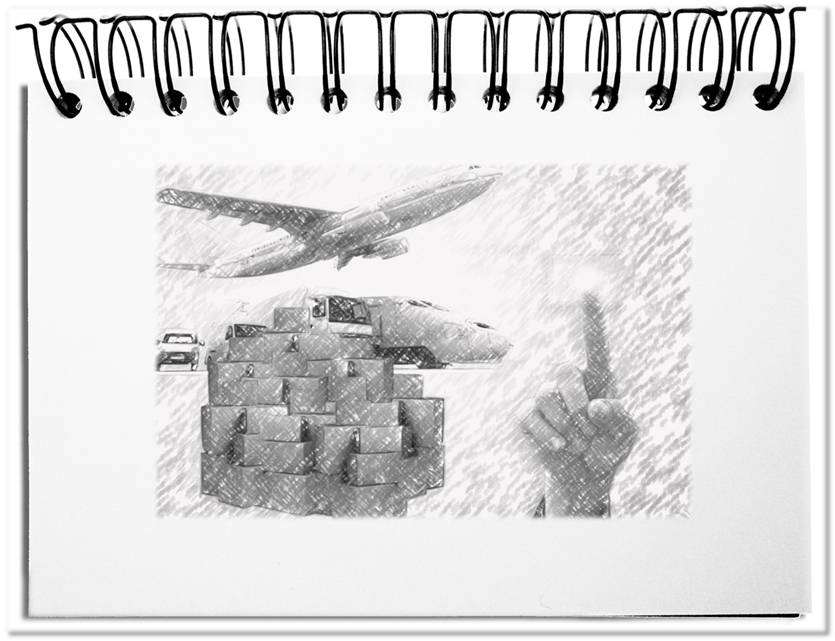
This reversal of the relationship between manufacturer and supplier requires a new, or at least a different interpretation of the satisfaction criteria.

  • Adequate performance
    Ever since López de Arriortúa contaminated GM’s and later VW’s cooperation with suppliers, his legacy has continued to impact in the form of one-sided advantages of the OEMs. At the latest, when supplier satisfaction in terms of the ratio between expenses and earnings regains importance, the purchasing departments will return to old values – cooperation based on partnership, win-win, and mutual support.
  • Future prospects
    The upfront services that are tailored for the customer, need good prospects for the vendor, otherwise the investment will be at the expense of the suppliers. The orientation of the deliverer towards the most promising companies ultimately forces the non-cooperative customers to take care of the external services themselves. The winners are the companies that perform their role as integrators to the satisfaction of both sides – e.g. by sharing and jointly developing long-term forecasts.
  • Smoothness
    An important factor is easy cooperation. This is disturbed by exaggerated administration in the form of complex processes and lack of provision of required data. Every manufacturer has its own requirements, a huge army of contacts and compliance rules that prevent trusting cooperation. Frictionless and simple procedures would help both sides.
  • Relationship quality
    It has been a long time since the Extended Company was proclaimed. Today, we are talking about platforms. The boundaries of the company no longer determine the relationships, but the respective task. For this reason, the employees must find ways to work in the steps of the process in harmony, trustingly and openly together with the partners – respectfully, promptly, and bindingly.
  • Image
    In the past, it was important to be a purveyor to the court. This created a reputation that influenced all other businesses. The former „courts“, today’s corporations, have lost this reputation, because they squeeze out their suppliers to the last drop in favor of their own balance sheets. In order to survive in the future with module-based approaches, it is important to regain the former image so that it is something special to work together again.

Bottom line: SSS will place the cooperation between manufacturers and suppliers on new pillars. In the long term it must be worthwhile for suppliers to work again for certain companies. The avoidance of any kind of waste through formalisms will make the difference. In the end, cooperation does not take place between companies, but between people. And there the quality of the relationship must be moved again into the foreground, without pulling the Compliance card in each step. If the suppliers get some more of the manufacturer’s image, SSS will probably be so favorable that the future is secured for everyone.

P.S.: Those who cannot or do not want to think in this direction will sooner or later have to rebuild their modules themselves.
An additional puzzle piece for better understanding

The path to the completed presentation does not begin with the scheduling or the elaboration of a topic or the preparation of the documents. The beginning lies hidden in a time when the interest in a subject area evolved. Eventually the lecture takes place in front of an interested audience. The contents are tailored to the occasion, formulated, visualized and equipped with suspense. The posture, facial expressions and gestures as well as the tone of voice during a lecture underline the relationship of the speakers to their presentation. And between the lines you will find the speaker’s intentions, regardless of the topic – an additional puzzle piece for a better understanding.

Even if this part of a lecture is often covered by the show and the contents, the audience unconsciously perceives these aspects. Presenters should be aware of what they intend to do in advance, to package their facts appropriately. By consciously observing this space in between, the audience is offered more clarity regarding the intentions of the lecture. Thanks to John Searle, there are five generalized speech acts that reveal the expectations of the speaker.

  • Statement – Saying, how it is
    The main purpose of describing facts is to inform the public. For this purpose, statements are formulated, which consist of numbers, data and facts, explanations and conclusions as well as arguments for or against a point of view. The view goes back to the past or describes a current situation or predicts future developments. You can confirm, correct or deny assertions.
    Saying, as it is, conveys circumstances from the speaker’s point of view to the audience.
    Examples: argue, assert, communicate, conclude, correct, deny, determine, disprove, inform, predict, report
  • Solicitation – Saying, what to do
    Presentations can be used to motivate the audience to act. A wide range of (in)direct impulses is available for this purpose. They range from the allusion, the recommendation and request to the command. Restrained speakers will make subtle hints. A piece of advice offers meaningful outcomes that someone only has to take and realize. In order to make its wish clearer, the listener’s insight can be appealed to or even asked for support. The next step is to clearly delegate or commission certain individuals.
    Saying, what to do, indicates the tasks to be completed.
    Examples: admonish, advise, allow, ask, call, command, demand, forbid, invite, order, persuade, plead, request, suggest, threaten
  • Commitment – Saying, what you’re doing
    A powerful propulsion convey messages that show what you are willing to do. These commitments are later observed by the audience, in order to check the speaker’s credibility against his future acts. Promises can be assurances or threats.
    Saying, what you’re doing, and adhering to it, is a powerful tool for directing large groups.
    Examples: agree, announce, assure, bet, commit, confirm, ensure, guarantee, insure, offer, pledge, promise, serve, swear, vow
  • Psychic condition – Saying, how you are doing
    The expression of one’s own feelings offers the opportunity to make emotional contact with the audience. These messages are less processed by the audience with reason than with the sixth sense. The whole range of emotions can be found here: from sad to happy, from disappointed to satisfied, from angry to joyful. The content can discredit or praise someone. You can complain about facts or being thankful for them. That way it is possible to communicate your state or to apologize for something.
    Saying, how one is doing, has a subliminal effect and, in a positive case, promotes cohesion.
    Examples: apologize, approve, blaspheme, cheer, compromise, condone, congratulate, defame, express condolence, glorify, greet, lament, mock, praise, scold, thank
  • Declaration – Saying, what is officially valid
    The announcement of formal messages determines, what is fixed from that moment. This may involve the proclamation of new rules or contracts, the dismantling or filling of a position or the release of a decision. It may refer to external or internal circumstances.
    Saying, what is officially valid, announces realities that are formally established.
    Examples: abdicate, appoint, baptize, cancel, dismiss, outlaw, pardon, release, resign, suspend, trust

Bottom line: In addition to contents and presentations, the intentions form an additional puzzle piece for interpreting circumstances – the intentions hidden in the messages. Just as in any description, Searle’s five speech acts are also included between the lines of each dialogue: statement, solicitation, commitment, psychic condition, and declaration. The speakers and the audience can use these patterns consciously for their own purpose. The lecturer ensures that his desired intentions become visible. The listeners use the conscious look at the wording for recognizing the intentions of the speaker on the basis of the verbs used. This provides all participants with an additional puzzle piece for a better understanding of expressions.