
Archiv der Kategorie: English

There is no meaning per se

Meaning is always arising through the conscious processing of words that someone disseminates. The scope used to be limited to people in the immediate vicinity. As a result, content was always surrounded by comprehensible cultural, linguistic and social context that made understanding easier. For centuries, the mass media have provided words from expert publicist to an ever-growing audience – via press, radio and TV. This led to a unified language and a press code that is committed to truth, reliability, and human dignity. At the same time, the art of interpreting content in a twisted way evolved, in order to manipulate the audience’s formation of opinion.
Through the Internet it is now again possible to exchange thoughts directly from one to the other without expert brokers – however, limited to the words used, which are internalized without additional context information as well as without hints on purposeful influence. As recipients of vast amounts of news, we assume that these messages mean exactly what we understand.
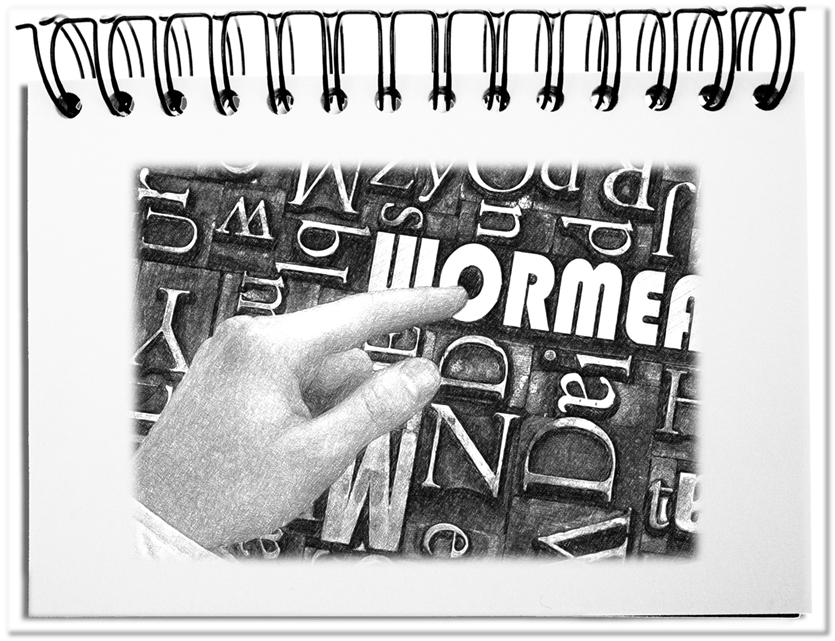
It is based on the fallacy of thinking that sentences and words mean something unambiguous. Perhaps we should be aware of the features of statements. This article deals only with written and spoken language – not pictorial representations. For the sake of simplicity, we speak of speakers and listeners, which also include writers and readers.

  • A collection of words
    Language delivers a series of words, which, more or less, follow grammatical rules. The speaker chooses the expressions from its vocabulary, with a little luck oriented towards its target group – the appropriate national language and an appropriate jargon. The audience receives the words and understands the meaning through their own language skills. The general assumption is that this leads to a far-reaching overlapping of meanings, which is very unlikely.
  • A variety of intentions
    Each statement always contains several intentions: 1) Say what is; 2) Urge to (or not to) do something; 3) Disclose, to (or not to) do something; 4) Share, how you are feeling; 5) Announce, what applies. All this is in one sentence and is noticed according to the interest of the listeners. The following statement is drawn arbitrarily from the stream of news: A denies that B has two things: Experience and charisma. What does this include: 1) B lacks experience and charisma. 2) B is not acceptable. 3) A does not accept B. 4) A does not feel well with B. 5) B will not get it. Scan any sentence for the included messages.
  • Infelicity of the expression
    A statement can be made with different words. And sometimes you get carried away with an awkward wording. Example is the statement „Reconcile the social with the national“. Despite the changed word order you become aware of the double sense. With the amount of other words one could have used, the question arises, to what extent this happened intentionally or unintentionally.
  • Who knows, what it actually meant
    The message behind the words is not always clear, even with a conscious word choice. A statement can be meant as it is said. However, something can also be expressed without meaning it. Quickly, something is expressed that is meant differently. It is particularly frustrating, when you say something and nobody understands what was in your mind. For these reasons, an open, reciprocal discourse, with questions and answers, is always preferable to a one-sided proclamation.

Bottom line: There is reason to fear that there is no longer a common basis for expressing universally accepted facts. The real meaning lies in the eye of the beholder and its own opportunistic interpretation. Although the speaker thinks that it can control this, it is the listener, who processes the content and intention of an utterance. Today, all those, who have access to the Internet, can easily publish. This exacerbates the situation that opinions come into the world that deserves to be called alternative facts. The background is unknown and the contents are adopted uncritically. The fact checkers don’t help here. Direct exchange on the Internet is a new form of conversation, in which opinions are exchanged. In the interest of the freedom of expression, this must be allowed, even if the content is available worldwide without delay and reaches directly immediately vast numbers of people. We must learn to distinguish between personal statements and expert publications, as in everyday street conversations – even, if the differences are difficult to perceive. It is worth taking a look at the imprint of the publicists. There, a part of the context becomes visible or obscured and one recognizes who you are dealing with or not. If the imprint, the names of the authors, the address and the telephone number are missing, or if the contact address is a Freemail, or if the responsibilities are located abroad, the contents are questionable. In any case, there is simply no meaning per se.
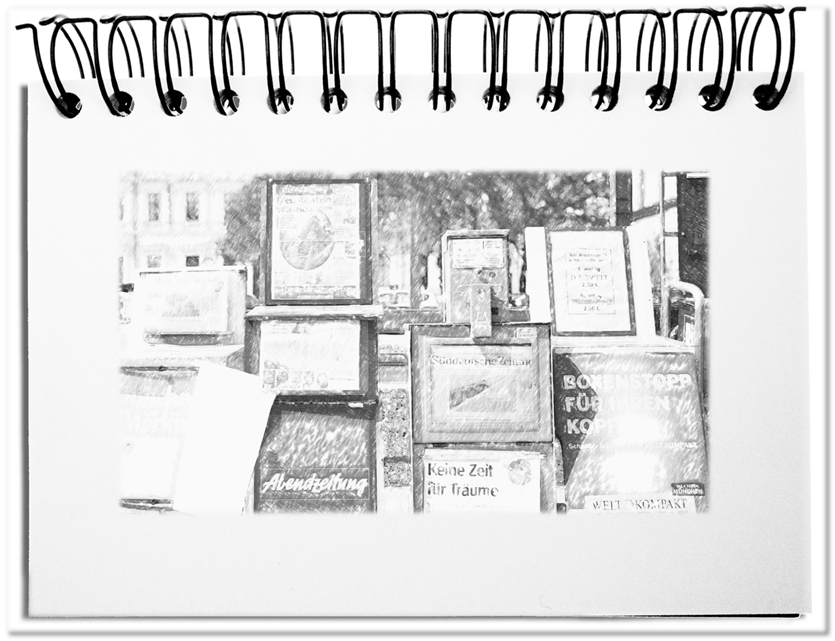
Who actually owns a fact?

As soon as the virtual word of mouth reaches everyone immediately, the contribution of a messenger, the conveyor of the fact or briefly the performance of the traditional media, gets lost. Agencies can’t deploy reporters everywhere at the place of the news. At the same time, there are witnesses everywhere, who can unveil and publish a message with the simplest means – with their mobile phone via Facebook or Instagram. In addition, journalists work according to a certain working standard that requires more time for research. If then the case of a local newspaper becomes known that researched an article extensively that appeared then without indication of source in a nationwide newspaper, one starts thinking. Assuming that the news was not copied word by word and that it was only the message of the actual facts, the question arises, who actually owns the message. The sources that report the circumstances? The journalist, who does the extensive research? The publication medium that publishes the news? The witnesses, who obtain, prepare and publish the content?

Facts are not personal, intellectual creations and therefore per se not worth protecting. However, one could find arguments that suggest the intellectual creation and above all the compensation for the news. For example, the following roles are affected.

  • The reporters
    There are many perspectives from which a news can be generated. This includes the effort of finding, collecting and evaluating sources in order to eventually condense and prepare the circumstances into a news. Once the message is published, it can be reused as a fact by anyone – unless you simply copy it. The costs accrued for the journalists and their investigations stick to the writer or the agency, while the copy-cats exploit the fact. Does that make reporters creators?
  • The correspondents
    A special type of reporter is the rapporteur, who is located all around the world and represents the editors. The quality of a fact is determined by its completeness, accuracy, up-to-dateness, relevance and traceability (e.g. through several independent sources). Today’s information bubbles and echo chambers amplify opinions. The correspondents integrate with a lot of effort the different reports of reporters in order to work out their own point of view. These expenditures should also be covered by appropriate revenues. Does that make the correspondents creators?
  • The editors
    Due to the flood of hard-to-verify details about a particular event, news have to go through a selection process to separate content from non-content, i.e. filter-out the details that are not reliable enough to reach the status of a fact. The content and political orientation is just as significant for the editors as the need to use the most eventful data. This can lead in the absence of reliable material to quickly using unconfirmed smartphone videos of witnesses – with the corresponding indication that no more reliable material is available. Does the editorial work turn the editors into creators?
  • The copywriters
    A news is first of all a fact that has to be prepared. This begins with the selection of the original sequences and images and continues with the formulation of the message text. The use of flag or stigma words gives EVERY message a tone that rates unnoticed the event – for example, when an assassin of a certain origin is called terrorist, while another is called mentally confused. Even if nowadays the role of the writer is usually part of one of the above roles, texts have to be written. Does that make the copywriter the creator?
  • The perpetrators
    Let’s not forget those that trigger an event. These include politicians, celebrities, organizers, judges, those responsible for accidents, lifesavers and all the others who are worth the news. In a certain sense they are the creators of the news. Without these protagonists, there wouldn’t be any news. Does that make the perpetrators the creators?

The sources, the journalists and the respective medium should on the one hand be appreciated for their contribution and on the other hand the expenses accrued should pay off. The original text is protected by copyright and may not be reused free of charge. To what extent this also applies to the actual fact, their interplay and the resulting insight is difficult to answer. For the news medium, it’s all about survival.

Bottom line: The discussion of copyright has not yet reached the so-called facts. Since the credibility of facts gets frequently questioned, the general understanding is gradually emerging that every fact also contains creative achievement – which could then also become worth protecting. If then more and more individuals open their own channels and even rally an interested fellowship, then the end of the Fourth Power, the Press, arises on the horizon. If facts are treated like goods, they also follow the rules of supply and demand. Then, at the latest, the question will arise: Who actually owns a fact?