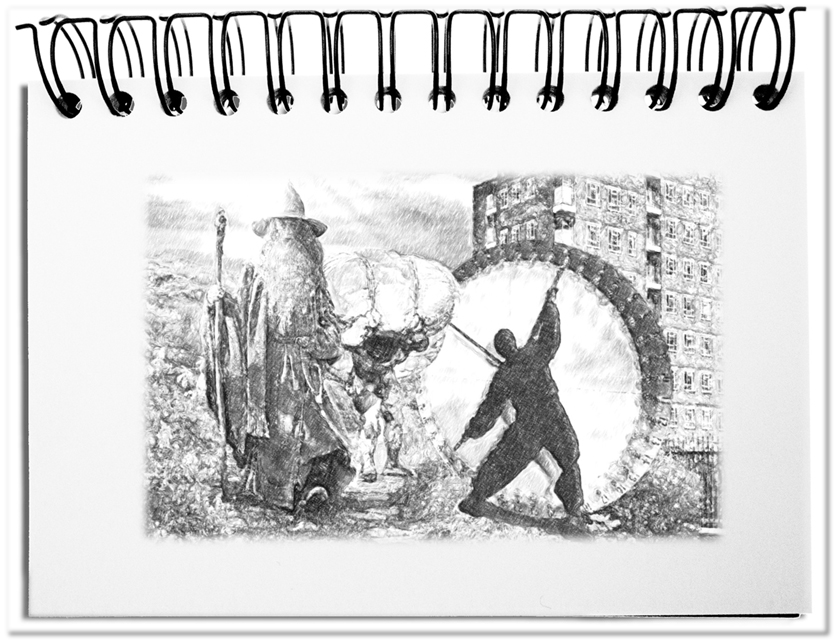
A look at cultures always takes place from the individual perspective of the own origin. The description uses words, associations and beliefs that are unconsciously determined by the culture in which you have grown up. This begins with the filtered attention that only notices aspects for which the viewer is accustomed to – are individuals or groups at the center of interest? This continues with the world view, which provides explanatory patterns for the observed facts, e.g. religious or secular convictions. The words that are used by the observing culture are available for the description, e.g. the interpretation of terms such as freedom, work, and government. If it is followed by an action, then this act is based on the possibilities of one’s society, e.g. imprisonment vs. corporal punishment. Already Ludwig Wittgenstein mentioned “Whereof one cannot speak, thereof one must be silent.” This turns our personal culture into the essential information bubble.
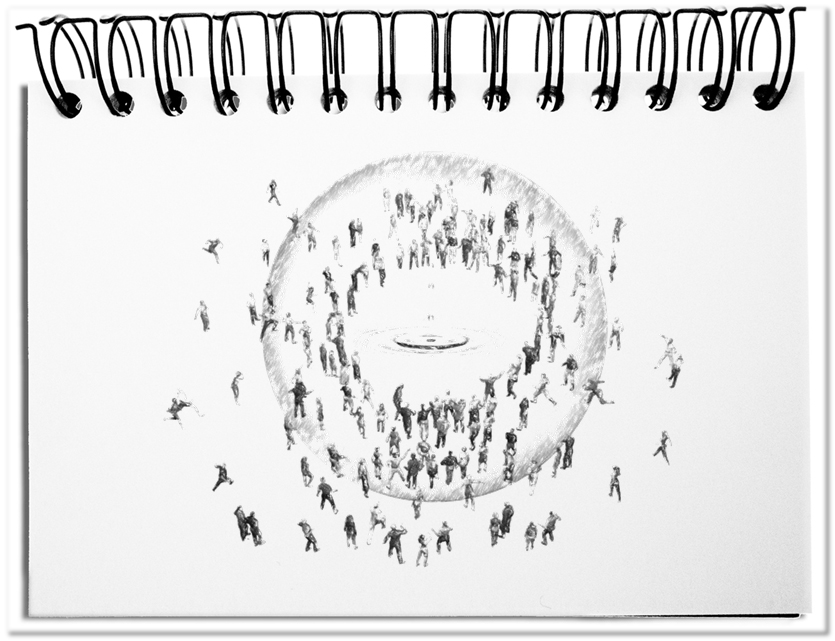
The following examples are cultural dimensions that hold this information bubble together.
- Socialization
One focal point of growing into the world is the social focus on oneself versus on one’s own group. The emphasis on independence and one’s own needs is an individualistic orientation. If, on the other hand, the group is the center of attention, then the affiliation and subordination of one’s own interests to the group determines one’s own identity.
When different points of view come together, the participants focus on their learned standards. For example, while the collectivists ignore the desire for personal freedom, the individualists are missing the need for affiliation. This blind spot is preserved by the constant exchange of already familiar ideas. Socialization stabilizes the information bubble that is isolated from otherness and results in the known exclusions – e.g. Xenophobia, nationalism, and racism. - Hierarchy
The relationship between people is essentially determined by the understanding of the position, the influence and the responsibilities. Hierarchical societies quickly accept the claim to power and the decisions of superiors. At the same time, this view relieves the burden of responsibility, because the higher-ranking persons naturally take over their responsibility. Egalitarian societies, which practice a flat hierarchy with group members of equal rank, are skeptical about power claims. Since they meet at eye level, they do not understand when they are presented a fait accompli without asking and then are still expected to be committed. The understanding and acceptance of a stratification of society and the associated roles can quickly lead to tensions between different cultures – e.g. lack of or too much respect, required decisiveness. - Time
Differences in culture are often attached to the dealing with time. This begins with the division of time into fixed sections or flowing transitions. With the introduction of ever more accurate clocks, the day could be split into finer and finer segments. Nevertheless, cultures differ in the handling of appointments – e.g. Punctuality, duration, timeliness. This includes the use of time for one or more tasks at a time – e.g. multitasking, single tasking. Strongly internalized is the division into past, present, and future. Past-oriented people value experience and established approaches. In the here and now it is all about short-term, quick outcomes. Future-oriented people are not interested in the current situation and Quick-wins, but in long-term, sustainable results. You can easily determine the view on time with the following questions for oneself and others: Where do you see the future? Where do you point, if you indicate the past? In most parts of the world it has become accustomed that we find the future ahead of us and that we point backwards into the past. There are, in fact, nations, where it is the other way around. The past is visibly in front of them and the future lies invisibly behind their back. The cultural sense of time results in filtered reports that hide other perceptions of time.
Bottom line: The few examples should make it clear that we all float in an information bubble that distorts or at least burdens our look at other areas. Our socialization has made us personalities shaped by the surrounding. The responsibility is determined by our understanding of hierarchy. Dealing with time determines the perspective of the information bubble. So today, when we talk about the information bubble and alternative facts, it is not necessarily a matter of populists, but a necessary understanding of the cultural differences. Long before the political opinions of lobbyists we are already caught up in our cultural information bubble. We only overcome the limit, when we try to break free of it and behave openly and tolerantly towards the unknown and the strange. Culture is the essential information bubble that limits us.