
Der Spiegel an der Wand bringt nicht die wesentlichen Merkmale ans Licht, da das Selbstbild nur unvollständig in einem Spiegel sichtbar wird. Es sind die weichen Merkmale, die das Wesen einer Person oder Gruppe von Menschen beschreiben. Diese lassen sich nur schwer greifen oder beobachten. Außerdem werden sie meistens unbewusst verarbeitet – wenn man jemand das erste Mal trifft, intuitiv betrachtet oder sich mit seinen Publikationen beschäftigt. Das explizite Format des Selbstbilds ist die heutige Form des Spiegels an der Wand. Damit beschreiben Sie die eigenen Eigenschaften und die von anderen Personen und Gruppierungen.
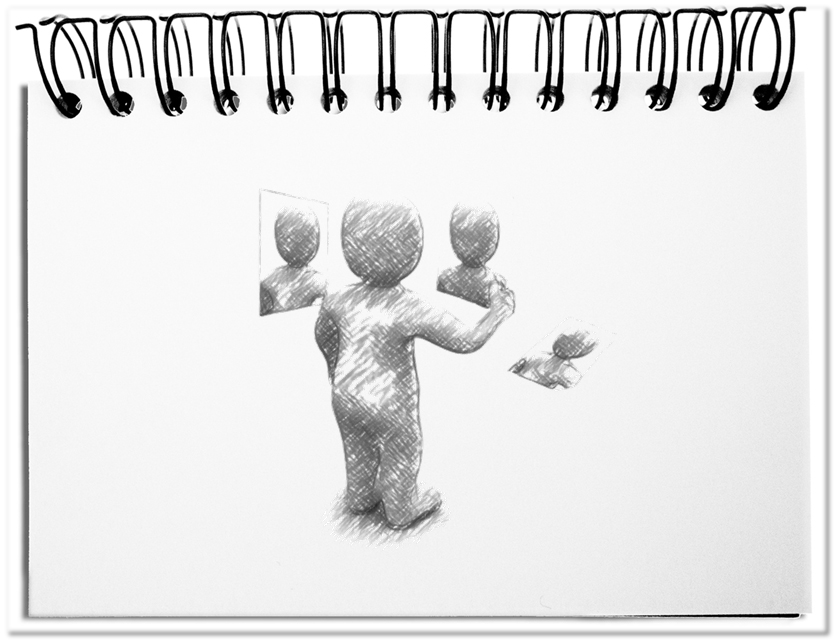
Diese weichen Aspekte der Corporate Identity bestimmen den Umgang mit einer Zielgruppe und die Zusammenarbeit innerhalb Ihres eigenen Teams.
Werfen Sie einen Blick auf die Zielgruppe in ihrem Umfeld. Dies liefert Hinweise auf die Überzeugungen, die aktuelle Verteilung der Aufgaben und die Verbundenheit mit einem kulturellen System. Die Merkmale können durch die Betrachtung von Veröffentlichungen und Veranstaltungen genauer bestimmt werden.
Das Selbstbild ist die Grundlage für den Umgang mit der Zielgruppe. Indem Sie den Austausch von Informationen ausarbeiten, vermeiden Sie Aussagen, die den Einstellungen des Publikums widersprechen. Die erkannten Eigenschaften und Angewohnheiten erleichtern es, die eigenen Botschaften treffsicherer zu formulieren.
Der Spiegel an der Wand, der um die Elemente des Selbstbilds erweitert ist, liefert den Rahmen für ein gemeinsames Selbstverständnis, das den sozialen Zusammenhalt und die Zusammenarbeit fördert.
Fazit: Das Zusammenspiel innerhalb des eigenen Bereichs und mit anderen macht es erforderlich, die eigenen Besonderheiten und Eigenarten sowie die der anderen in Worte und Bilder fassen zu können. Das Selbstbild erleichtert die Beschreibung der Profile.
Videos:
Das Selbstbild in Kürze: http://ow.ly/wdk20
Mögliche Anwendungsgebiete: http://ow.ly/wdk5i