
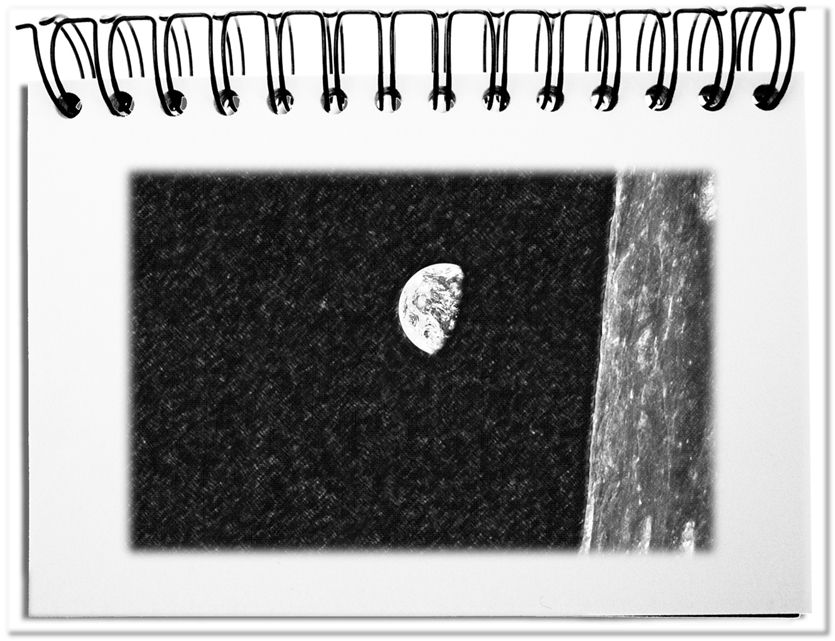
Am 24. Dezember 1968 veränderte ein Photo, das William Anders während der Umrundung des Mondes mit Apollo 8 aufnahm, das Selbstverständnis der Welt. Durch diesen ungewöhnlichen Wechsel der Perspektive wurde der Menschheit mit einem Schlag vorgeführt, wie endlich unsere Lebenswelt ist. Gleichzeitig ermöglichten es Computer, Simulationen durchzuführen, die die Entwicklung der Welt vorwegnahmen. Die Studie Die Grenzen des Wachstums erschien 1972 und sagte das Erreichen der absoluten Wachstumsgrenzen bezüglich Weltbevölkerung, Industrialisierung, Umweltverschmutzung und Nahrungsmittelproduktion bis 2072 voraus. Zur gleichen Zeit kam die Gaia-Hypothese auf, die die Erde als einen sich selbst regelnden Organismus betrachtet, der sich bei Bedarf gegen seine Zerstörung zur Wehr setzt. Unabhängig welche Vorstellung wir haben, sollten wir uns bewusst sein, dass wir uns auf dem einzigen für uns erreichbaren Planeten befinden. Alles, was hier passiert, passiert immer früher oder später allen.
In Anbetracht dieser Vernetzung ist es schwer verständlich, dass manche immer noch meinen sie wären nicht von den grundsätzlichen Entwicklungen betroffen.
- Gemeinsame Atmosphäre
Ohne die Lufthülle, die die Erde umschließt, gäbe es kein Leben auf der Erde. Das Zusammenspiel von Fauna und Flora ist entscheidend für die 80% Stickstoff und 20% Sauerstoff. Natürliche chemische und physiologische Prozesse halten das lebensnotwendige Gleichgewicht. Manche scheinen zu denken, dass die Grenzen ihres Landes auch für den Luftraum gelten und sie nicht Teil des Problems sind.
Die Erde ist jedoch ein geschlossenes System, in dem auf den ersten Blick Probleme von der linken in die rechte Tasche geschoben werden – ohne zu bemerken, dass man die Nachteile nicht wirklich loswird. - Gemeinsames Wasser
Wir verfügen über 1,4 Milliarden Kubikkilometer Wasser auf der Erde – 97% Salzwasser, weniger als 1% des Süßwassers im Grundwasser und davon drei Tausendstel im Oberflächenwasser. Das Leben auf Gaia lebt von dem Süßwasser. Diese Ressourcen zu verunreinigen schadet allen, auch den Verschmutzern.
Damit wir auch morgen noch die benötigten Mengen an Süßwasser haben, müssen wir uns selbst darum kümmern, d.h. nicht zu Gunsten von einer Handvoll Dollars diese Ressource mit Nitrat aus Düngemitteln, Mikroplastik, Öl, Medikamenten und Fracking zu zerstören. - Gemeinsame Rohstoffe
Wir sitzen auf endlichen Rohstoffen – Kohle, Erdöl und -gas, Kupfer, Blei, Gold und seltene Erden. Ohne diese Stoffe können wir den aktuellen Lebensstandard nicht halten – Versorgung mit Lebensmitteln und Wasser, Energie, Mobilität sowie Information und Kommunikation. Die Schätzungen diesbezüglich beschränken sich auf die uns bekannten Lagerstätten. Diese reichen zwischen 30 und zweihundert Jahre aus. Danach ist Schluss. - Gemeinsames Schicksal
Das Raumschiff Erde ist so groß, dass es uns vorkommt, als wäre es eine Scheibe. Geschützt und am Leben gehalten werden wir durch die Atmosphäre. Unser lebenswichtiger Proviant ist das, was wir auf dem Land erwirtschaften und aus dem Boden und Meer ziehen. Mehr gibt es nicht. Wir verbrauchen heute mehr als doppelt so viele Rohstoffe, als vor fünfzig Jahren. Jährlich gehen durch Überweidung, ungeeignete Anbaumethoden, Erosion sowie durch Straßen- und Städtebau zwölf Millionen Hektar an Agrarflächen verloren. Gleichzeitig steigt die Bevölkerung bis 2050 auf neun Milliarden, die versorgt sein wollen. Was immer auf einer Seite der Erde passiert, hat einen Einfluss auf den Rest – ohne das aktuelle, magische Schlüsselwort zu benutzen.
Fazit: Der Blick auf die aufgehende Erde hat der Menschheit gezeigt, wie beschränkt unser Handlungsspielraum ist und für lange Zeit bleiben wird. Es gibt nur eine Atmosphäre, gemeinsame Wasserspeicher und endliche Rohstoffe, die uns zu EINER Schicksalsgemeinschaft machen. Ressourcen von der einen Seite auf die andere Seite zu verschieben, schadet der anderen Seite und bringt der Erde nichts. Trotz aller Hinweise haben einflussreiche Leute die Grenzen des Wachstums immer noch nicht verstanden, obwohl sie genauso betroffen sind, denn: Mehr gibt es nicht.
P.S.: An dieser Stelle ein Dankeschön an Greta.